Here is an explanation of how to link a purchase invoice or simple invoice to a fixed asset to increase its value.
- You can add the value of a fixed asset or expenses to increase the asset’s cost by linking a purchase invoice or simple invoice.
- The invoice must contain fixed assets or non-inventory products or products of type expense, and the invoice must be in “Approved” or “Paid” status.
How to add an invoice to an asset:
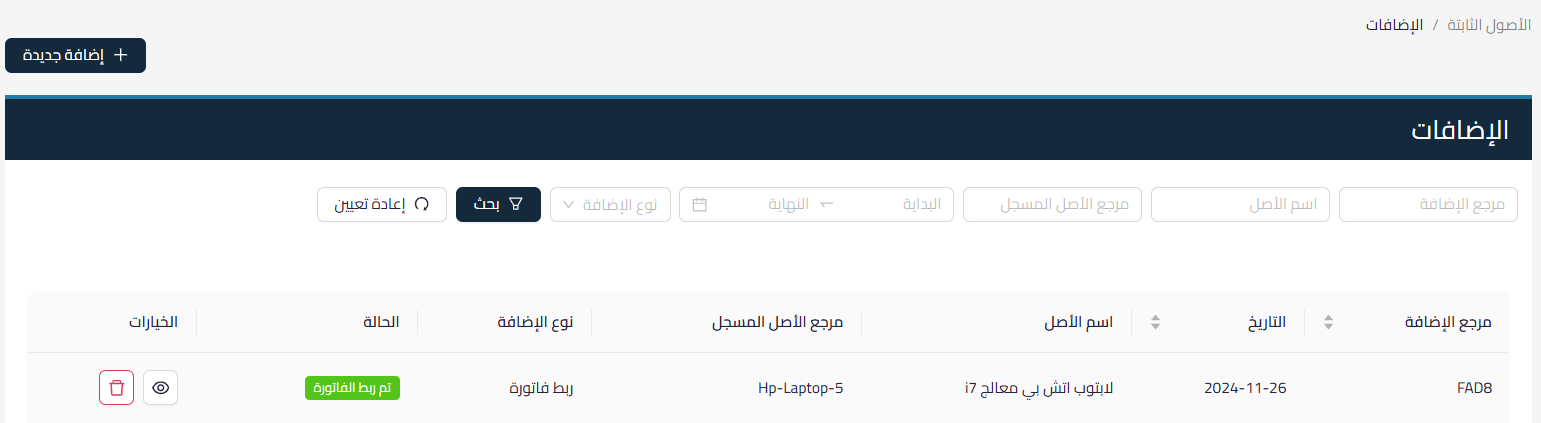
- Go to Fixed Assets – Additions.

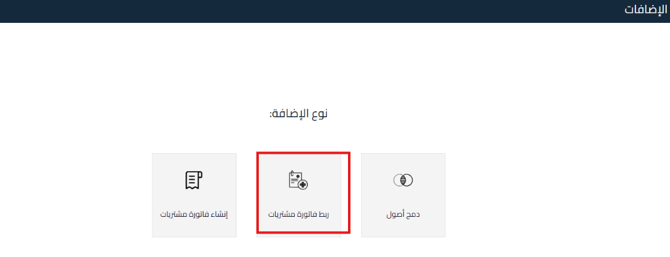
- Click on “Add New“.
- Select the addition type: Link Purchase Invoice.

-
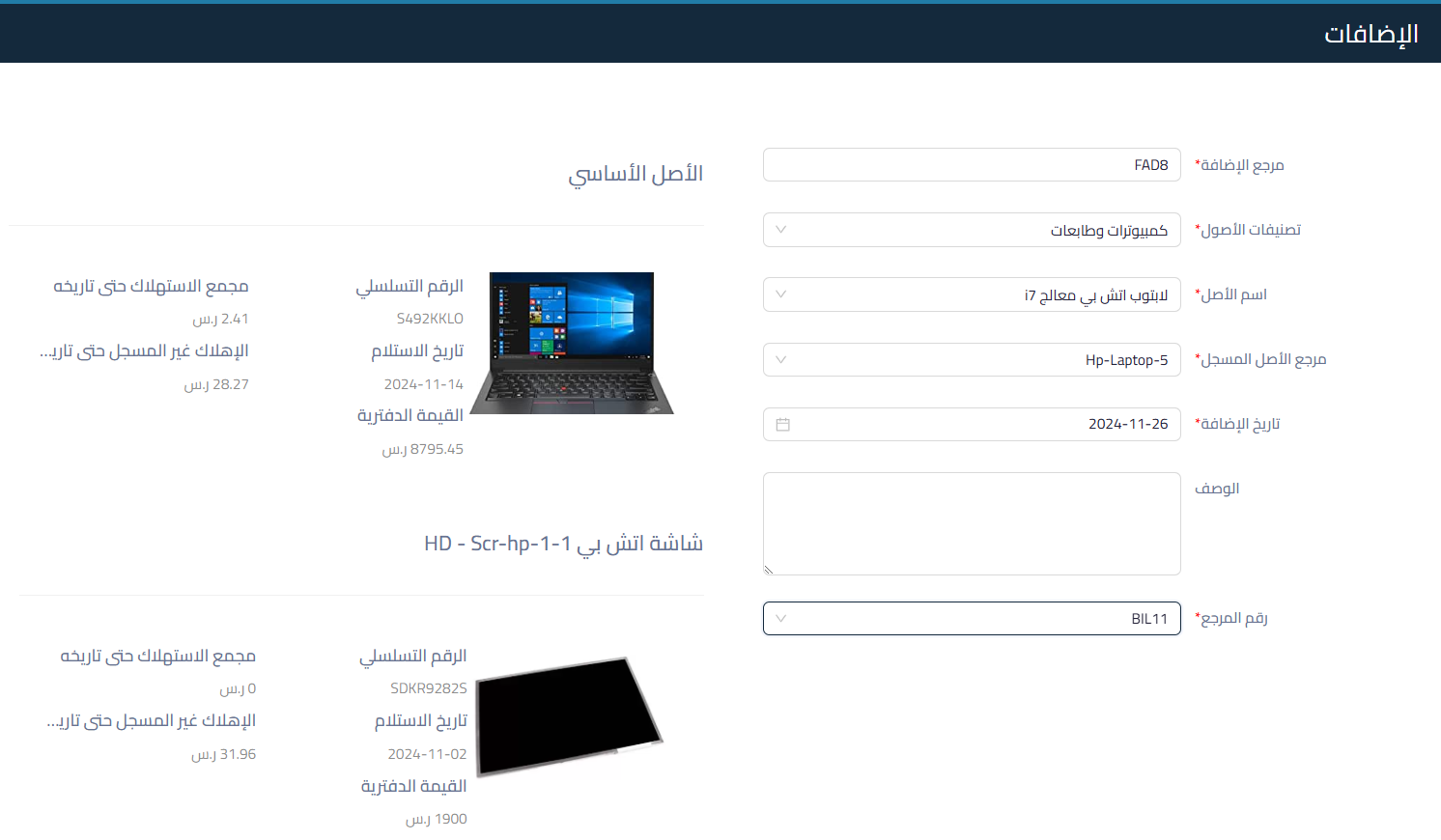
By selecting the primary asset in which the assets will be merged:
- Addition Reference: Auto-filled.
- Asset Category: Select the primary asset category.
- Asset Name: Select the asset to be merged.
- Registered Asset Reference: Specify the asset to be merged.
- Addition Date: Set the date of adding the assets through the merger.
- Description: Can be added optionally.
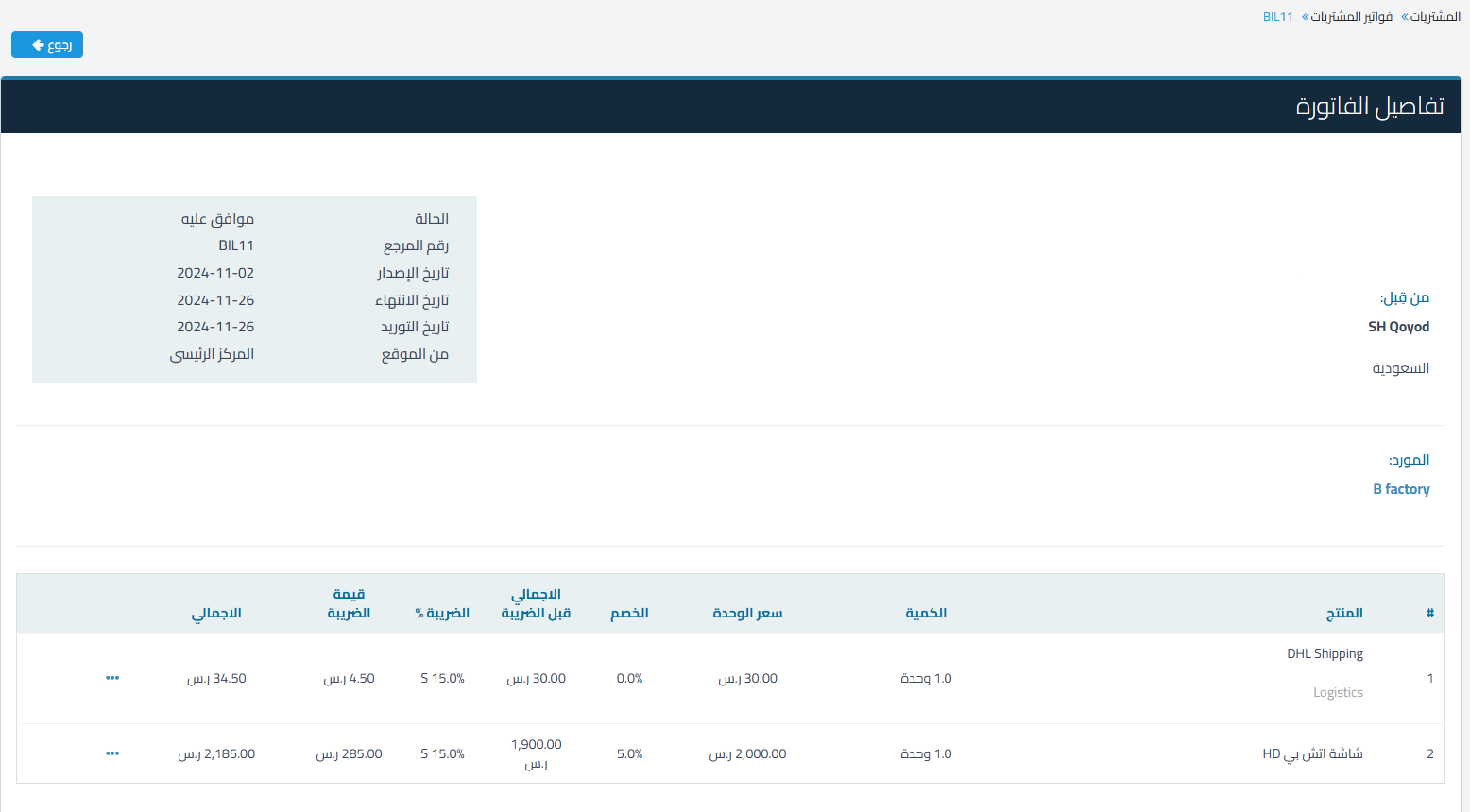
- Enter the reference number: the invoice reference (purchase invoice or simple invoice).

- Review the details of the added invoice.

Asset Information:
- Serial Number: To view the asset details.
- Receipt Date: The date when the depreciation calculation period begins is set.
- Accumulated Depreciation to Date: Shows the recorded depreciation up to the addition date.
- Unrecorded Depreciation up to Addition Date: Shows the unrecorded depreciation up to the addition date.
- Book Value: The book value of the fixed asset up to the addition date is displayed.
After reviewing the asset, fill in the following:
- Increase in Asset Life: An optional choice if an increase in the useful life is expected.

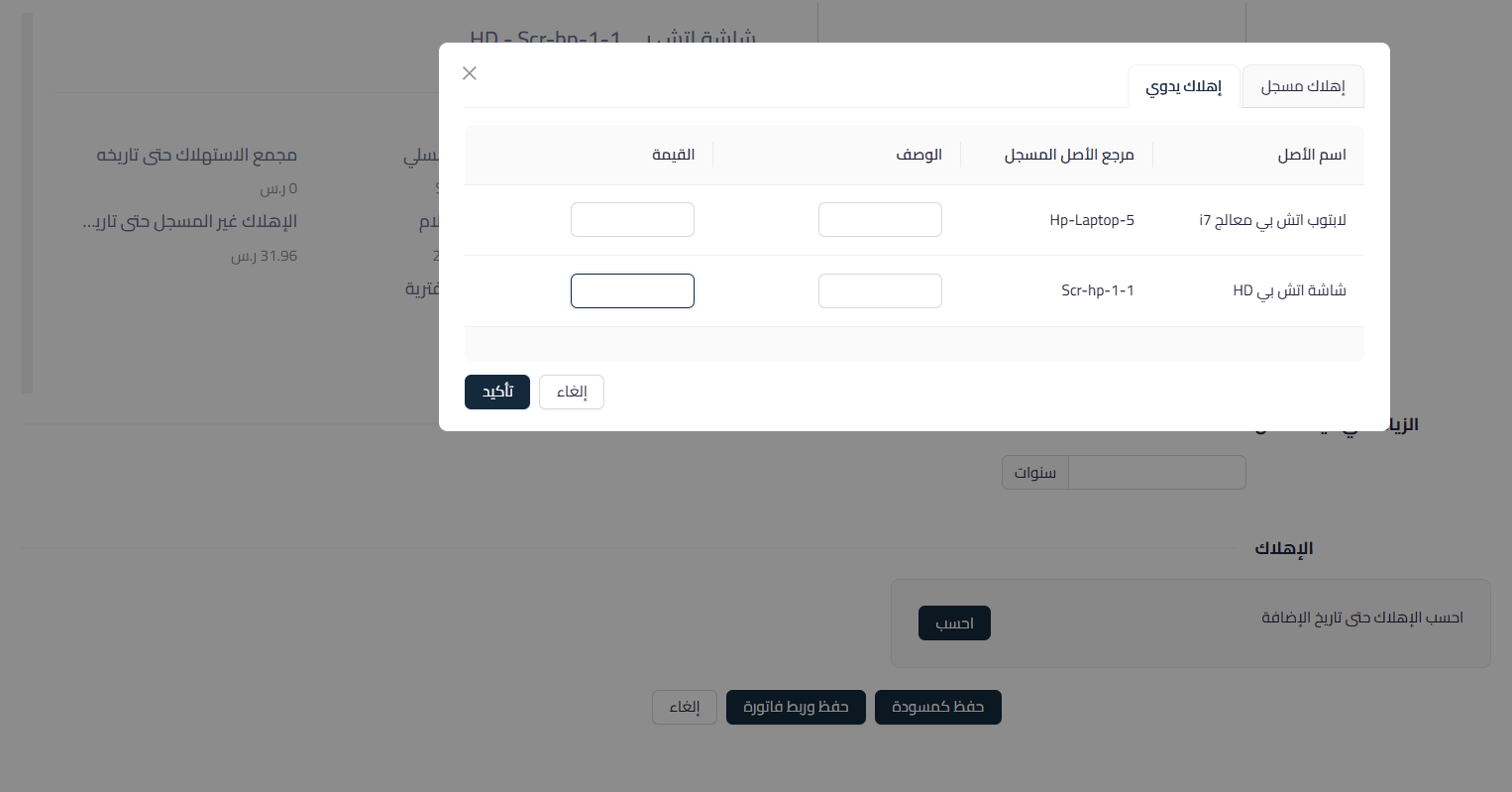
- Depreciation Calculation: If the asset is depreciable, you can specify the depreciation type:

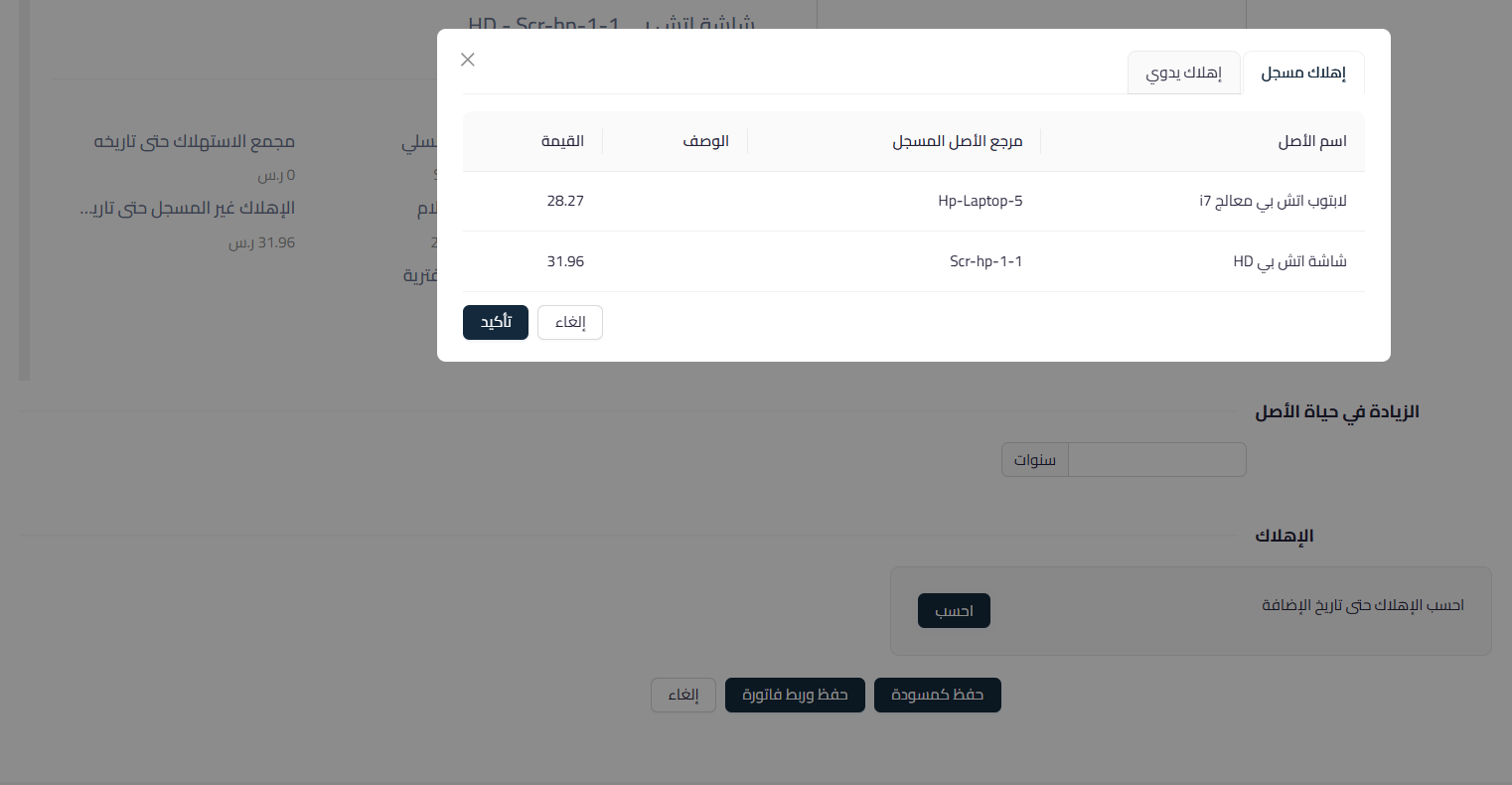
- Recorded Depreciation: Calculate the unrecorded depreciation up to the addition date.

- Manual Depreciation: Add depreciation manually as desired.

After calculating the depreciation, you can save and link the invoice or save it as a draft to complete later.

- Recorded Depreciation: Calculate the unrecorded depreciation up to the addition date.


Impact of Addition on the Asset:
-
The value of the primary asset will increase (by the value of the fixed asset or the value of non-inventory products or the value of expenses after discount and before tax) as well as the depreciation and scrap value (after merging the values of fixed assets)
- Increase in the useful life and depreciation calculation on the new asset value.
- The registered asset in the invoice will be classified as an archived asset.
- Reflection of the value of expenses and non-inventory products in the primary asset.