An equipment rental business rents out scaffolding, generators, air compressors and power tools by the day or by the week. Equipment goes out and comes back, a deposit is taken and returned, and a customer runs a week late and then rents again anyway. The financial problem here is not the renting. It is the collecting, it is deposit money sitting inside your revenue, and it is not knowing which units actually earn and which ones just take up yard space.
1. The accounting problem in equipment rental businesses
Most equipment rental shops in Saudi Arabia run on a paper ledger and WhatsApp threads. The ledger holds a customer name, a mobile number and a go-out date. Everything else lives in someone’s head.
That holds up for the first month. A year in, you have dozens of customers who never settled, deposits you took without a record of which were returned and which were kept against damage, and equipment that went out with no return ever logged.
What you end up with is cash that looks healthy but is partly customers’ money, VAT reconstructed in a rush at the end of the period, and an annual profit figure nobody can trace back to anything.
2. What accounting software is, and why rental changes it
Accounting software records each financial movement in your business once, then builds the invoice, the tax, the receivables and the reports off that single entry instead of you keying it in three places.
In ordinary retail the transaction ends when the goods are handed over. In rental it starts at handover and does not close until the unit is back, the deposit is settled and the last riyal is collected.
So rental needs a system that keeps three things apart, which a paper ledger never does: revenue earned over the rental period, deposit money held in trust rather than booked as income, and each customer’s open balance with its age attached.
3. Why an equipment rental business specifically needs accounting software
Every unit in your yard is an asset you bought with your own money, and it is supposed to earn every month. A scaffold tower that has not gone out in sixty days is not neutral. It is a quiet loss.
Your customers are a mix. One walks in, takes a cut-off saw for two days and pays cash. A small contractor takes ten generators for a month and wants a full tax invoice in his company’s name. The two need different treatment, both in how you invoice them and in how you chase payment.
Equipment rental is a standard-rated supply, so it carries VAT at 15%. Late-return charges and damage compensation have their own treatment as well, and ignoring them opens a gap between what you actually collected and what you declared.
4. The main accounting challenges without software
Refundable deposits blend into revenue. A deposit you take is money you are holding and expect to give back, not a sale. Dropping it into the till alongside rental income inflates the month and has you spending money that is not yours.
Receivables with no age on them. You know a customer owes you. You do not know since when. A 15-day-old balance and a 120-day-old balance are the difference between money you will collect and money you probably won’t.
Per-unit profitability is invisible. Purchase cost, maintenance and spare parts all land in general expenses, so you cannot tell which item deserves a second unit and which one you should stop replacing.
Late and damage charges evaporate. They get agreed verbally, then forgotten at return time, especially with the regular customers you would rather not argue with.
VAT gets assembled at the last minute. Pulling paper invoices together the week a return is due invites the kind of errors and penalties that daily entry would have prevented.
Unit counts drift. Ten scaffold frames on paper, eight in the yard, two with somebody nobody remembers. Tracking quantity per unit is the backbone of any rental operation. See what inventory control actually has to cover.
5. What changes once you run on accounting software
You issue a tax invoice the moment the unit leaves (period, rate and tax on it), and the “I’ll invoice you later” stage disappears.
You take the deposit on a standalone receipt that stays outside revenue until it is settled, whether you end up refunding it or applying it against damage.
You open a customer receivables aging report and see outstanding invoices spread across age bands, so you know who to call this morning and who should stop getting credit terms. Receivables aging is what turns a list of names into a collection plan with an order to it.
You get a net profit figure for the period built out of movements recorded day by day, instead of an estimate assembled at year end.
6. Where Qoyod fits in an equipment rental business
Qoyod is a Saudi cloud accounting platform, certified by the Zakat, Tax and Customs Authority for Phase 2 of e-invoicing and integrated with the Fatoora platform.
Qoyod is not a rental-management system and not a booking system, and Qoyod does not track equipment going out into the field and coming back. Its role is the accounting and tax layer underneath your operation: the invoice, the tax, the receivables, the collection, and the cost of every asset you own.
That is exactly the gap in a rental shop run on paper and a mobile phone, where the owner wants to know how much has actually been collected and how much is still sitting with customers.
7. What Qoyod gives an equipment rental business
-
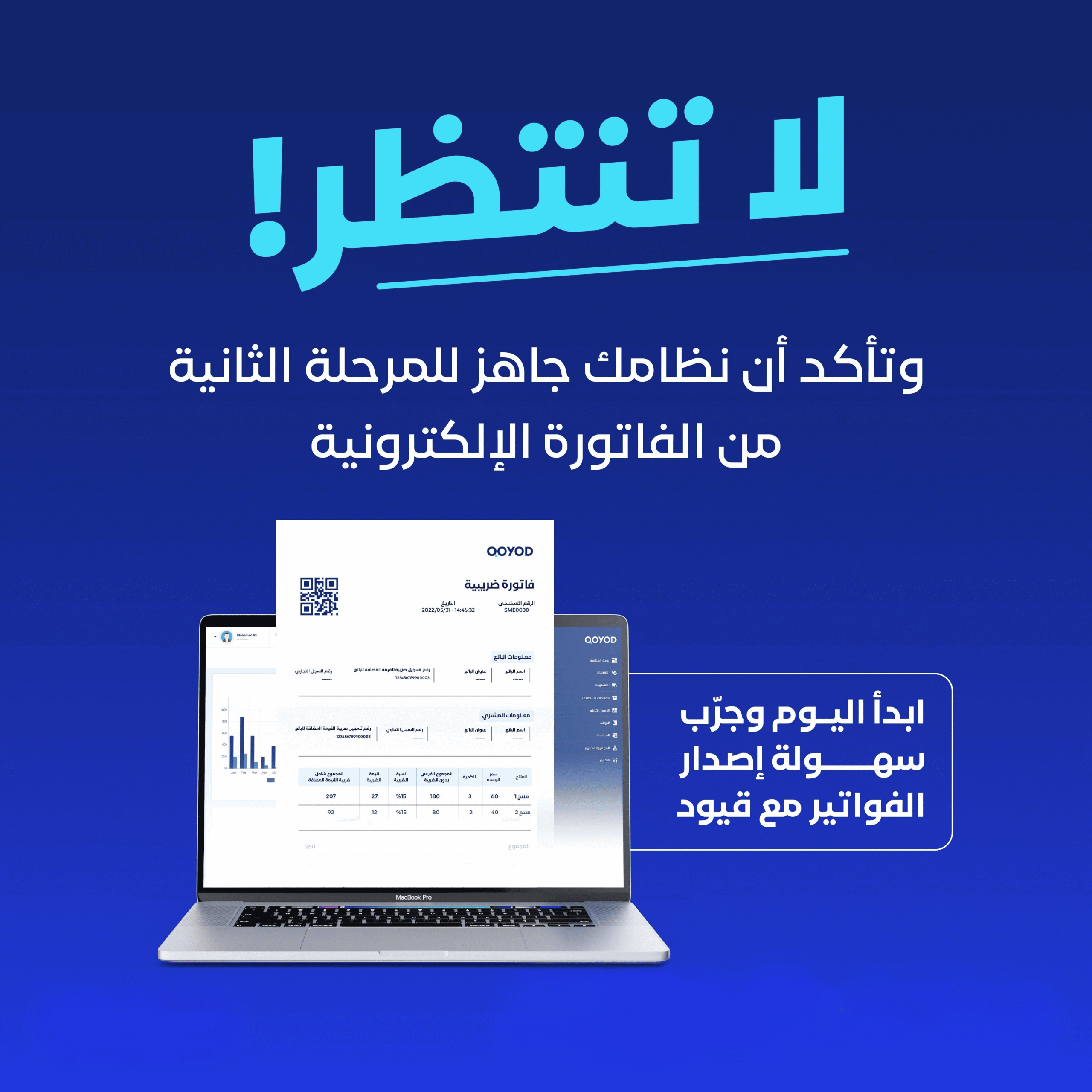
Phase 2-compliant tax invoicing. Issue a full tax invoice to a contractor or a company, and a simplified tax invoice to a walk-in individual, with 15% VAT calculated automatically on the rental value. More on how this works on the e-invoicing page.
-
Deposits held outside revenue. Record the deposit as a standalone receipt voucher that is not linked to an invoice, so it never enters rental revenue. When you settle, you either refund the amount or allocate the voucher against the rental invoice, which reduces the invoice total by that amount. Settle the tax treatment of refundable deposits with your accountant before you fix your policy.
-
Automatic payment reminders. Turn on email payment reminders and set how many days before the due date they go out, and the reminder reaches the customer without you chasing it.
-
Customer receivables aging report. Outstanding invoices are split across 1–30 days, 31–60, 61–90, and over 90 days, so the accounts that need a call today stand out. This is accounts receivable management in its practical form.
-
Automatic invoicing for monthly contracts. Recurring transactions generate the monthly contract invoice on their own, with a start date, a repeat type, and either a set number of occurrences or an end date. This feature is on the Advanced plan.
-
A record per unit, with depreciation. Register each machine as a fixed asset under its own name, value, category, useful life and salvage value, and you can attach a barcode to each unit. The system calculates depreciation and records asset expenses, transfers and disposals. Fixed assets and depreciation are on the Advanced plan.
-
More than one location. If you have a second branch or a separate store, you can follow each location’s movements and pull a statement for it on its own. Additional locations come with the higher plans. Basic covers one.
-
Support 24 hours a day, 7 days a week. Help reaches you whenever you need it, on a working day or over the weekend.
8. How to choose the right accounting software for rental
Ask these six questions before you subscribe to anything:
9. Frequently asked questions
Is Qoyod a rental and booking management system?
No. Qoyod is accounting and e-invoicing software, not a booking system and not a field tracker for equipment going out and coming back. Its role is the accounting and tax layer underneath your operation: the tax invoice, the VAT calculation, receivables and collection follow-up, and registering machines as assets with their costs.
How do I record a refundable equipment deposit without it mixing into rental revenue?
You take it as a standalone receipt voucher that is not linked to an invoice, so it stays outside rental revenue. On return you either refund the amount or allocate the voucher against the rental invoice, which reduces the invoice total. Settle the tax treatment of refundable deposits with your accountant before you adopt a policy.
Can I see the profitability of each machine separately?
You register each machine as its own fixed asset and attach asset expenses and depreciation to it, so its accumulated cost shows up in the asset reports. Fixed assets and depreciation are on the Advanced plan, so ask the sales team which scope suits the size of your fleet.
How do I follow up rental customers who are late paying?
Through the customer receivables aging report, which splits collectable amounts across 1–30 days, 31–60, 61–90, and over 90 days. Alongside it, turn on email payment reminders and set how many days before the due date they go out.
Do I need a point-of-sale system in an equipment rental shop?
If you have a front counter serving individual customers who pay on the spot, POS speeds up issuing the simplified invoice. Be aware, though: POS in Qoyod is a separate paid add-on, not included in any plan and not available during the free trial, and it is billed per user. If most of your business is on credit terms with contractors, invoicing and receivables follow-up matter more than a cashier.
Are rental invoices compliant with Phase 2 of e-invoicing?
Yes. Qoyod is certified by the Zakat, Tax and Customs Authority for Phase 2 and integrated with the Fatoora platform. A full tax invoice to a business is cleared by the authority before it is sent to the buyer, and a simplified tax invoice to an individual customer is delivered immediately and reported to the authority within 24 hours.