A food truck in Saudi Arabia parks at a different location every day, sometimes runs three trucks at three events on a weekend, sells fast food at counter speed, and lives or dies on per-event profitability. A single Riyadh-Season night can post 14,000 SAR of revenue from one truck, while a quiet Tuesday at a corporate park does 800 SAR. Without per-event location costing, ingredient consumption tracking, and fleet expense allocation, the operator cannot tell which events pay back the permit, the staff, the ingredients, and the fuel.
What makes food-truck accounting different
A food truck is a mobile P&L. Every shift is a separate event with its own permit fee, location, hours, weather, and crowd profile. Revenue and direct costs move together by event, not by month. Generic accounting tools treat the whole truck as one cost center and hide the events where the truck quietly loses money.
Food-truck accounting revolves around five connected pieces: per-event revenue and cost capture by location, recipe-level ingredient consumption from a central commissary, festival and event contracts with permit and commission fees, fleet maintenance and fuel allocated per event, and ZATCA simplified tax invoice on every counter sale.
Daily reality is dozens of postings per truck per event: opening cash, ingredient pull from commissary, counter sales, end-of-shift cash count, permit and commission expense, fuel top-up, and any spoilage write-off. Multiply by three trucks across a Riyadh-Season weekend and the volume becomes the problem.
The most common accounting challenges in food-truck operations
Every food-truck operator in Saudi Arabia runs into the same four recurring problems. They share the same gap: events are tracked on WhatsApp, ingredients flow from the kitchen to the truck without paperwork, and fleet expenses pile up at month-end with no event attribution.
1. Per-event profit unknown. A Friday night at Boulevard Riyadh posts 9,200 SAR in sales but costs 1,800 SAR in permit, 1,400 SAR in staff overtime, 2,600 SAR in ingredients, and 320 SAR in fuel. Without per-event capture, the operator celebrates the revenue and never sees the 2,820 SAR net contribution.
2. Commissary-to-truck transfer untracked. The central kitchen prepares 80 burger patties, 60 chicken portions, and 12 kilos of fries for the truck. Without a transfer document, both the kitchen and the truck book the same inventory and end-of-quarter inventory variance becomes a 6-figure write-off.
3. Festival commission lost in the COGS. A Riyadh-Season permit charges 15% of gross sales on top of a fixed daily fee. Without separating commission from cost of goods, gross margin looks healthy and net contribution per event quietly turns negative on busy nights.
4. Fleet maintenance not allocated. Each truck consumes 1,200 SAR in fuel and 800 SAR in maintenance every month. Without per-truck-per-event allocation, the operator cannot tell whether the older truck is now a liability or whether the newer truck pays back its lease through higher event uptime.
What a food-truck operator actually needs from its accounting software
A generic accounting tool was built for a fixed location with a single P&L, not for a fleet of trucks that each post a separate event-by-event income statement. The gap is concrete:
| Task | Generic accounting tool | What a food truck needs |
|---|---|---|
| Revenue capture | Single P&L | Per-event by truck by location |
| Cost of goods | Standard SKU cost | Recipe with commissary transfer |
| Permits and commission | Lumped expense | Per-event with revenue tie-out |
| Fleet | Generic fixed asset | Per-truck fuel and maintenance pool |
| Inventory | One warehouse | Commissary plus per-truck location |
| VAT | Flat 15% | Per-line on standard rated |
Beyond the table, a food-truck operator specifically needs three capabilities generic platforms do not deliver:
- Per-event revenue and cost capture, where every shift is an event tag and revenue, ingredients, staff, permit, commission, and fuel all attach to the same tag so net contribution is one report away.
- Commissary-to-truck transfer workflow, where every pull of patties, chicken, fries, sauces, and drinks moves from central kitchen to truck location via a document that posts the right journals on both sides.
- Per-truck fleet pool with event allocation, where fuel, maintenance, lease, and insurance flow into a per-truck monthly pool then allocate to events by hours operated, with ZATCA-certified tax invoice on every counter receipt.
How to organize a food-truck operation’s books step by step
Moving a food-truck operation to integrated accounting takes around two to four weeks depending on fleet size and event volume. This is the sequence Qoyod applies with every new food-truck customer:
E-invoicing and ZATCA compliance for food trucks
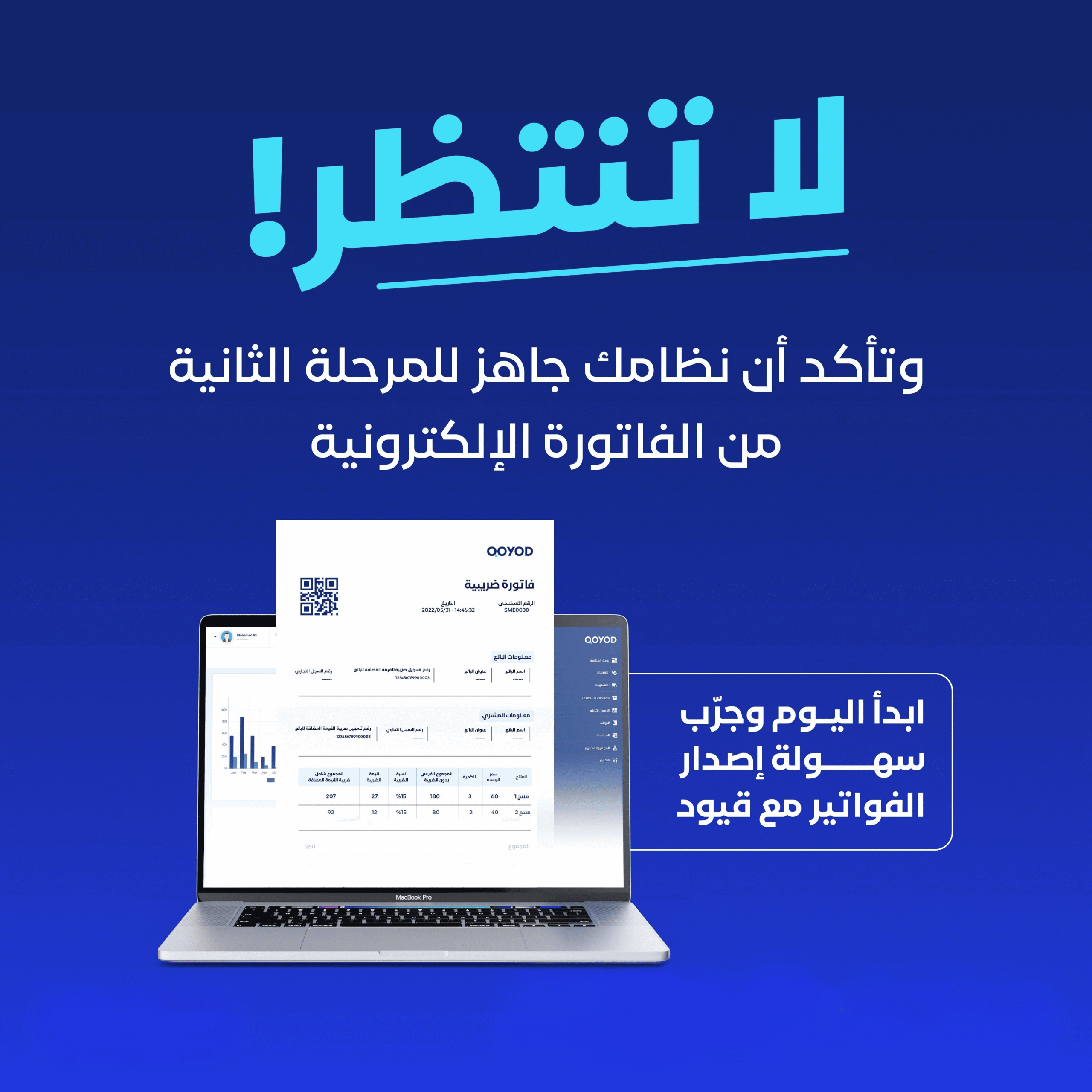
Phase two of ZATCA e-invoicing requires every counter receipt and every B2B festival invoice to be issued through a certified system connected to the Fatoora platform. Food trucks issue mostly simplified tax invoices at the counter and occasionally B2B invoices on private-event catering through the Clearance flow. For a side-by-side view of vendor costs, read the guide on e-invoicing pricing in Saudi Arabia.
Every invoice must include the truck name and tax number, a sequential invoice number, the date and time, the buyer name on B2B invoices, an itemized list of items with VAT at 15%, totals before and after VAT, and a QR code. A certified system generates the QR code, signs the invoice in XML, and transmits it to the Fatoora platform automatically inside the Reporting or Clearance window.
How to evaluate a ZATCA-certified system for a food truck
When evaluating any e-invoicing vendor for a food truck, verify these six criteria:
- Official ZATCA phase-two certification with a verifiable approval number on the Authority’s portal.
- Both Reporting (counter receipts) and Clearance (B2B private events) flows in one system.
- Offline-mode receipt printing with automatic sync once connectivity is restored.
- Per-line VAT treatment so any zero-rated items are flagged separately.
- Long-term cloud storage of signed invoices for at least six years.
- Monthly input-VAT and output-VAT reports ready in time for the quarterly filing deadline.
Where Qoyod fits in specifically for food trucks
Qoyod brings together, inside one account: cloud accounting with truck and event dimensions, recipe master with commissary-to-truck transfers, per-event revenue and cost capture, festival contract modeling, per-truck fleet pool with event allocation, ZATCA-approved e-invoicing, payroll, and consolidated reports. Every counter sale, transfer, fuel top-up, and maintenance invoice lands an automatic journal entry inside the same ledger.
The platform handles multi-truck fleets under one account, with shared master data (menu, recipes, commissary, COA), role-based permissions per truck, and either consolidated or per-truck reports. It runs entirely in the cloud, so owners, shift leads, and the external auditor share the same numbers from any device.
For operators launching new trucks or migrating from a legacy POS, the setup service and the bookkeeping service are available as part of Qoyod Pro Services, alongside the app marketplace for connecting to POS, delivery, and payment partners.
Frequently asked questions
Does Qoyod support per-event contribution for food trucks?+
How does Qoyod manage commissary-to-truck transfers?+
Can Qoyod model festival commission contracts?+
Does Qoyod track fleet expenses per truck?+
Does Qoyod work for multi-truck fleets?+
Is technical support available 24/7?+
Running a food truck does not need a generic accounting tool, it needs an operating ledger that ties per-event contribution, commissary transfers, festival commissions, fleet pools, and ZATCA e-invoicing together inside one account. The operators that consistently grow are the ones that see event contribution every week. That capability is what makes Qoyod the right fit for food trucks in Saudi Arabia.