A heavy equipment rental company in Saudi Arabia owns excavators, bulldozers, cranes, loaders, dump trucks, concrete mixers, and forklifts that it rents to construction contractors, infrastructure projects, mining operations, and industrial clients. Each piece of equipment represents 400,000 to 4 million SAR of capex that depreciates whether it works or sits idle, so utilization rate is the single biggest profitability driver. Rates mix bare-rental (equipment only) with operated rental (equipment plus driver), mobilization fees recover transport, and Vision 2030 megaprojects demand 6-month-plus contracts with monthly billing. ZATCA e-invoicing applies on every rental invoice.
What makes heavy-equipment-rental accounting different
A heavy equipment rental business is not regular fleet rental. Each asset depreciates SR 8,000 to SR 35,000 per month regardless of utilization, mobilization to a remote site costs SR 4,000 to SR 25,000 and has to be billed separately, operated rental adds driver payroll to the equipment rate, and major-overhaul costs hit every 4,000 to 6,000 operating hours. Generic accounting tools cannot track per-asset utilization or operating-hour-based depreciation.
Heavy-equipment-rental accounting revolves around five connected pieces: per-asset utilization with operating hours, bare-versus-operated revenue split, mobilization billing as a separate revenue stream, major-overhaul accrual against operating hours, and ZATCA tax invoice on every B2B contractor invoice plus simplified tax invoices on direct rentals.
Daily reality is dozens of postings per branch: contract signing, equipment dispatch, operating-hour logs, operator timesheets, fuel and consumable issues, mobilization invoices, maintenance and overhaul expenditures, and monthly utilization reviews. Every uncosted asset hour is a margin guess, and every skipped major-overhaul accrual is a P&L surprise hiding inside the fleet.
The most common accounting challenges in heavy equipment rental
Every heavy equipment rental company in Saudi Arabia runs into the same four recurring problems. They share one root cause: the fleet is treated as a single asset block, and operating hours are tracked outside accounting.
1. Per-asset utilization not measured. The company owns 24 excavators. Without per-asset utilization tracking, the operator cannot tell which units are running 85% of the month and which sit idle 60% of the time. Idle units burn depreciation, occupy yard space, and never earn back their capex.
2. Major-overhaul cost not accrued. A bulldozer needs a major engine overhaul every 5,000 operating hours costing SR 280,000. Without accruing the overhaul cost per operating hour, the P&L looks healthy for years and then collapses the month the overhaul lands. The right approach posts an overhaul accrual per hour worked.
3. Mobilization revenue mixed with rental revenue. Moving a crane to a remote project costs SR 18,000 in lowbed transport. Booking the mobilization fee as part of monthly rental hides the true rental margin and creates a discount illusion when contracts are renegotiated.
4. Operated-rental driver cost not allocated. Operated rentals bundle the equipment rate with a driver. Without separate cost allocation, the operator cannot tell whether the operated premium actually covers driver salary, GOSI, and per-diem, or whether it is being given away.
What a heavy-equipment-rental company actually needs from its accounting software
A generic accounting tool was built for one-time sales, not for asset-heavy rental businesses with operating-hour-based depreciation. The difference is concrete:
| Task | Generic accounting tool | What a heavy-equipment-rental company needs |
|---|---|---|
| Asset depreciation | Time-based straight line | Operating-hour-based |
| Per-asset utilization | Untracked | Per-asset utilization rate |
| Mobilization | Mixed with rental | Separate revenue stream |
| Operated rental | Single rate | Equipment plus driver split |
| Major overhauls | Hit expense at invoice | Accrued per operating hour |
| VAT on contracts | Charged at signing | Recognized monthly |
Beyond the table, a heavy-equipment-rental company specifically needs three capabilities that generic platforms do not deliver:
- Per-asset utilization and operating-hour tracking, where every dispatch ties to a specific asset, operating hours feed depreciation and overhaul accruals, and utilization rate per asset class is visible weekly.
- Bare-versus-operated revenue split, where operated rental separates equipment rate from driver cost, and the operator can see whether the operated premium covers driver payroll and per-diem.
- Major-overhaul accrual against operating hours, smoothing the P&L and surfacing the real per-hour cost the day rates are quoted, with ZATCA-certified tax invoices on every B2B contract and simplified invoices on direct rentals.
How to organize a heavy-equipment-rental company’s books step by step
Moving a heavy-equipment-rental company to integrated accounting takes around four to six weeks depending on fleet and depot count. This is the sequence Qoyod applies with every new heavy-equipment customer:
E-invoicing and ZATCA compliance for heavy equipment rental
Phase two of ZATCA e-invoicing requires every contractor invoice and every direct-rental receipt to be issued through a certified system connected to the Fatoora platform. Heavy-equipment rental companies issue both B2B tax invoices on contractor and project contracts through the Clearance flow and simplified tax invoices on direct rentals through the Reporting flow. For a side-by-side view of vendor costs, read the guide on e-invoicing pricing in Saudi Arabia.
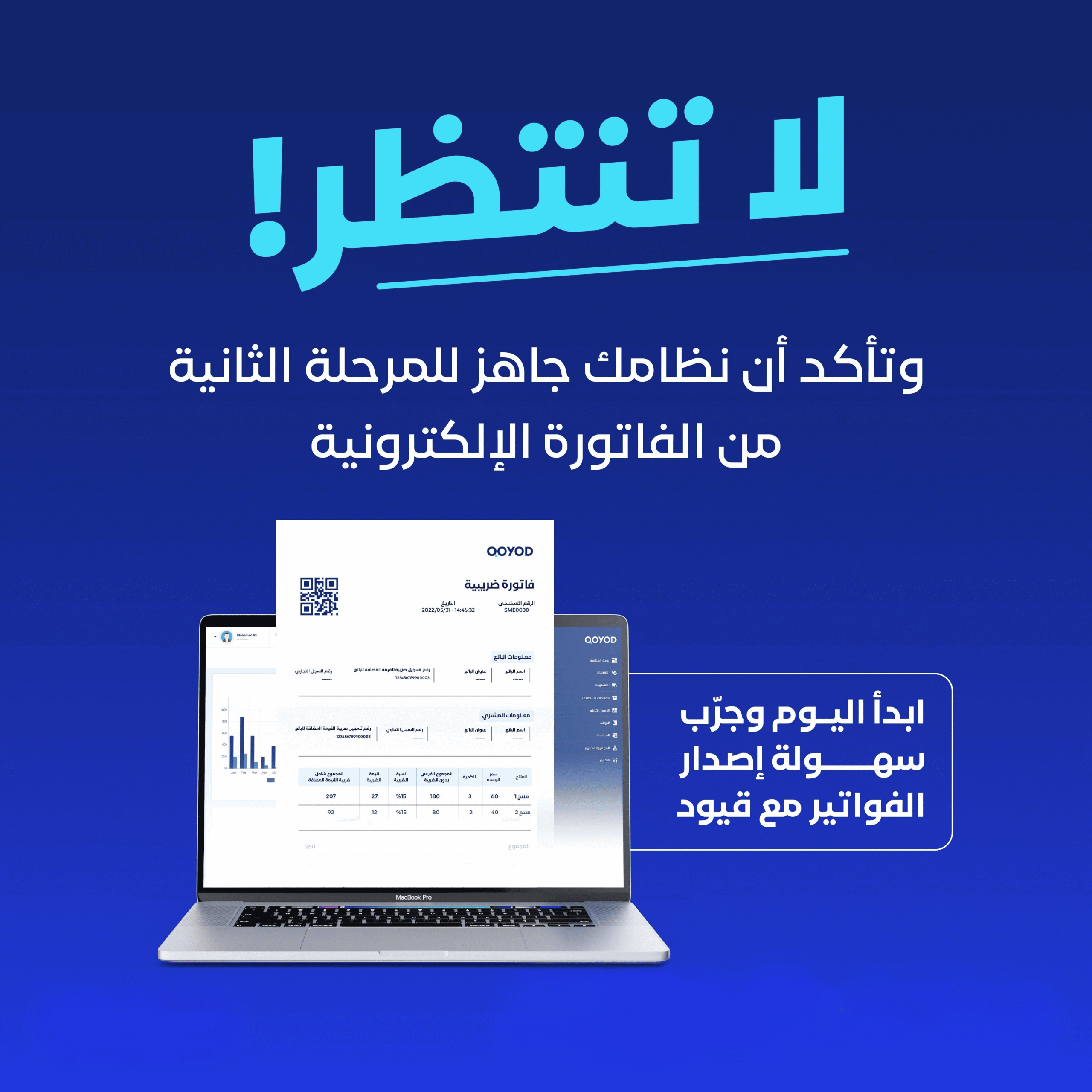
Every contract invoice must include the rental company name and tax number, the contractor name and tax number, a sequential invoice number, the date and time, an itemized list with the equipment, operating hours, mobilization line if applicable, VAT at 15%, totals before and after VAT, and a QR code. A certified system generates the QR code, signs the invoice in XML, and transmits it to the Fatoora platform automatically inside the Clearance window.
How to evaluate a ZATCA-certified system for a heavy-equipment rental company
When evaluating any e-invoicing vendor for a heavy-equipment rental operator, verify these six criteria:
- Official ZATCA phase-two certification with a verifiable approval number on the Authority’s portal.
- Both Reporting (direct rentals) and Clearance (B2B contractor contracts) flows in one system.
- Recurring-invoice automation for long-term project rentals.
- Mobilization separation as a standalone invoice line.
- Long-term cloud storage of signed invoices for at least six years.
- Monthly input-VAT and output-VAT reports ready in time for the quarterly filing deadline.
Where Qoyod fits in specifically for heavy equipment rental
Qoyod brings together, inside one account: cloud accounting with asset, project, and depot dimensions, per-asset utilization and operating-hour tracking, bare-versus-operated revenue split, mobilization as a separate revenue stream, major-overhaul accrual per hour, ZATCA-approved e-invoicing, payroll, and consolidated reports. Every dispatch, operating hour, mobilization, and overhaul lands an automatic journal entry inside the same ledger.
The platform handles multi-depot heavy-equipment operators and project-specific subsidiaries under one account, with shared master data (assets, drivers, projects, COA), role-based permissions per depot, and either consolidated or per-depot reports. It runs entirely in the cloud, so owners, depot managers, and the external auditor share the same numbers from any device.
For operators expanding fleet or migrating from spreadsheets, the setup service and the bookkeeping service are available as part of Qoyod Pro Services, alongside the app marketplace for connecting to telematics and asset-tracking partners.
Frequently asked questions
Does Qoyod track per-asset utilization for heavy equipment rental?+
How does Qoyod handle operating-hour-based depreciation and overhaul accrual?+
Can Qoyod separate bare and operated rental revenue?+
Does Qoyod bill mobilization separately?+
Does Qoyod work for multi-depot heavy-equipment operators?+
Is technical support available 24/7?+
Running a heavy-equipment-rental company does not need a generic accounting tool, it needs an operating ledger that ties per-asset utilization, operating hours, overhaul accrual, and ZATCA e-invoicing together inside one account. The operators that consistently grow are the ones that see per-asset and per-project margin every week. That capability is what makes Qoyod the right fit for heavy equipment rental in Saudi Arabia.