The free portal of the National Invoicing System does the whole legal job. There is no argument about that.
A business that issues five invoices a day, sells mostly for cash, and runs no complicated inventory can work on the portal for years without ever needing anything else. And the question business owners in Amman keep asking is not “portal or accounting program”, because both send into the same system and answer to the same rules.
The real question is narrower than that: at what size does entering the invoice twice, once in the portal and once in the books, stop being worth doing? This article answers that one question and nothing else.
The free portal is legally enough, and that is not a courtesy
Since 1 April 2025, issuing invoices through the National Invoicing System has been mandatory on every sale of goods and services, whatever the buyer is. Article 4(a) of the invoicing regulation reads: «تعتمد الفاتورة الإلكترونية الصادرة عن برنامج الفوترة الوطني الالكتروني أو الصادرة عن برنامج تم ربطه ببرنامج الفوترة الوطني الالكتروني». In English: an electronic invoice is accepted when issued by the National Invoicing System program, or by a program linked to it.
The legislator put both routes on one level. An invoice you typed into the portal and one your linked program issued are both accepted, with identical standing at the Income and Sales Tax Department.
The portal is reachable three ways: the Department’s website through the register and link option, the portal address directly, or the app on the app stores. No subscription fee.
Any content hinting you must buy software to comply is inaccurate. You comply when your invoices go out through the portal. The real discussion is operations, not compliance.
How the portal actually works, so we know where it tires
The fatigue comes from the details, not from the idea.
After you create the account, two paths appear. With an accounting program you pick “device linking” and generate the client ID and the secret key. Without one you press “add sub user”, enter the code sent to your phone, choose the income source sequence, then set a username and password.
The detail that surprises people: invoices are not issued from the main user. The main user only creates and manages sub users. To issue an invoice you sign out, sign back in as the sub user, and only then does “issue invoice” appear. It is the most repeated item in the official questions and answers guide.
Then you choose the payment type: cash if collected, or receivable if sold on credit. You fill the mandatory fields, add each good or service separately, then press “issue”. The system returns the QR code and you print the invoice.
A clear, disciplined process. The problem is repeating it.
When does manual entry stop being worth it?
No magic number fits every business, and the question is operational rather than legal. Your portal invoice is accepted under Article 4(a) whether you issue few invoices or many, so the dividing line is cost. The portal stops being worth it when the price of using it for free, counted in time and in error, climbs above the price of a system that spares you the effort. The practical measure is not invoice count but how many times the same data is keyed. Two factors shift the calculation: the nature of your selling, since a credit sale opens a balance that needs chasing while a cash sale ends at issue, and the number of people issuing invoices. A third gets overlooked: who keeps your books, because an external accountant who asks for a consolidated file every month turns double entry into fixed monthly work. Six signs follow, and their accumulation is what tells you.
Six signs that manual entry has started costing you more than it saves
None of them means the portal is legally insufficient. They mean the time it saves you for free is now being paid somewhere else in your day.
- The same invoice is keyed twice: once in the portal and once in the books
- Most of your selling is on credit, and collection is chased outside the system
- The buyer name is mandatory on every credit invoice and you type it by hand
- More than one employee issues invoices under a single sub user account
- Inventory and purchases are updated in a separate file after every sale
- You build the customer statement and the debt ageing by hand every month
1. Invoice count alone is not a criterion
Many people ask: how many invoices a day justify buying a program? The question is incomplete, because a one line cash invoice is not the same thing as a credit invoice with ten items and a buyer registered for general sales tax.
The sharper measure is the number of keying operations, not the number of invoices. If you enter every invoice once in the portal and once in your books or in an Excel file, you have doubled the number before you start. Add the receipt voucher at collection, the stock update, and the purchase record. One invoice can become four keying operations.
Work it out with your own figures. Multiply your daily invoices by the number of times the same data is keyed, then multiply the result by the average minutes each operation takes. The number that comes out is the only number that concerns you, and no article is in a position to decide it for you.
2. Cash or credit: this is the real dividing line
The difference between a cash invoice and a credit invoice looks like a simple choice at the moment of issue. Its operational effect is much larger than that.
A cash invoice ends when it is issued. A credit invoice is the start of a chain: an amount owed by a customer, then partial or full collection, then a remaining balance, then a statement of account that the customer or your accountant asks for. The portal issues the invoice and its job is done, and that is its intended design, because it is an invoicing system and not a receivables management system.
So a business whose selling is mostly on credit reaches the dividing line far sooner than a business that sells for cash, even when the two issue the same number of invoices.
3. The buyer name rule and the 10,000 dinar ceiling
The official invoicing guide sets two different rules:
- Cash invoice: the buyer name is required if the invoice value exceeds 10,000 dinars.
- Credit invoice: the buyer name is required always, with no exception.
The regulation adds a third rule that gets forgotten: if the invoice value exceeds 10,000 dinars, the seller must evidence the buyer’s receipt of it (Article 5/c/2). The buyer’s phone number has its own condition too: digits only, minimum 9 and maximum 14.
Each one of these rules is simple. Applying them by hand across dozens of credit invoices a month is what creates the error. One customer name written two different ways is enough to make the statement of account impossible to consolidate.
4. Who enters and who approves
The portal separates a main user from a sub user, and that is an administrative split of the account rather than an accounting permissions system. The official guides do not describe permission levels or an invoice approval step inside the portal.
In a business with a sales employee, a cashier, and an external accountant, you need a finer distinction: who may create an invoice, who may approve it, who sees cost and profit margin, and who sees bank balances. That distinction is part of organised bookkeeping, not part of the work of an invoicing system.
5. The external accountant feels the difference first
In the Jordanian market it is usually an external accounting office that keeps the books and prepares the returns. That office cannot build a trial balance out of printed invoices, so at the end of every month it asks for a file consolidating sales, purchases, and collections.
That file is double entry in its clearest form. The owner enters the invoice in the portal, and the accountant re-enters it in the general ledger. The larger the activity grows, the longer the gap between month end and the appearance of the numbers, and the more those numbers lose their value as a decision tool.
What the portal does not do, by design
This point needs care in the wording. The portal does not “fail” at the following, because it was never built for them. The National Invoicing System is a tax control system over invoices: it receives the invoice, validates it, and returns the QR code that makes it an accepted document. That is its function, performed precisely and without a subscription fee.
But an accepted invoice is not a ledger, and that difference is the whole subject. The invoice proves a sale happened and passed through the system. The books tell you its effect: how much the customer now owes, how much left the warehouse, how much you still owe suppliers, and what the month came to. The same applies to who may issue, who may approve, and who sees all the numbers. So everything below stays outside the portal’s scope and has to exist elsewhere in your business, whether in an accounting program, a file you keep yourself, or at your external accountant:
- A general ledger and journal entries. An accepted invoice is not an accounting entry. Someone has to turn it into a journal entry that appears in the trial balance.
- Customer balances and debt ageing. The portal knows the invoice. It does not know how much of it you collected, or when.
- Inventory and cost. Selling an item does not reduce its quantity and does not compute cost of goods sold.
- Purchases and supplier accounts. The system records what you sell, not what you buy from others, so payables management stays outside it.
- Management reports. The income statement, the balance sheet, and the cash flow statement are built from the books, not from invoices.
- Feeds from a point of sale or an online store. Sales that happen elsewhere need someone to key them in, and closing that gap runs through the API or Zapier, not through a ready made integration with every device or store.
So the correct comparison is not between “free” and “paid”. It is between “free covering one layer” and “paid covering the same layer along with the books”. We explained in a separate article how linking to the National Invoicing System actually works on the technical side, and that is the right place for you once you are done with “do I need a system” and have moved on to “which system do I choose”.
What stays the same either way
The following rules do not change when the tool changes. Anyone selling you a program on the basis that it “exempts” you from one of them is selling an illusion. A linked program does not replace Jordan’s national e-invoicing system, it sends into it. The invoice travels the same path, undergoes the same validation, and returns the same result, whether you typed it in the portal or your program issued it from your books. So any promise of extra flexibility in the invoice’s legal standing, in amending it after issue, or in how it is verified, is a promise the vendor cannot control. What a program can change is who keys the data, how often, and what follows inside your books once it is accepted. So the choice between the portal and a linked program is settled by operations alone. What follows is settled by the text or the technical guide, and the two routes stand equal in it:
| Item | The single rule on the portal and on any linked program |
|---|---|
| Legal standing of the invoice | The invoice is accepted if it was issued by the National Invoicing System program or by a program linked to it, under Article 4(a). |
| The QR code | It is returned by the Income and Sales Tax Department after the invoice is approved, and is generated neither by the seller nor by their program. It must be printed on the invoice. |
| Verifying the invoice | Done through the Sanad app only, from the digital documents verification option, and it displays the core data carried inside the code. |
| Amending an issued invoice | Not possible. Correction is made with a return invoice (credit note) on quantities only, not exceeding the original quantity, with a mandatory return reason. |
| Document types | New invoice and return invoice. The technical guide does not define a debit note. |
| Invoice type code | A three digit code combining trade type, payment method, and tax family. For example: 012 local cash on general sales, and 022 local credit. |
| Accepted tax rates | 0, 1, 2, 3, 4, 5, 7, 8, 10, and 16 percent. Any rate outside this list is a recurring cause of transmission rejection. |
| Retention period | Four years under Article 8(a), and National Invoicing System data is accepted in place of retaining the invoice on paper under Article 8(b). |
These same rules are what make the phrase “a program officially approved by the Income and Sales Tax Department” a phrase worth stopping at. There is no published list of accredited solution providers at the Department. What is required of the taxpayer is to coordinate with the programmer of their system or with the technical solutions provider they themselves use, meaning the provider actually in place. The correct description of any program is that it is integrated with the National Invoicing System, not approved by it. And if you want the detail of the verification step itself, we explained it in how to verify an invoice with the Sanad app.
What actually changes on the first day after linking
Linking is not a new program on top of what you have, and not a layer running alongside the portal. It moves the point at which the invoice is entered: instead of typing it into the portal and retyping it into your books, you type it once into your books and from there it goes to the system. That change of order drives everything that follows. The invoice becomes an entry, a balance on the customer, and a movement in stock at the moment it is accepted, not weeks later when somebody consolidates it into a file. Linking requires less than people expect: a client ID and a secret key you generate from your portal account, and the correct income source sequence. Approval, verification, and correction rules stay with the Department exactly as before. The clearest effect on day one: whoever signed in with a sub user to issue every invoice no longer has to, because issuing moved to the screen they already work on:
Five things that change on your first day after linking your program to the National Invoicing System
Four things linking does not exempt you from
Linking moves the point of entry. It does not cancel your responsibility. Note the following:
- There is no official test environment. The approved technical guide does not mention any test environment from the Department. Anyone promising you a government sandbox is promising something undocumented.
- An error in the income source sequence stops transmission. That and a wrong tax number are the two most common causes of failed transmission, followed by an incorrect client ID or secret key.
- Matching the invoice to reality is a shared responsibility. Article 10 of the regulation places the responsibility on seller and buyer together. The program transmits what you enter, not what you should have entered.
- Identifying the parties stays your responsibility. The seller name must be written as registered at the Department, and the tax number is a mandatory field. The buyer is identified by the national number for a Jordanian, by the personal number for a non-Jordanian, or by the tax number if registered for sales tax. In development zone invoices the buyer’s tax number becomes mandatory together with a valid exemption letter.
A simple calculation of what double entry really costs
We will not hand you a ready number, because a ready number here is a guess. The cost of double entry changes with your invoice count, with whether you sell for cash or on credit, and with how many people issue invoices. But the equation is simple, you can fill it with your own figures in minutes, and the result is truer than any average you read in an article. Its value is not only the final number. It converts a vague feeling that “time is being lost” into a written line item at the moment of decision. If the number comes out small, that is a correct and final answer: stay on the portal, and read on to know when to run it again. Two things matter most: count keying operations rather than invoices, and include the time spent preparing the accountant’s file and reconciling the portal against your own files, because neither shows up in an invoice count:
- Monthly invoice count multiplied by the number of times the same data is keyed.
- The result multiplied by the average minutes per keying operation.
- The result divided by 60 gives you the monthly working hours lost.
- Add to it the monthly time you spend preparing the accountant’s file, and the time spent reconciling the difference between what is in the portal and what is in your files.
Then put beside that number a line item that appears in no table: the lag in information. When the month’s figures are ready two weeks after it ends, you are running your business by the rear view mirror. The value of this line differs from one activity to another, and the more your daily decisions depend on the month’s numbers, the more expensive the lag becomes.
And to check where you stand today before any decision, we built a readiness check for the National Invoicing System that runs through the core requirements in minutes.
What if you stay on the portal? The real limits of the risk
Staying on the portal is not a violation. The violation is not issuing the invoice through the system at all, or issuing it with mandatory data missing.
An invoice not issued through the National Invoicing System is not accepted as a tax document. The effect is twofold: the buyer loses the right to deduct input tax, and the expense is not recognised for income tax purposes. The fine ranges between 200 and 500 dinars and doubles on repetition, in addition to exclusion from government tenders. And failure to issue a proper invoice may be treated as tax evasion, with a fine equal to the tax difference.
These risks have nothing to do with the choice between the portal and a program. They are the risks of not issuing, not the risks of the tool. But the tool affects how likely they are: the more manual the entry, the higher the chance an invoice goes out without passing through the system on a busy day.
And what about the exemption?
There are categories genuinely excluded, and the exclusion is set out in the text rather than built on size alone. The instructions cover specific licensed activities whose annual sales fall below 75,000 dinars, among them groceries, mini markets, supermarkets and small shops, bookshops selling books and stationery, vegetable and fruit shops, household goods, bakeries, popular restaurants, home based work, dairy shops, and shops selling sewing supplies. Added to those are licensed crafts whose annual revenues fall below 30,000 dinars, and bakeries selling bread only whose sales fall below 150,000 dinars. Lawyers have their own mechanism: a receipts voucher is accepted instead of the invoice up to 50,000 dinars of collected revenue, and above that the invoice is issued within 45 days of reaching the threshold.
Three constraints govern all of this. The exclusion is conditional on the business actually practising the activity rather than merely holding its licence. The list is not closed, since sectors have been added by later amendments, and the reference is the text in force today. And the Director may impose the obligation on an excluded party once evidence appears that it exceeded the threshold, so the exclusion is not permanent.
The decision in three real cases
A retail shop selling mostly for cash
Short invoices, most of them with no buyer name, and immediate collection. This case stays comfortable on the portal for longer. The pressure usually comes from inventory rather than from invoicing: the number of items and the cost of goods sold are what push the shop owner towards an accounting system, not the invoice itself.
A wholesaler selling on credit
This case reaches the dividing line fastest of all. Every invoice opens a balance, the buyer name is mandatory, and collection stretches over weeks. Without measuring receivables turnover and keeping accurate statements of account, working capital becomes unknown, and bad debts are hard to catch in time. Double entry here is not a nuisance. It is a source of error in real numbers.
A professional services office
The number of invoices is small, but they repeat monthly on the same clients. The bigger benefit here is not speed. It is recurring invoicing and collection reminders, and having the accounting books ready at all times instead of built at the end of the year.
How Qoyod helps you in Jordan
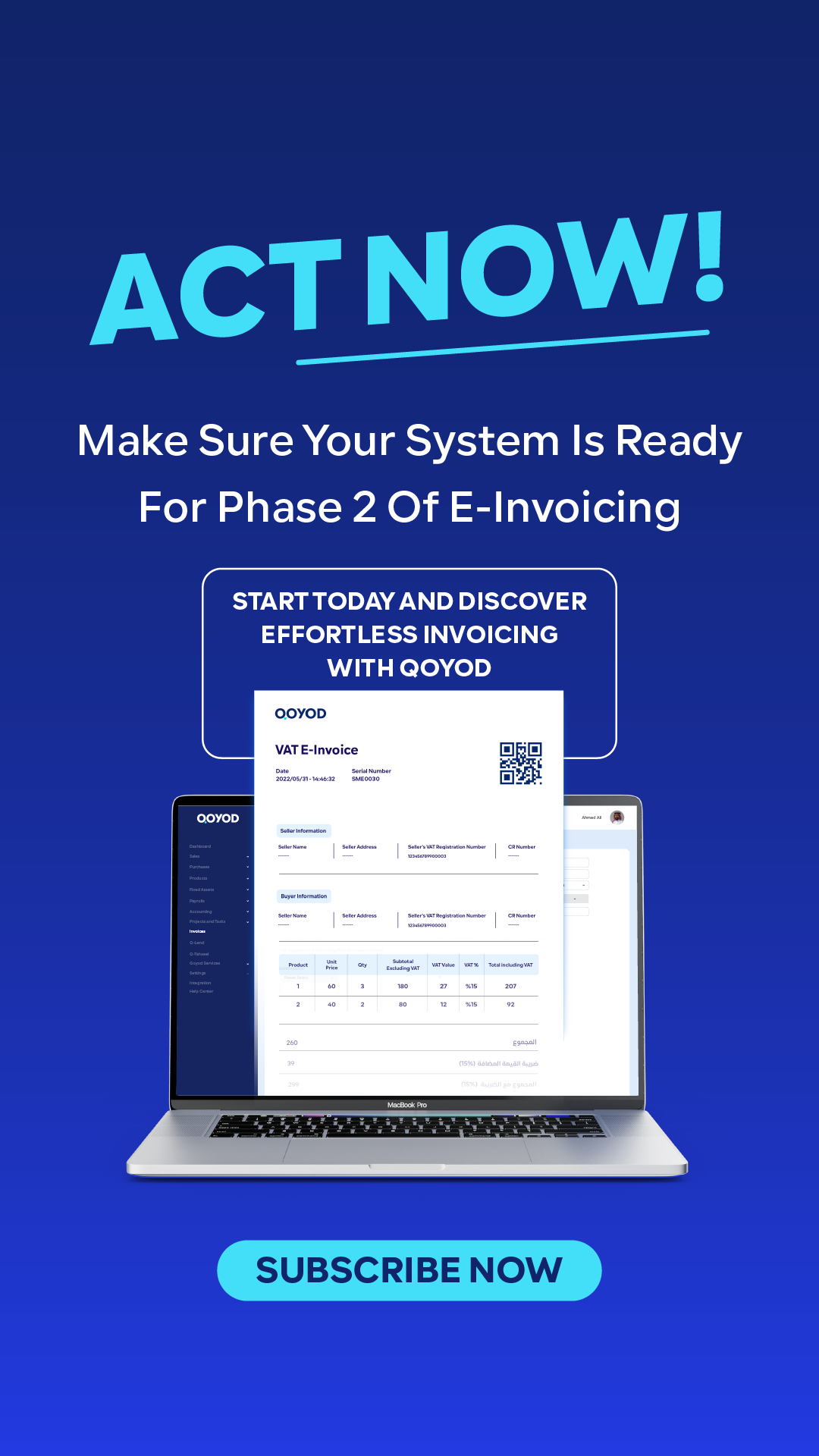
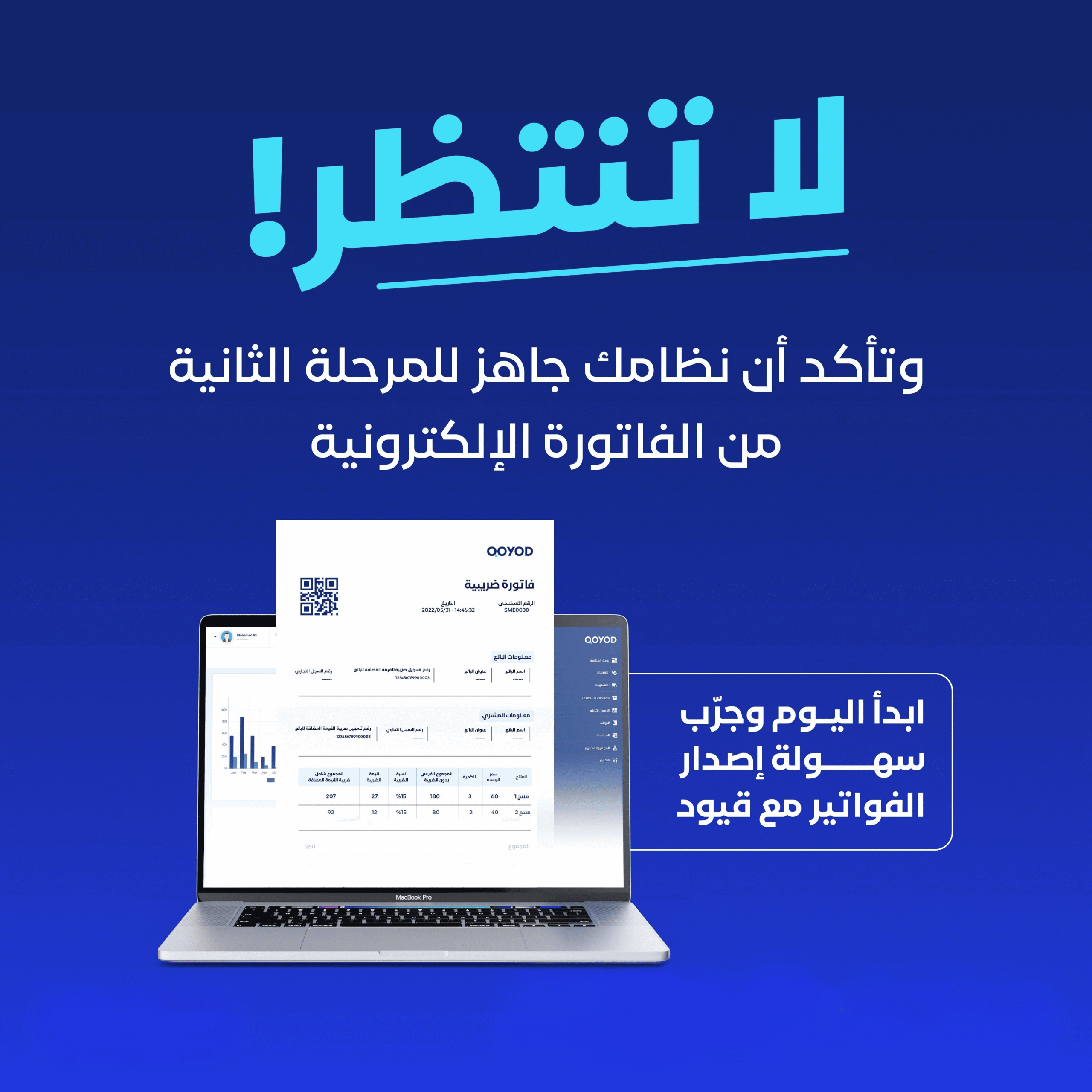
Qoyod is integrated with the National Invoicing System (JoFotara), invoices are sent from inside the program, and the QR code comes back from the Department onto the invoice. That alone is not a sufficient reason to choose, because it is required of any linked program, and because the portal itself achieves compliance without a subscription fee, exactly as we started this article. The difference shows in the layer transmission does not cover: what happens to the invoice after it is accepted. In Qoyod the invoice is entered once, and at that moment it becomes an entry, a balance on the customer, and a movement in stock, and from it the trial balance and financial statements are built without an intermediate file at month end. The same difference shows at your accountant: instead of a file to consolidate and review, they open books already built from the invoices that passed through the system:
- A Jordanian sales tax engine. The 16% rate with the reduced rates, the exempt cases, and the zero rated cases, and the label inside the system is “General Sales Tax 16%”.
- A Jordanian invoice template in dinars. The tax number, Arabic and English wording, the QR code, and the mandatory fields.
- The document types the system requires. Income invoice, general sales tax invoice, special tax invoice, and a credit note for returns. With no debit note, because the system does not define one.
- The invoice becomes an entry immediately. A chart of accounts, journal entries, a trial balance, and financial statements drawn from the invoices themselves rather than from a file built later, through the sales and purchases modules.
- Customer and supplier balances. Balances, statements of account, receipt vouchers, and automatic payment reminders for overdue amounts.
- Inventory across multiple branches and warehouses. Item movement, transfers between locations, and cost reports.
- Real user permissions. Defining who creates the invoice, who approves it, and who sees the financial reports.
- Recurring invoicing and instant reports. Invoices issued automatically on a schedule, with instant financial reports instead of waiting for the month to close.
- Bank reconciliation and automatic matching of movements against entries, along with cost centres, fixed assets, and multiple currencies.
- Import from Excel. Sales and purchase invoices, entries, opening balances, customers, suppliers, and items, with a per line error report.
- Connect what you already have. The API, Zapier, WhatsApp, and email, plus a mobile app available to users in Jordan.
And Qoyod is not a new name in e-invoicing compliance: more than 25,000 businesses run on it under a comparable e-invoicing mandate in the Saudi market. That is operating experience under a mandate, now carried across to Jordanian requirements. For the full picture, the National Invoicing System in Qoyod page brings together the requirements and the linking steps, and Qoyod in Jordan covers the rest of what the system does for a Jordanian business.
Frequently asked questions
Is the free portal of the National Invoicing System legally sufficient?
Yes. Article 4(a) of the regulation on organising invoicing accepts the invoice issued by the National Invoicing System program and the invoice issued by a program linked to it on an equal footing. The invoice you issue from the portal is a fully proper invoice, and there is no obligation whatsoever to buy a program in order to comply.
When do I need an accounting system instead of keying into the portal?
When double entry starts to cost. The practical indicators are: entering the same invoice twice, selling mostly on credit so that you need customer balances and debt ageing, running inventory that changes with every sale, having more than one employee issue invoices with different permissions, and an accountant who asks for a monthly file you consolidate by hand.
Why does the “issue invoice” option not appear in my portal account?
Most likely because you are signed in as the main user. Invoices are issued from the sub user only. Create a sub user from the main user, then sign out and sign in with the sub account. And if you pressed the “device linking” option by mistake, the fix is the same path.
When is the buyer name mandatory on the invoice?
On a credit invoice the buyer name is always mandatory. On a cash invoice it becomes mandatory if the invoice value exceeds 10,000 dinars. The regulation adds that if the invoice exceeds 10,000 dinars the seller must evidence the buyer’s receipt of it. The buyer’s phone number is digits only, from 9 to 14 characters.
Can I amend or cancel an invoice after issuing it?
No. Once issued, the invoice is not amended. Correction is made with a return invoice, treated in law as a credit note, referencing the original invoice number, its unique identifier, and its total value, with a mandatory return reason. The return is on quantities only, may not exceed the quantity originally sold, and can be repeated partially until the quantities are exhausted.
Does linking need a digital certificate or an electronic signature?
No. The approved technical guide for linking does not ask the taxpayer for any digital signature or certificate. What is required is the client ID and the secret key generated from the device linking screen, together with the correct income source sequence. The signed document comes back from the Department itself within the response.
Can I return invoices issued from the portal after I link my program?
Yes. The platform allows returning invoices sent through it in all cases, whether linking took place or not. This is an official answer published in the questions and answers guide for the system.
What is the difference between a cash invoice and a credit invoice in the system?
The payment method is part of the invoice’s identity and appears inside the three digit invoice type code. The code 012 means a local cash invoice on general sales, and the code 022 means a local credit invoice for the same case. In practice: cash ends at issue, and credit opens a balance on the customer that needs collection follow up outside the portal’s scope.
Conclusion
The question we opened with has a clear answer now. The free portal makes your invoice legal, and an integrated accounting system makes it part of your books, with the same compliance and without double entry.
So the decision is not between complying and not complying. It is between paying the price of manual entry out of your time and out of the accuracy of your numbers, and paying it as a subscription to a system that holds the invoice, the entry, the balance, and the stock together. For a small business selling for cash the portal is often enough, and a wholesaler selling on credit reaches the dividing line early.
Work out your own figures, then read the e-invoicing requirements in Jordan to make sure what you issue today carries complete data. And if you want to see how the income tax side lands on your own numbers, the Jordan income tax calculator runs the brackets in seconds.