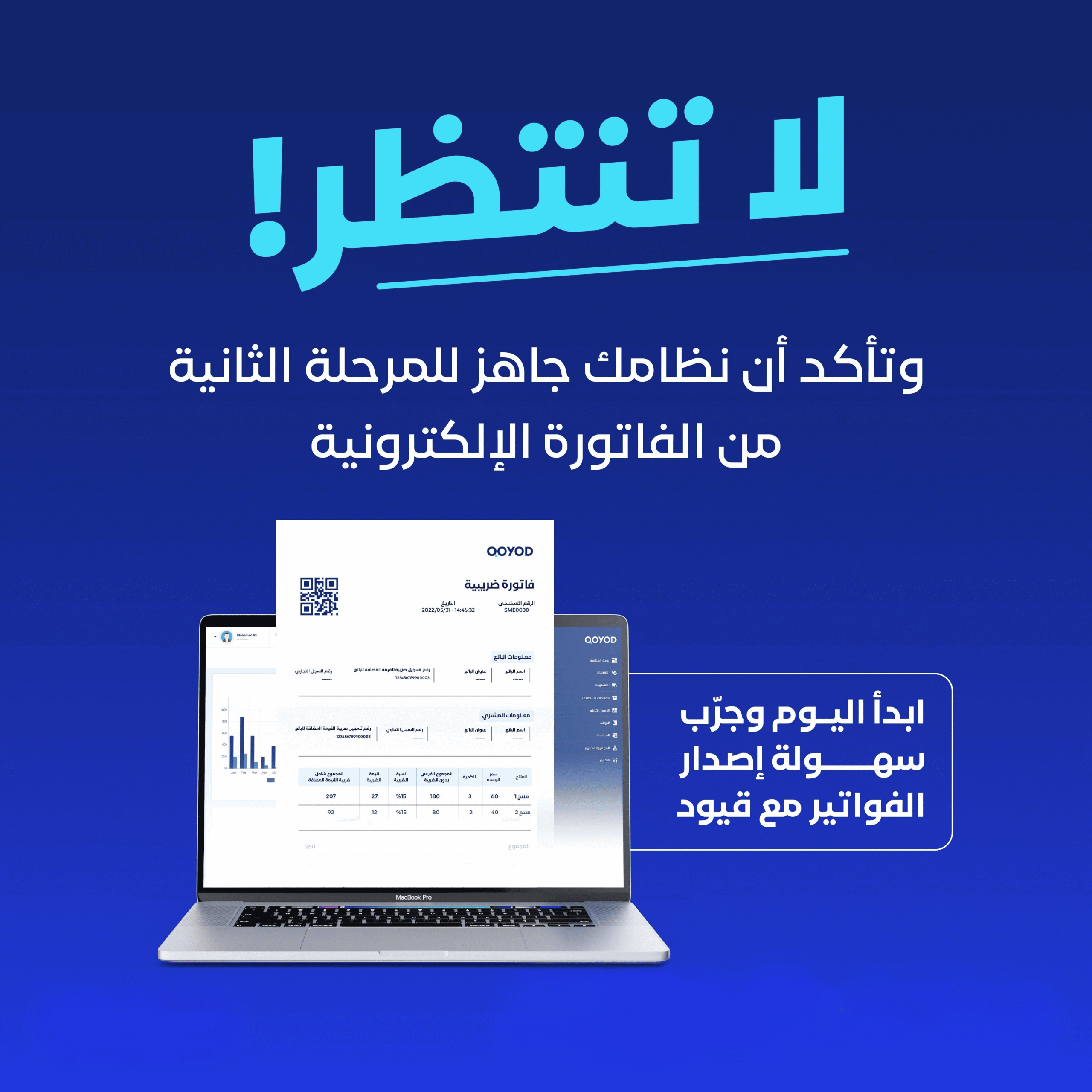
A wholesaler in Amman issued a JOD 4,000.000 invoice to a corporate customer and emailed it as a PDF from his old software. Weeks later the customer’s accountant refused to record it, because it carried no QR code issued by the Income and Sales Tax Department. The customer lost the right to deduct input tax, and the wholesaler lost the customer.
That scenario has become routine in the Jordanian market since the National Invoicing System (JoFotara) entered full mandatory force. The trouble is that many business owners still read “electronic invoice” as a PDF sent by email, while the legal definition is something else entirely.
What follows is what the e-invoicing requirements in Jordan actually are: the regulator, who is covered, the mandatory fields, the technical requirements, the penalties, and the practical steps to connect.
What counts as an e-invoice in Jordan?
An electronic invoice in Jordan is not an invoice typed on a computer, and it is not a scanned file. It is an invoice created in a structured data format, sent to the National Invoicing System through an API, validated by the system before it is handed to the buyer, and returned carrying a QR code that proves it was cleared.
That last point is the heart of the difference. Jordan runs a real-time clearance model, meaning an invoice does not legally exist until it has passed through the Department. There is no “issue now, report later” option, which is what separates this from the e-invoicing models some neighbouring markets use.
The working rule every business owner should memorise: no QR code, no cleared invoice. The buyer can verify the code independently through the Sanad application.
Who regulates it?
The competent authority is the Income and Sales Tax Department, part of the Ministry of Finance, working alongside the Ministry of Digital Economy and Entrepreneurship. The Department runs the platform and issues integration credentials to taxpayers through the system portal at portal.jofotara.gov.jo.
One common confusion is worth naming here. A great deal of the “e-invoicing” content circulating online was written for other markets in the region, with different regulators, different platforms and different tax rates. None of it applies to Jordan. The regulator is different, the system is different, the tax rate is different, and the technical requirements differ fundamentally, as the sections below make clear. Rely on the Jordanian official source alone when deciding what applies to you.
When did compliance become mandatory?
The legal basis is the Regulation for Organising and Controlling Invoicing No. 34 of 2019, issued under Article 23 of Income Tax Law No. 38 of 2018, amended in 2023, and followed by the amended Invoicing and Control Regulation No. 2 of 2025.
The rollout ran as follows:
- End of 2022: the platform launched on a voluntary basis.
- Early 2023: mandatory registration for specified taxpayer groups, with integration testing beginning.
- 2024: a registration window closed in May, followed by compliance notices from the Department in October.
- 1 April 2025: full mandate. Every invoice for the sale of goods or the supply of services, whether business to business, business to consumer, or to government entities, must be issued through the National Invoicing System or through a system connected to it.
- After that: smaller businesses and remaining sectors continue to be brought in gradually, with enforcement tightening throughout.
Put plainly: the mandate date passed more than a year ago. A business that has not connected yet is not inside a grace period, it is non-compliant.
E-invoicing in Jordan in four numbers
Who is covered by Jordan’s e-invoicing requirements?
This is where the most expensive mistake happens. Many owners assume the obligation applies only to businesses registered for general sales tax. The reality is far broader.
The system covers anyone who sells a good or supplies a service, professionals included: doctors, lawyers, engineers, consultants and accounting practices. The difference between a registered and an unregistered business is not exemption from the system, it is the type of invoice each one issues:
- A business registered for general sales tax issues a general sales tax invoice carrying the tax.
- An unregistered business issues an income invoice with no tax, but is still obliged to issue it through the system.
So the right question is not “am I registered for tax?” but “do I sell a good or supply a service for a fee?” If the answer is yes, you are inside the system. Our guide to who must use e-invoicing in Jordan breaks the obligated and exempt categories down in detail.
Take a concrete pair of examples. A dental clinic in Irbid has not reached the general sales tax registration threshold; a car parts shop in Zarqa passed it years ago. Both are obliged to issue their invoices through the National Invoicing System. The difference is that the clinic issues an income invoice with no tax, while the parts shop issues a general sales tax invoice carrying the applicable rate. Exemption from the tax is one thing; exemption from e-invoicing is another, and it does not exist.
Document types in the National Invoicing System
The system handles a defined set of documents, each with its own context:
| Document | When it is used |
|---|---|
| Income invoice | For businesses not registered for general sales tax. Issued with no tax. |
| General sales tax invoice | For registered businesses, carrying the rate applicable to the good or service. |
| Special tax invoice | For goods subject to special tax alongside the general tax. |
| Return invoice | For returns and discounts. It references the original invoice and works as the credit note of the Jordanian system. |
A point worth stating clearly, because it is widely got wrong: the Jordanian system’s technical manual defines a new invoice and a return invoice, and corrections run through the return invoice. It does not operate a separate debit note document the way some other markets do, and a return is limited to quantities and may not exceed the quantity on the original invoice. If you are used to the wider credit note and debit note vocabulary, this is the part that needs unlearning, and the credit note concept is the closest equivalent.
Each invoice also comes in two forms depending on settlement: a cash invoice settled immediately, and a credit invoice recorded against the customer account and collected later. The system distinguishes them through the payment method code in the invoice data.
That distinction is not cosmetic. Marking an invoice “cash” when it is really a credit sale means the receivables balance in your books will read lower than reality and your ageing report loses its meaning. The reverse is equally damaging: recording a cash sale as credit inflates receivables and hides how much liquidity you actually have. The working rule is to pick the code from the real settlement method at the moment of issue, not from the software default. That is also why accounts receivable management and your days sales outstanding depend on getting this field right.
And one strict rule to absorb from the start: an invoice cannot be edited after it is issued. Any correction happens solely through a return invoice linked to the original. Accuracy before sending is far cheaper than correction after, and any business relying on “we’ll just edit the invoice if something’s wrong” will have to change how it works.
Mandatory invoice fields in Jordan
An invoice that passes validation must carry a set of fields the system will not accept without. The main ones:
What must a Jordanian e-invoice carry?
The fields the National Invoicing System validates before it clears an invoice and returns its QR code.
- The seller tax number and the activity number
- The buyer name and tax number on business invoices
- An invoice number and date within a non-repeating sequence
- The document type and the payment method: cash or credit
- A description, quantity, price and tax rate for every line
- Totals in Jordanian dinars to three decimal places
- The tax amount stated separately from the line values
- The QR code issued by the Department
Note the last item in particular: the QR code is not generated inside your software. The Department issues it and returns it after validation succeeds. Any program that “prints a code” locally without passing through the system is not producing a cleared invoice.
It is also worth repeating that the tax number is a mandatory field with no exceptions. A Jordanian sales tax registration number is seven digits and is issued by the Department through its online portal.
Technical requirements for integration
This is the section most people get wrong when they copy their information from another market. The integration requirements in Jordan are as follows:
| Element | The requirement in Jordan |
|---|---|
| Invoice format | An XML file to the UBL 2.1 standard, encoded and sent inside an API request to the system endpoint. |
| Credentials | A client ID, a secret key and an activity number, generated from the taxpayer account on the system portal. |
| Digital signature | No digital signature or certificate is required from the taxpayer. Authentication is by client ID and secret key. |
| QR code | Issued by the Department after validation. Never generated locally. |
| Operating model | Real-time clearance: validation happens before the invoice reaches the buyer. |
That table alone saves businesses weeks of wasted work. Content copied from other markets talks about digital signature certificates and complex cryptographic chains, requirements that have no place in the Jordanian system. Integration here is technically simpler, but far stricter on timing, because every invoice must pass through the Department before it reaches the customer.
One further practical note from live implementations: the system rejects negative quantities and prices in invoice lines. Anyone used to recording a return as a negative-quantity line inside the invoice itself will need to change approach and move to a separate return invoice.
Steps to connect to the National Invoicing System
From registration to your first cleared invoice
For the full walkthrough of the portal side, including the account-creation sequence and the two paths the Department offers, see our guide to how Jordan’s National Invoicing System works and how to connect your business.
General sales tax and its effect on the invoice
The tax applied in Jordan is general sales tax, and its standard rate is 16%. That is the correct legal name in Jordan, and any other name or rate carried over from a neighbouring market has no place on a Jordanian invoice.
Alongside the standard rate sits a wider structure:
- Reduced rates on specified lists: 1%, 2%, 4%, 5% and 10%.
- Special tax imposed on top of the general tax on particular goods such as tobacco, alcoholic drinks, cars, fuel, oils and cement. This is the Jordanian counterpart of what is generally called excise tax.
- A higher rate of around 24% on certain telecommunications services.
- Zero-rated goods and services such as exports and supplies to free zones and development zones.
- Exempt goods and services with no input deduction right, such as bread, education, health services, land and residential property.
- The Aqaba Special Economic Zone, which carries its own rates on specified lists.
A simple worked example: a services business in Amman issues an invoice of JOD 1,000.000 before tax. General tax = 1,000 × 16% = JOD 160.000, and the invoice total is JOD 1,160.000. Note that amounts are written to three decimal places, because the Jordanian dinar divides into 1000 fils. Software that rounds to two places will produce cumulative differences in your tax return and in your bookkeeping. Our dedicated guide to general sales tax in Jordan covers the rates and calculation in full.
When must you register for general sales tax?
Thresholds are calculated on annual taxable turnover:
| Annual threshold | Who it applies to |
|---|---|
| JOD 30,000 | Service providers |
| JOD 75,000 | Sellers of goods not subject to special tax |
| JOD 10,000 | Manufacturers of goods subject to special tax |
| No threshold | Importers, who must register within 30 days of their first import |
If a business carries on more than one activity, the lowest applicable threshold applies. Voluntary registration is available to anyone below the threshold who wants it, and it is worth considering if most of your customers are companies that want to deduct input tax.
Penalties for non-compliance
The first consequence is not the fine, it is the invalidity of the document. An invoice not issued through the National Invoicing System is not accepted as a tax document, which means:
- The buyer loses the right to deduct input tax on that invoice.
- The expense is not recognised when income tax is calculated.
- A fine of JOD 200 to 500 that doubles on repetition under Article 64 of the Income Tax Law.
- Failure to issue a proper invoice may be treated as tax evasion under Article 66, carrying a fine equal to the tax difference, with imprisonment on repeat offences.
- Exclusion from government tenders and procurement.
The first item is the commercially dangerous one. A non-compliant business does not only pay the price in front of the Department, it pays it in front of its corporate customers, because they will simply stop buying from it. That is exactly what happened to the wholesaler at the top of this article.
Common mistakes when applying the requirements
From what recurs in the market:
- Carrying assumptions over from another market. Applying a non-Jordanian tax rate, hunting for a digital signature certificate, or waiting for implementation “phases” that do not exist here. The Jordanian system has its own logic.
- Believing an unregistered business is exempt. An unregistered business must issue an income invoice through the system.
- Generating the QR code locally. The cleared code comes only from the Department.
- Trying to edit an issued invoice. Correction happens through a return invoice, not by editing the original.
- Recording returns as negative quantities inside the invoice. The system rejects them.
- Rounding to two decimal places. The dinar needs three.
- Keeping invoicing separate from accounting. Issuing invoices manually on the government portal and then re-entering them into accounting software doubles the work and opens the door to reconciliation errors.
The free portal or integration from your accounting system?
The government portal is available free of charge and satisfies the legal requirement. But it is manual entry, disconnected from your books. The real question is not which one is legal, because both are, but what each option costs you in time and errors.
The comparison below sets out the operational difference; the signals that tell you which side you fall on are worked through in when manual entry in the portal stops paying off.
Manual entry on the portal versus integration from your software
| Criterion | Manual entry on the portal | Integration from a full accounting system |
|---|---|---|
| Issuing an invoice | Double entry Typed on the portal, then typed again into your books. |
Single entry Issued from the software, sent automatically, and posted to the accounts. |
| Chance of error | High Every re-entry is a chance to mistype a tax number or an amount. |
Limited Data is pulled from the customer record and the item list. |
| State of your books | Separate Invoicing lives in one place and accounting in another. |
Unified Invoice, journal entry, receivables and inventory in one system. |
| Audit readiness | Manual assembly Reconciling invoices against the books takes time every period. |
Ready Tax and sales reports are built from the same data. |
The short version: if your daily invoice volume is small, the portal is enough. Once you pass dozens of invoices a day and deal with inventory and customer receivables, double entry turns into a genuine daily burden, and then into discrepancies when the return is prepared. The same tipping point applies to spreadsheets, which is the subject of our piece on when to stop managing your invoices in Excel.
How Qoyod helps you meet Jordan’s e-invoicing requirements
Qoyod is integrated with the National Invoicing System (JoFotara), which means the invoice is issued inside the software, sent for validation, returned with its QR code, and posted to the accounts in the same movement. No double entry, and no carrying numbers between two systems.
What you get in practice:
- The Jordanian document types: sales and purchase invoices, and return invoices linked to the original, with cash distinguished from credit.
- A multi-rate tax engine that applies the standard rate, the reduced rates, and zero-rated and exempt treatment at item level, not only at invoice level.
- The Jordanian dinar to three decimal places across invoices and reports, with multi-currency support for anyone selling outside Jordan.
- Customer and receivables management with automatic payment reminders for overdue invoices, and recurring invoices for contracts and monthly subscriptions.
- Invoicing linked to inventory: every invoice updates quantities and cost of goods sold, with support for multiple warehouses and branches and transfers between them.
- A chart of accounts, journal entries and cost centres for anyone who wants to read the profitability of each branch or project separately, and the journal entry generator helps if you are still learning the entries.
- Bank reconciliation matching bank movements against entries so you can close the period with confidence.
- Custom reports for sales, tax and receivables built from the invoice data itself, which turns return season into a review exercise rather than a collection exercise.
- User permissions defining who issues an invoice and who approves a return invoice, an important control when an invoice cannot be edited after issue.
- A mobile app for issuing invoices and following up collection away from the office, alongside an API, a Zapier connection, and sending invoices over WhatsApp and email.
And if you work with an external accounting practice, the system is fully cloud-based, so you can grant your accountant review access without exchanging files.
Start your free trial and meet the e-invoicing requirements
Frequently asked questions about e-invoicing requirements in Jordan
Does a PDF count as an electronic invoice in Jordan?
No. An electronic invoice is one sent to the National Invoicing System in a structured data format, validated by the system, and returned with a QR code. A PDF emailed without that path is not an accepted tax document.
I am not registered for general sales tax. Am I exempt?
No. You are obliged to issue your invoices through the system, but as a different type: an income invoice, issued with no tax.
Do I need a digital signature certificate as in other markets?
No. Authentication in the Jordanian system uses the client ID, secret key and activity number generated from your account on the system portal. Taxpayers are not asked to sign invoices digitally.
Can I edit an invoice after issuing it?
No. Corrections are made through a return invoice that references the original. The Jordanian system does not provide a separate debit note document, and a return is limited to quantities and cannot exceed the quantity on the original invoice.
Where does the QR code on the invoice come from?
The Income and Sales Tax Department issues it after the invoice passes validation, and it returns to your software to be printed on the copy handed to the customer. It is not generated inside the software.
What is the difference between a cash invoice and a credit invoice?
The first is settled as soon as it is issued; the second is recorded against the customer account and collected later. The system distinguishes them through the payment method code, and the difference feeds straight into the receivables balances in your books.
What is the penalty for issuing an invoice outside the system?
The invoice is not accepted as a tax document, so the buyer loses the input tax deduction and the expense is not recognised for income tax purposes. The fine ranges from JOD 200 to 500 and doubles on repetition under Article 64, while failure to issue a proper invoice may be treated as tax evasion under Article 66 with a fine equal to the tax difference. Exclusion from government tenders is also possible.
When must I register for general sales tax?
When annual turnover reaches JOD 30,000 for services or JOD 75,000 for goods, and JOD 10,000 for manufacturers of goods subject to special tax. Importers register with no threshold within 30 days of their first import. Anyone carrying on more than one activity falls under the lowest threshold.
The next step
Jordan’s e-invoicing requirements are not technically complicated, but they do not tolerate delay. The mandate has been in force since April 2025, and the larger price of non-compliance is paid by the business owner in the relationship with corporate customers well before it is paid as a fine.
Start with three moves: create your account on the National Invoicing System portal, generate your integration credentials, then connect them to accounting software that issues the invoice and posts it to the accounts in a single step. After that, compliance becomes part of your daily operating cycle rather than an extra task on anyone’s desk.