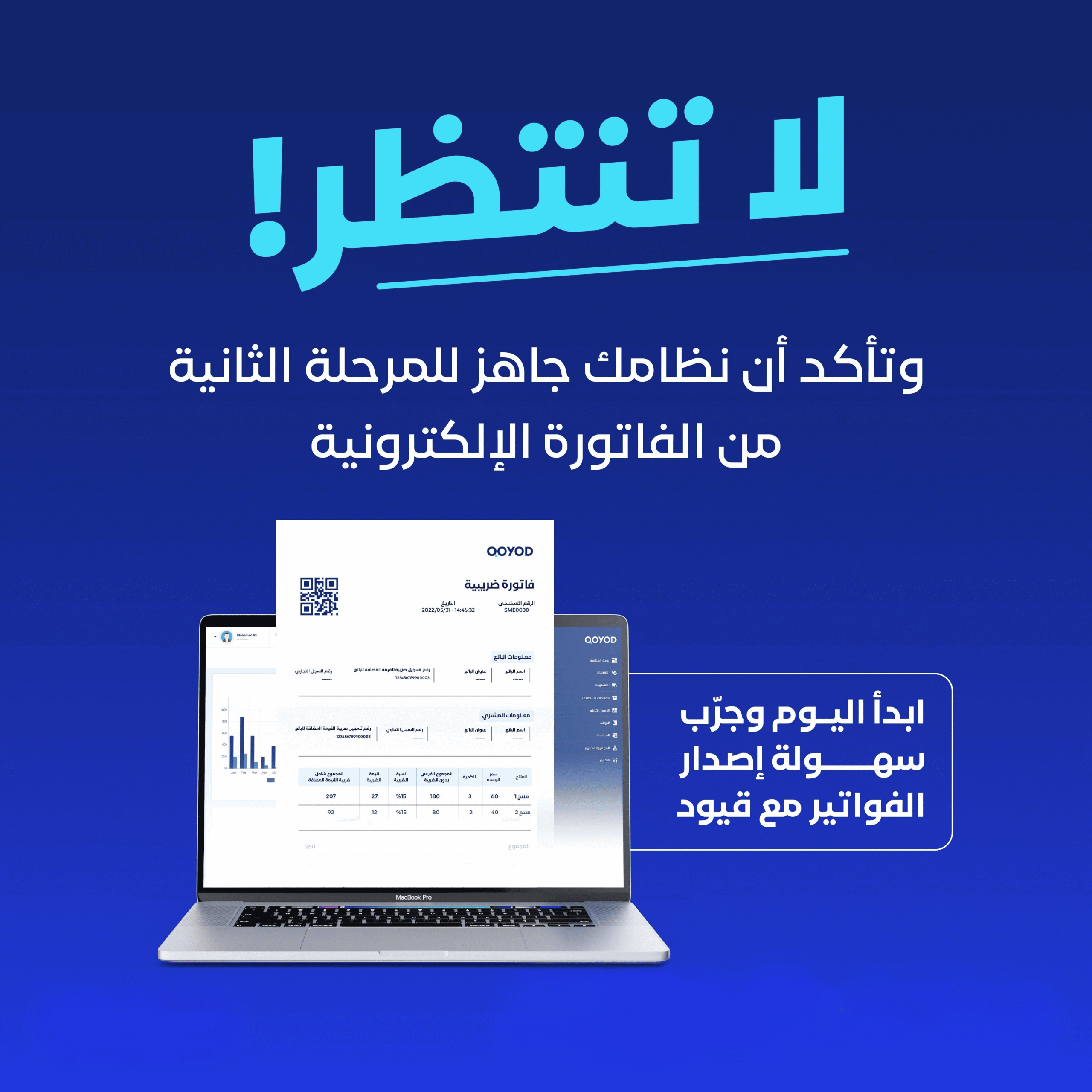
A wholesale trader in central Amman issues a sales invoice for JOD 2,000 and adds 15% on top, assuming that is the going tax rate in Jordan. The number is wrong at the root. Jordan does not levy a 15% value-added tax. It levies a General Sales Tax at 16%, a tax with a different name and a different legal basis, even though it operates in a broadly similar way.
The mix-up is common because a neighboring tax system uses the term “value-added tax,” and the label and the rate travel with it onto a Jordanian invoice that has nothing to do with that system. The result is an invoice with the wrong tax figure, one that gets rejected or corrected later, sometimes after the seller has already been questioned over a shortfall in what was remitted.
This guide walks through General Sales Tax in Jordan from its legal basis: which authority collects it, its full set of rates (not just the headline 16%), who has to register and when, and how this tax connects directly to the invoice your national e-invoicing system issues.
General Sales Tax in Jordan in four numbers
What is General Sales Tax, and who administers it?
General Sales Tax is Jordan’s main indirect consumption tax, established under General Sales Tax Law No. 6 of 1994 and its amendments, most notably the amendment introduced by Law No. 29 of 2009. The state levies it on most goods and services traded inside the Kingdom, and it is collected by the Income and Sales Tax Department (ISTD), the same authority that administers income tax and runs the national e-invoicing system.
Notice the precise gap between the description and the name. International sources, PwC among them, describe this tax as “operating in a manner similar to a value-added tax,” because the mechanism collects tax at every stage of a sale while crediting whatever was already paid at the previous stage. But the Jordanian legal text names it explicitly a general sales tax, not a value-added tax. That is not a cosmetic difference — every figure on your invoice, and every field in the national e-invoicing system, is built on this name and not another one.
On first mention of this authority in any document or formal exchange, write the full name: the Income and Sales Tax Department. After that, “the Department” is enough.
The General Sales Tax rate table: 16% is not the only number
The rate you hear most often in conversation is 16%, the rate applied to most goods and services traded in the Jordanian market. But the actual table is wider than a single figure, and any business selling a mix of goods or services needs to know exactly where each item falls.
| Category | Rate | Examples |
|---|---|---|
| Standard rate | 16% | Most goods and services — the default rate whenever no special provision applies |
| Reduced rates on annexed lists | 1% / 2% / 4% / 5% / 10% | 1% on hygiene gloves; 2% on food salt and pencils; 4% on oils and ghee, supplies for people with disabilities, veterinary medicines, and some agricultural products; 5% on corn; 10% on live animals and cheese |
| Special telecom rate | ~24% | Specific telecommunication services — one of the highest rates in the table |
| Special Sales Tax, on top of the standard rate | Added on top of 16% | Tobacco, alcohol, cars, fuel and its derivatives, cement, beer, wine, and spirits |
| Zero rate | 0% | Exports of goods and services, supplies to free zones, development areas, and the Aqaba Special Economic Zone, plus enumerated goods |
| Exempt, no input credit | No tax charged | Bread, education, healthcare and health insurance, land and residential real estate, electricity, water under 5 liters, tea, sugar, gold, air transport, and religious and social organizations |
| Aqaba’s own rate | 7% | Specific goods and services inside the Aqaba Special Economic Zone only |
This variety is exactly why older write-ups shorthand the whole subject as “special rates from 4% to 10%.” The real table is more precise than that: five separate reduced rates on distinct annexed lists, plus a separate Special Sales Tax charged on specific goods on top of 16% rather than instead of it, plus an independent telecom rate approaching 24%. Any tax engine or price list that skips this detail gets the invoice wrong, not just the explanation.
One point that trips up a lot of people: the Special Sales Tax is not a substitute for the standard rate — it stacks on top of it. A car or a pack of cigarettes carries the Special Sales Tax first, then the 16% General Sales Tax on top of that, which means the real burden on these goods runs well above 16% alone.
Zero-rated versus exempt: input credit is what actually separates them
Many people treat a “zero-rated” item and an “exempt” item as the same thing, because the visible effect on the selling price looks identical: no tax line added to the invoice either way. The real difference only shows up when it comes to crediting input tax, not at the selling price.
An exporter selling at the zero rate — goods exports, or supplies to free zones, for example — adds no tax to the sales invoice, but can still credit the input tax paid on purchases and production inputs. A seller of an exempt good, bread or education services, also adds no tax to the invoice, but cannot credit any input tax paid on purchases tied to that activity.
That is a substantive accounting difference, not a footnote. An exporting business recovers its input tax in full, while a business selling an exempt good absorbs its input tax as part of its cost, with no recovery at all.
A worked example: an invoice at the standard rate
A trading business in Amman sells a batch of goods worth JOD 2,000.000 before tax, an item subject to the standard rate:
| Line item | Amount (JOD) |
|---|---|
| Goods value before tax | 2,000.000 |
| General Sales Tax, 16% of value | 320.000 |
| Total invoice due from the customer | 2,320.000 |
If the same item instead fell under the reduced 4% list rather than 16%, the tax would be only JOD 80.000, and the total JOD 2,080.000. The gap between the two rates on the exact same invoice comes to precisely JOD 240 — which is exactly why classifying the item correctly matters before you issue the invoice, not after you find the mistake in the monthly return. In both cases the arithmetic is the same operation: multiply the tax base — the value of the sale — by whichever rate the item is actually assigned.
When the price already includes the tax: pulling 16% back out
Not every figure a business works from starts clean. A retail shelf price, a menu, a quoted delivery fee — in Jordan these are usually advertised tax-inclusive, meaning the 16% is already baked into the number the customer sees. Reading that number correctly is a different skill from charging the tax in the first place, and it is where a second, quieter mistake creeps in.
Say the same trading business in Amman later sells a retail item priced at JOD 232, tax included. To find out how much of that JOD 232 is actually General Sales Tax:
- Gross, tax-inclusive price: JOD 232
- Net value before tax: 232 ÷ 1.16 = JOD 200
- General Sales Tax portion: JOD 32
The mistake that keeps showing up here is multiplying the gross price by 16% directly instead of dividing by 1.16 first. Do that on this same JOD 232, and the result is JOD 37.12 — a number that does not correspond to anything real on the invoice, yet it is the figure a rushed bookkeeper types into the tax field. The gap looks small on one invoice; run it across a month of retail transactions and the books stop reconciling. A reduced-rate item follows the identical logic with its own divisor — 1.04 to back out a 4% rate, 1.10 for 10% — so the rate itself, not just the arithmetic, has to be right before you divide.
Filing General Sales Tax: what a business actually pays ISTD
Getting the rate right on every invoice is only the first half of the job. The other half — the part the word “filing” actually refers to — is working out what the business owes the Income and Sales Tax Department at the end of the period, and that figure is almost never the tax collected on sales alone.
A registered business nets two flows against each other: the tax it charged customers on its own sales (output tax) against the tax it already paid its own suppliers on purchases and expenses (input tax). What gets remitted is the difference, not the full amount collected at the till. Take a trading business closing out one filing period:
| Item | Value (JOD) | Tax at 16% |
|---|---|---|
| Standard-rated sales for the period | 50,000 | 8,000 (output tax) |
| Taxable purchases and expenses for the period | 32,000 | 5,120 (input tax) |
| Net payable to ISTD | — | 2,880 |
Treating the JOD 8,000 collected from customers as if it were profit is the error that catches out a business used to thinking in revenue terms only. It was never the business’s money to begin with — it was ISTD’s money, held temporarily, and the JOD 5,120 already paid to suppliers is what brings the net bill down to JOD 2,880. This is also why the input-credit rule under the zero-rated versus exempt distinction, covered earlier, is not academic: a purchase tied to an exempt activity carries no input tax to net off, so the full output tax stays payable with nothing to offset it.
Why this matters more to your accountant than to you
The overwhelming majority of Jordanian businesses are small. Micro, small, and medium enterprises make up more than 98.5% of registered enterprises in the Kingdom, and most of those are micro businesses with fewer than five employees. The largest concentration of these businesses sits in Amman Governorate — by a wide margin the biggest economic cluster in the country.
Because most of these businesses have no in-house tax department, the burden of classifying each item correctly and pinning down its rate falls on the external accounting firm the business works with. That is a big part of why the person choosing the accounting system is usually the accountant, not the owner — the accountant is the one who answers to the Income and Sales Tax Department when a classification is wrong. Bookkeeping discipline is what turns “we think this is right” into “we can prove this is right” the day a review happens.
Who has to register for General Sales Tax?
Registration in Jordan is built on annual sales thresholds that vary by activity type, not on a voluntary decision the owner alone can make — except in the case of voluntary registration, which the law permits.
| Threshold | Who it applies to |
|---|---|
| JOD 30,000 per year | Service providers — the threshold that matters most to anyone subscribing to software as a service, such as a cloud accounting subscription |
| JOD 75,000 per year | Sellers of goods, excluding goods subject to the Special Sales Tax |
| JOD 10,000 per year | Manufacturers of goods subject to the Special Sales Tax |
| No threshold | Importers, who must register within 30 days of the first import, unless the import is strictly for personal use |
A business running more than one activity, where the registration thresholds differ between them, is measured against the lower threshold among the activities it actually carries out — not the higher one. This detail is missing from a lot of short explainers, and it leads to late registration for anyone who assumes their threshold is JOD 75,000 while part of their activity is service-based and therefore falls under the JOD 30,000 threshold.
Voluntary registration is available to anyone below the threshold who wants to charge the tax and credit input tax on purchases — a useful option for a business that deals mainly with registered businesses that prefer working with a supplier who issues a tax-compliant invoice.
Four steps to pin down your General Sales Tax obligation
The tax number and how many digits it carries
The Income and Sales Tax Department issues the Tax Number through its e-portal, and it is the same identifier used in correspondence and tax returns. But the digit count is not fixed: a General Sales Tax registration number has 7 digits, while an individual’s personal tax number has 10 digits. The mix-up between the two shows up when invoice data is entered into an accounting system or the national e-invoicing system, and the field is either rejected or accepted with the wrong value. The tax number is a mandatory field on every Jordanian tax invoice, and on every submission to the national e-invoicing system.
Selling into Jordan without a local entity: how is the tax collected?
Some service providers — cloud software sold across borders with no branch or office inside Jordan — ask how General Sales Tax is even collected in that situation. The law draws a clear line between two types of customers.
- A business customer, meaning a sale from one business to another: the reverse charge principle applies. The Jordanian business receiving the service calculates the tax on itself and remits it to the Department, so no registration obligation falls on the foreign provider.
- An individual or end consumer: the foreign provider can register through the Department’s dedicated non-resident e-commerce platform, launched in early 2024, and account for tax on those sales directly at 16%. The JOD 30,000 annual services threshold applies to non-residents too.
A tax representative is not required in either case, though the law does allow appointing one for anyone who wants that option, provided the representative is a Jordanian national with an accounting qualification, registered with the Department. Payment goes to a JOD bank account at the Central Bank of Jordan from a foreign bank account, with no local branch needed.
The invoice is the link between General Sales Tax and e-invoicing
General Sales Tax is not collected separately from the invoice. Every taxable sale has to be documented by an invoice issued through the National Invoicing System, or through software connected to it directly — otherwise the invoice loses its standing as an approved tax document, regardless of how correct its figures are.
The national e-invoicing manual defines exactly four document types: an income invoice, a General Sales Tax invoice, a Special Sales Tax invoice, and a return invoice that functions as a credit note. There is no fifth type called a debit note — any quantity correction goes through a return invoice, one that cannot exceed the original invoice’s quantity.
That is why it is hard to separate the General Sales Tax file from the e-invoicing file in any review. Anyone who has not yet worked out their national e-invoicing obligation can start with who must use e-invoicing in Jordan, and a business receiving invoices from multiple suppliers needs to verify each supplier’s compliance before accepting a purchase invoice — which is exactly what the guide to verifying an e-invoice through the Sanad app walks through.
For a business that already picked its accounting system and only needs to switch on the connection to the Department, the practical steps are laid out in the guide to connecting with JoFotara. And for a business still comparing providers before deciding, when the free government portal is enough versus when a full accounting system is required lays out the technical criteria that separate them. You can also run a quick JoFotara readiness check to see where your own setup stands today.
Five recurring mistakes with General Sales Tax
- Importing a 15% rate or the term “value-added tax” from a neighboring system. Jordan applies a General Sales Tax with a standard rate of 16%, not a 15% value-added tax. The difference is in the name and the rate together, not the rate alone.
- Assuming 16% covers everything. The reduced rates on annexed lists, the Special Sales Tax stacked on top of the standard rate, and the exempt and zero-rated goods are all real exceptions on specific goods and services, not marginal footnotes.
- Ignoring the lower-threshold rule when running more than one activity. A business with both a service activity and a goods activity is measured against the lower JOD 30,000 threshold, not the higher JOD 75,000 one.
- Confusing the 7-digit tax number with the 10-digit personal tax number. Entering the wrong number in an invoice field exposes it to rejection when submitted to the national e-invoicing system.
- Delaying importer registration. There is no sales threshold that exempts an importer from registering, and the legal window is only 30 days from the first import.
How Qoyod helps you keep General Sales Tax right in your books
Qoyod does not file your General Sales Tax return on your behalf — that stays the job of your accountant or accounting firm, answering to the Income and Sales Tax Department. What Qoyod does is make sure every invoice and every entry is built on the correct rate from day one:
- A tax engine renamed for Jordan. The field that carries “value-added tax” in Qoyod’s original build shows up in the Jordan build as “General Sales Tax 16%,” so no term from a different tax system reaches your invoice.
- A ready Jordanian tax invoice template. It carries the tax number in its correct format, the QR code the national e-invoicing system returns after approval, and a bilingual Arabic/English layout.
- Direct submission to the national e-invoicing system. The sales invoice is issued, sent, and posted to the books in the same operation, with no double manual entry between the invoicing system and the accounting system. Integration details are on the JoFotara e-invoicing page.
- Full accounting in Jordanian dinars. Your chart of accounts, daily journal entries, the trial balance, the income statement, and the balance sheet all run in your activity’s own currency directly, with no conversion from another currency.
- A mobile app to issue invoices from anywhere. Useful for anyone selling across more than one location between Amman, Irbid, Zarqa, and Aqaba, without being tied to a single device.
Even Qoyod’s own subscription invoice in Jordan follows the same rule: Qoyod remits 16% General Sales Tax on its Jordanian customers’ subscriptions, and its own invoices are issued compliant with the national e-invoicing system, so it never asks a customer for something it does not apply to itself.
Capabilities vary by plan, so confirm the scope that fits the size of your operation with the sales team before relying on any specific capability.
Start your free trial and get your invoices on the right rate
A 14-day free trial, no credit card required. Or talk to the sales team.
Frequently asked questions
What is the General Sales Tax rate in Jordan?
The standard rate is 16%, applied to most goods and services. Alongside it sit reduced rates of 1%, 2%, 4%, 5%, and 10% on specific annexed goods lists, a special rate near 24% on certain telecom services, and an additional Special Sales Tax charged on top of 16% for goods such as tobacco, alcohol, cars, fuel, and cement.
Is General Sales Tax the same thing as value-added tax?
No. Jordan levies a General Sales Tax under its own law — General Sales Tax Law No. 6 of 1994 and its amendments — not a 15% value-added tax as applied in neighboring systems. The mechanism is similar in that tax is collected in stages across a sale, but the name, the rate, and the legal basis are all different.
When does a business have to register for General Sales Tax?
When its annual sales exceed JOD 30,000 for a service provider, JOD 75,000 for a seller of goods not subject to the Special Sales Tax, or JOD 10,000 for a manufacturer of goods subject to the Special Sales Tax. Importers register with no sales threshold at all, within 30 days of their first import. A business running more than one activity is measured against the lower of the applicable thresholds.
How is the tax collected on cloud software sold from outside Jordan?
If the buyer is a registered business, that business calculates the tax on itself under the reverse-charge mechanism, and no registration obligation falls on the foreign provider. If the buyer is an individual, the foreign provider can register through the Department’s dedicated non-resident e-commerce platform and account for the tax directly on sales to individuals.
How many digits does the General Sales Tax registration number carry?
Seven digits. That differs from an individual’s personal tax number, which has ten digits. Confusing the two when entering invoice data into the national e-invoicing system exposes the invoice to rejection, or to acceptance with an incorrect value.
Can a business be permanently exempt from General Sales Tax?
Exemption and the zero rate under this tax are tied to the type of good or service, or to the nature of the transaction — exports and supplies to free zones, for example — not to the size of the business or a permanent, unreviewable decision. Exempt goods such as bread, education, and healthcare are exempt because of what they are, not because of who sells them.
Does General Sales Tax apply to Qoyod’s own subscription in Jordan?
Yes. A Qoyod subscription in Jordan is subject to General Sales Tax at 16%, and its invoices are issued compliant with the national e-invoicing system, the same way any other Jordanian business is required to comply.
How do I pull the General Sales Tax out of a price that already includes it?
Divide the tax-inclusive price by 1.16, not by 100%. A shelf price of JOD 232 splits into JOD 200 net of tax and JOD 32 of tax. Multiplying the gross price by 16% directly is the common mistake, and on that same figure it produces JOD 37.12 — a number with no basis in the actual invoice. A reduced-rate item uses its own divisor: 1.04 for a 4% item, 1.10 for a 10% item.
What does a business actually pay ISTD at filing time?
Not the full tax collected from customers. A registered business nets the output tax charged on its own sales against the input tax it already paid its suppliers, and remits only the difference. A business with JOD 8,000 of output tax and JOD 5,120 of input tax for the period pays JOD 2,880, not JOD 8,000.
Does the rate change for a small company?
No. The rate, the exemption, and the zero rate under General Sales Tax are determined by the type of good or service or the nature of the transaction, not by the size of the business or its headcount. Business size only affects whether registration is required, through the annual sales thresholds.
How does General Sales Tax relate to income tax in Jordan?
The two taxes are entirely separate in what they tax and why. Income tax is charged on net profit after deductions and exemptions, while General Sales Tax is charged on the value of each taxable sale. But the same authority, the Income and Sales Tax Department, administers both, and they share the same underlying document: the invoice issued through the national e-invoicing system. The brackets and exemptions for income tax are covered in the guide to income tax in Jordan.
Conclusion
General Sales Tax in Jordan is not a single number to memorize. It is a full table that starts at a standard rate of 16% and extends to reduced rates, a Special Sales Tax on top, zero rates, exemptions, and registration thresholds that differ between a service provider, a seller of goods, a manufacturer, and an importer.
Any invoice built on that table has to pass through the national e-invoicing system, which means what separates a correct tax figure from a rejected invoice is not just understanding the law. It is the system that translates that understanding into a correct number on every invoice, from the very first sale.