A shipping or freight company in Saudi Arabia moves thousands of consignments every week between origin points, sorting hubs, and destinations, collecting cash on delivery on a sizable share of them and settling fuel, driver, vehicle, and last-mile courier costs across multiple lanes. Every shipment carries a billable rate that depends on weight, dimensions, lane, and service level, and every cash-on-delivery parcel adds a cash-reconciliation step between the courier, the operations cashier, and the customer remittance. ZATCA e-invoicing applies on every shipper invoice and every customer settlement, and the difference between a profitable shipper and one that bleeds is accounting discipline on per-shipment costing, COD reconciliation, and lane-level margin.
What makes shipping accounting different
A shipping company is not a regular retail or service business. Its revenue is millions of small transactions priced on a multi-dimensional rate card. Its costs are mostly variable: fuel, drivers, vehicle maintenance, last-mile courier subcontracts, and customs clearance fees. Its cash flow is complicated by cash-on-delivery, where the courier carries customer cash that must be reconciled and remitted to the shipper. Generic accounting tools cannot price a shipment, reconcile a COD bag, or settle a last-mile courier.
Shipping accounting revolves around five connected pieces: a rate engine that prices every consignment on weight, dimensions, lane, and service level, COD reconciliation between courier collections and shipper remittances, last-mile courier settlements with per-shipment costing, fuel and route economics tied to vehicle and driver dimensions, and ZATCA tax invoice issuance on every shipper invoice. Each connects directly to a journal entry.
Daily reality is tens of thousands of postings per shipper: consignment bookings, pickups, hub scans, linehaul movements, last-mile assignments, deliveries, COD collections, returns, customs clearances, fuel purchases, and customer invoices. Each missed COD reconciliation becomes cash that disappears silently into a courier’s float.
The most common accounting challenges in shipping companies
Every shipping and freight company in Saudi Arabia hits the same four recurring problems. They share one root cause: shipment pricing runs on a separate operations system, COD lives in courier hands, and last-mile costs are settled long after the shipment is delivered.
1. Per-shipment cost not calculated. A 5 kg parcel from Riyadh to Jeddah consumes fuel, linehaul capacity, two hub handlings, and a last-mile courier slot. Without per-shipment costing, the shipper bills 30 SAR and discovers at year-end that true cost varies from 18 SAR to 42 SAR depending on lane and density.
2. COD bags not reconciled daily. A courier delivers 80 COD parcels at 120 SAR average and returns to the depot with cash that must equal collections minus refused deliveries. Without daily COD reconciliation per courier, cash float drifts, shrinkage hides for weeks, and customer remittance delays trigger commercial disputes.
3. Last-mile courier settlements not automated. Subcontracted couriers earn per successful delivery, per failed attempt, and per return. Without integrated settlements, monthly payouts go out on spreadsheets, errors are discovered after payment, and courier disputes age into bad debt or lost partnerships.
4. Lane margin not visible. Some lanes are structurally unprofitable at the current rate card, but the shipper cannot tell because all lanes share one revenue line. Without per-lane and per-customer margin, pricing decisions are made on instinct and bad lanes drag the whole P&L.
What a shipping company actually needs from its accounting software
A generic accounting tool was built for selling goods on a single price list, not for multi-dimensional shipment pricing and COD float. The difference is concrete:
| Task | Generic accounting tool | What a shipping company needs |
|---|---|---|
| Pricing | Single price list | Rate card on weight, dim, lane, service |
| COD | Standard AR | Daily reconciliation per courier |
| Last-mile cost | Manual AP | Per-shipment settlement engine |
| Lane margin | Not tracked | Per-lane and per-customer profitability |
| Fuel and routes | Generic expense | Driver and vehicle dimensions |
| VAT | Flat 15% | Per-line, including customs treatment |
Beyond the table, a shipping company specifically needs three capabilities that generic platforms do not deliver:
- Rate engine with multi-dimensional pricing, where every consignment is priced automatically on weight, dimensions, lane, and service level, and customer contracts override the public rate card per customer.
- COD reconciliation per courier per day, comparing courier collections to delivered parcels minus refusals, generating a daily settlement journal that posts the courier float as a payable and remittance to customer accounts on the agreed cadence.
- Last-mile settlement engine with ZATCA e-invoicing, accruing per-delivery, per-attempt, and per-return courier payouts, settling on the monthly cycle with full reconciliation, and issuing ZATCA-certified tax invoices on every customer shipper billing cycle.
How to organize a shipping company’s books step by step
Moving a shipping company to integrated accounting takes around four to seven weeks depending on lane count and last-mile partner mix. This is the sequence Qoyod applies with every new shipping customer:
E-invoicing and ZATCA compliance for shipping companies
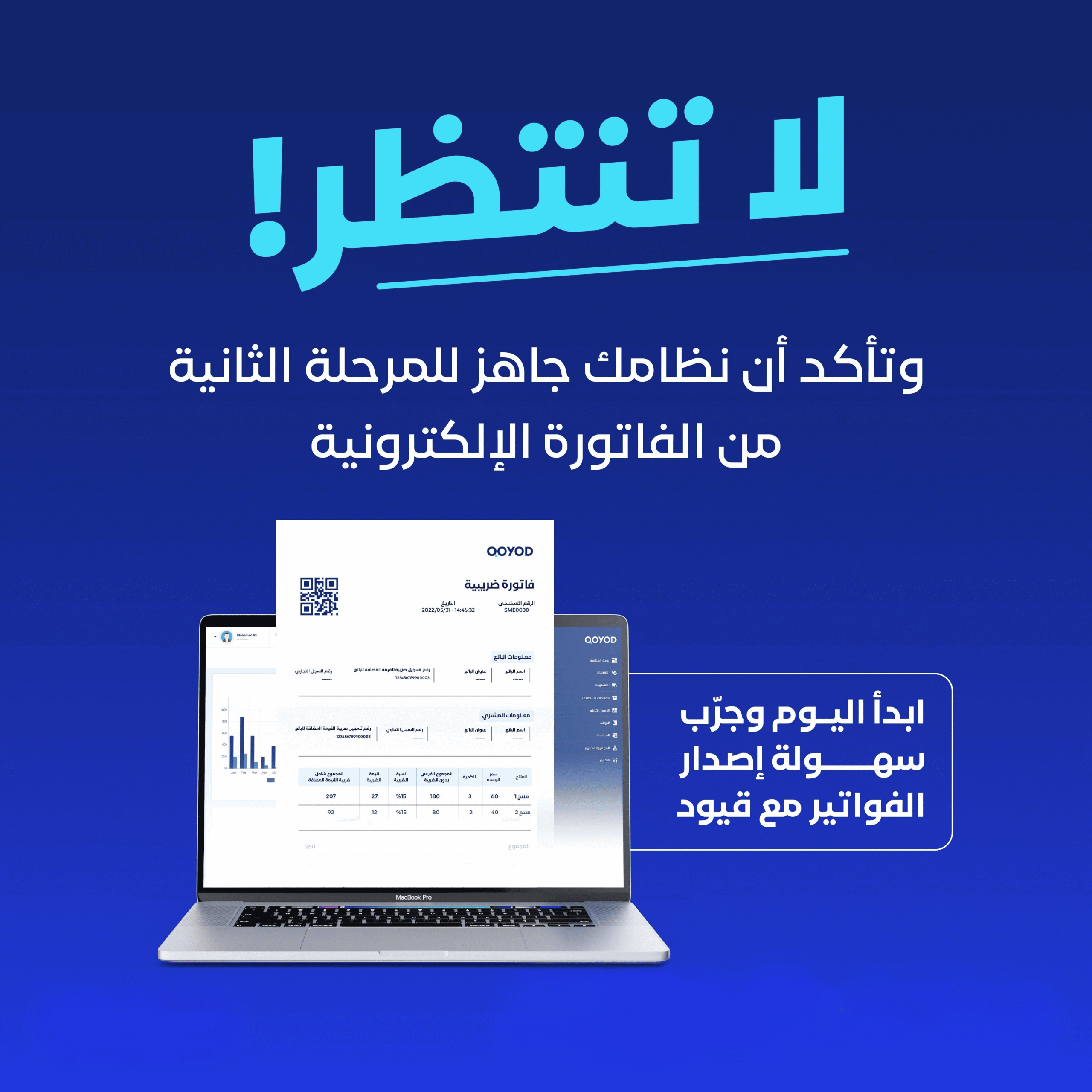
Phase two of ZATCA e-invoicing requires every shipper invoice and every customer settlement to be issued through a certified system connected to the Fatoora platform. Shipping companies in Saudi Arabia issue both B2B tax invoices to corporate shippers through the Clearance flow and simplified tax invoices on retail counter shipments. For a side-by-side view of vendor costs, read the guide on e-invoicing pricing in Saudi Arabia.
Every invoice must include the shipper name and tax number, a sequential invoice number, the date and time, the customer name and tax number (on B2B), an itemized list of consignments with the AWB number, weight, lane, and rate, VAT at 15% on standard-rated lines (with international legs and certain customs items flagged separately), totals before and after VAT, and a QR code. A certified system generates the QR code, signs the invoice in XML, and transmits it to the Fatoora platform automatically inside the Reporting or Clearance window.
How to evaluate a ZATCA-certified system for a shipping company
When evaluating any e-invoicing vendor for a shipping company, verify these six criteria:
- Official ZATCA phase-two certification with a verifiable approval number on the Authority’s portal.
- Both Reporting (B2C counter receipts) and Clearance (B2B shipper invoices) flows in one system.
- Per-line VAT treatment with international legs and customs items flagged separately.
- AWB-number field required on every invoice line.
- Long-term cloud storage of signed invoices for at least six years.
- Monthly input-VAT and output-VAT reports ready in time for the quarterly filing deadline.
Where Qoyod fits in specifically for shipping companies
Qoyod brings together, inside one account: cloud accounting with lane and customer dimensions, multi-dimensional rate engine, daily COD reconciliation, last-mile courier settlement, per-lane and per-customer margin reports, ZATCA-approved e-invoicing, payroll, and consolidated reports. Every booking, hub scan, delivery, COD bag, courier payout, and customer remittance lands an automatic journal entry inside the same ledger.
The platform handles multi-hub shipping networks under one account, with shared master data (rate cards, customers, couriers, COA), role-based permissions per hub, and either consolidated or per-hub reports. It runs entirely in the cloud, so owners, operations directors, and the external auditor share the same numbers from any device.
For shipping companies opening new lanes or migrating from a legacy transportation-management system, the setup service and the bookkeeping service are available as part of Qoyod Pro Services, alongside the app marketplace for connecting to transportation-management partners.
Frequently asked questions
Does Qoyod support multi-dimensional shipment pricing?+
How does Qoyod handle COD reconciliation?+
Can Qoyod settle last-mile courier payouts?+
Does Qoyod track per-lane and per-customer margin?+
Does Qoyod work for multi-hub shipping networks?+
Is technical support available 24/7?+
Running a shipping company does not need a generic accounting tool, it needs an operating ledger that ties multi-dimensional pricing, COD reconciliation, last-mile settlements, lane margin, and ZATCA e-invoicing together inside one account. The shippers that consistently grow are the ones that see lane margin and COD float every week. That capability is what makes Qoyod the right fit for shipping and freight companies in Saudi Arabia.