A bus rental company in Saudi Arabia operates a fleet of 30 to 200 buses serving school districts, corporate transport contracts, Hajj and Umrah season demand, tourism operators, and sports clubs. Revenue mixes monthly fixed-fee school routes, per-trip corporate charters, seasonal pilgrimage spikes, and one-off tourism bookings. Each bus carries its own fuel, maintenance, insurance, and depreciation, drivers earn a mix of fixed salary and per-trip allowance, and ZATCA e-invoicing applies on every B2B contract and B2C charter. The difference between a profitable operator and a struggling one comes down to per-bus margin discipline and contract revenue recognition.
What makes bus rental accounting different
A bus rental business is not a regular transport service. School-district contracts pay a fixed monthly fee over an academic year but only run on school days, Hajj contracts compress 80% of annual revenue into 6 weeks, corporate transport mixes fixed-fee with per-trip add-ons, and each bus has a useful life of 7 to 10 years that has to depreciate against the right revenue stream. Generic accounting tools cannot recognize seasonal contract revenue correctly or track per-bus margin.
Bus rental accounting revolves around five connected pieces: contract revenue recognition by service month, per-bus cost tracking with fuel, maintenance, insurance, and depreciation, driver payroll with per-trip allowances, route and contract gross margin, and ZATCA tax invoice on every corporate contract plus simplified tax invoices on direct charter sales.
Daily reality is dozens of postings per branch: contract billing, charter bookings, fuel card transactions, maintenance invoices, driver allowances, insurance renewals, and the periodic depreciation run. Every unrecognized contract month is revenue waiting to be booked, and every untracked bus is a maintenance surprise hiding inside the fleet.
The most common accounting challenges in bus rental
Every bus rental company in Saudi Arabia runs into the same four recurring problems. They share one root cause: contracts bill on signature instead of service month, and fleet costs sit in one operating bucket.
1. Annual contracts billed up front but booked as revenue immediately. A school district signs an SR 1.8 million contract for the academic year and pays 50% on signature. Booking the cash as revenue inflates the month and creates a Zakat and VAT exposure on revenue not yet earned. Annual contracts must be recognized by service month, not by payment day.
2. Per-bus cost not tracked. The company runs 60 buses across three regions. Fuel, maintenance, tires, insurance, and depreciation all sit in one fleet-expense line, so the company has no idea which buses are cheap to run, which need replacement, and which contracts are losing money once true bus cost is applied.
3. Driver allowances calculated by hand. Drivers earn a fixed salary plus per-trip allowances for charter work, with different rates for inside-city, intercity, and inter-regional trips. Without integrated trip logs, the payroll team tallies a spreadsheet every month, gets it wrong, and creates monthly disputes.
4. Hajj-season surge revenue mixed with regular contracts. Six weeks of Hajj and Umrah charter work generate as much revenue as four months of regular school contracts. Without segmenting the P&L, the company cannot tell whether the seasonal spike actually pays for the rest of the year or hides thin off-season margins.
What a bus rental company actually needs from its accounting software
A generic accounting tool was built for one-time sales, not for multi-month transport contracts with seasonal spikes and a depreciating fleet. The difference is concrete:
| Task | Generic accounting tool | What a bus rental company needs |
|---|---|---|
| Contract revenue | Booked on signature | Recognized per service month |
| Per-bus costs | Single fleet expense | Per-bus dimension |
| Driver allowances | Manual payroll | Auto-calculated from trip logs |
| Seasonal segmentation | Annual P&L only | Hajj, school, corporate separately |
| VAT on contracts | Charged at signature | Recognized per service month |
| Bus depreciation | Single line | Per-bus, per-class |
Beyond the table, a bus rental company specifically needs three capabilities that generic platforms do not deliver:
- Deferred revenue per contract with monthly recognition, where the cash collected on signature sits as a customer-advance liability and converts to revenue each service month over the contract term.
- Per-bus cost tracking with fuel, maintenance, insurance, and depreciation, so per-bus and per-route margin is available at any time and replacement decisions are driven by data, not opinion.
- Driver-allowance engine driven by trip logs, generating accurate monthly payroll without manual spreadsheets, with ZATCA-certified tax invoices on every corporate contract and simplified invoices on direct charter sales.
How to organize a bus rental company’s books step by step
Moving a bus rental company to integrated accounting takes around three to five weeks depending on fleet and branch count. This is the sequence Qoyod applies with every new bus-rental customer:
E-invoicing and ZATCA compliance for bus rental
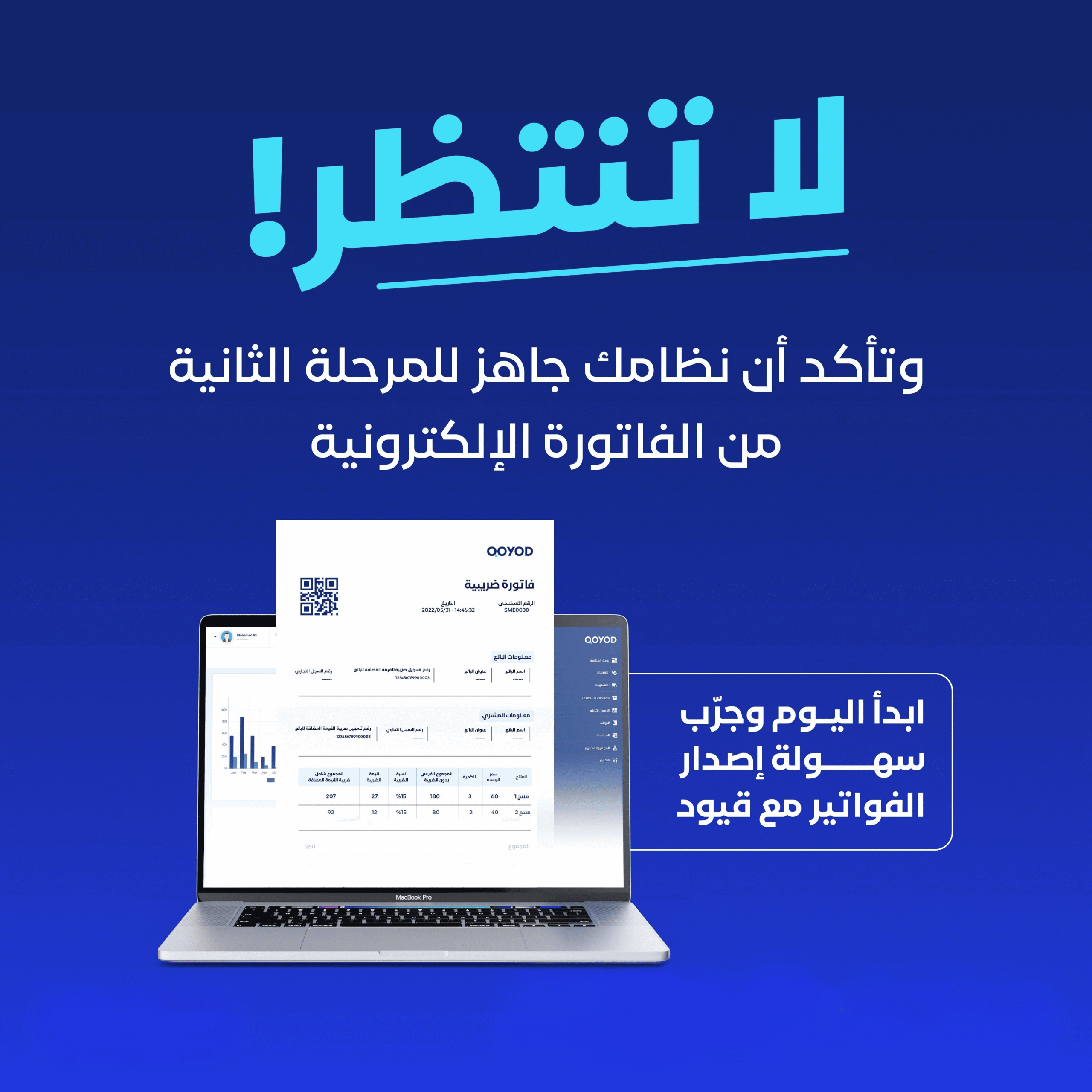
Phase two of ZATCA e-invoicing requires every corporate contract invoice and every direct charter receipt to be issued through a certified system connected to the Fatoora platform. Bus rental companies issue both B2B tax invoices on school districts, corporate clients, and tourism operators through the Clearance flow, plus simplified tax invoices on direct charter sales through the Reporting flow. For a side-by-side view of vendor costs, read the guide on e-invoicing pricing in Saudi Arabia.
Every B2B contract invoice must include the operator name and tax number, the buyer name and tax number, a sequential invoice number, the date and time, an itemized list with the service month, number of buses, trips, VAT at 15%, totals before and after VAT, and a QR code. A certified system generates the QR code, signs the invoice in XML, and transmits it to the Fatoora platform automatically inside the Clearance window.
How to evaluate a ZATCA-certified system for a bus rental company
When evaluating any e-invoicing vendor for a bus rental operator, verify these six criteria:
- Official ZATCA phase-two certification with a verifiable approval number on the Authority’s portal.
- Both Reporting (direct charter) and Clearance (B2B contracts) flows in one system.
- Deferred-revenue posting that defers VAT until the service month.
- Recurring-invoice automation for monthly contract billing.
- Long-term cloud storage of signed invoices for at least six years.
- Monthly input-VAT and output-VAT reports ready in time for the quarterly filing deadline.
Where Qoyod fits in specifically for bus rental companies
Qoyod brings together, inside one account: cloud accounting with branch, bus, and contract dimensions, deferred revenue per contract with monthly recognition, per-bus cost tracking, driver-allowance engine driven by trip logs, seasonal revenue segmentation, ZATCA-approved e-invoicing, payroll, and consolidated reports. Every contract signature, trip, fuel transaction, and maintenance invoice lands an automatic journal entry inside the same ledger.
The platform handles multi-branch bus operators and seasonal Hajj subsidiaries under one account, with shared master data (drivers, buses, contracts, COA), role-based permissions per branch, and either consolidated or per-branch reports. It runs entirely in the cloud, so owners, branch managers, and the external auditor share the same numbers from any device.
For operators opening new branches or migrating from spreadsheets, the setup service and the bookkeeping service are available as part of Qoyod Pro Services, alongside the app marketplace for connecting to dispatch and fleet-tracking partners.
Frequently asked questions
Does Qoyod defer contract revenue correctly for bus rental companies?+
How does Qoyod track per-bus costs?+
Can Qoyod calculate driver allowances automatically?+
Does Qoyod separate seasonal revenue streams?+
Does Qoyod work for multi-branch bus operators?+
Is technical support available 24/7?+
Running a bus rental company does not need a generic accounting tool, it needs an operating ledger that ties contract deferrals, per-bus cost, driver allowances, and ZATCA e-invoicing together inside one account. The operators that consistently grow are the ones that see per-bus and per-contract margin every week. That capability is what makes Qoyod the right fit for bus rental companies in Saudi Arabia.