A tour operator in Saudi Arabia assembles multi-night packages from a network of hotels, transport companies, guides, and attraction tickets, sells them through travel agencies, online channels, and corporate clients, collects deposits months before the tour runs, and pays suppliers on different terms than it collects from travelers. Revenue mixes outbound packages priced in SAR with supplier costs in USD, EUR, and AED, inbound packages for international travelers, and Hajj and Umrah programs with their own regulatory regime. Each package has its own gross margin that depends on per-supplier negotiated rates, and ZATCA e-invoicing applies on every traveler receipt.
What makes tour operator accounting different
A tour operator is not a travel agency. Travel agencies broker individual tickets and earn commission; tour operators assemble packages, take principal risk on supplier inventory, and earn the spread between package price and supplier cost. Customer deposits land months before the tour, supplier prepayments go out for hotels and air seats, and the gross margin on every package depends on how well purchasing managed the supplier mix. Generic accounting tools cannot handle deposit liabilities or per-package supplier costing.
Tour operator accounting revolves around five connected pieces: customer deposit liabilities until tour date, supplier prepayments and supplier AP per package, per-package gross margin with multi-currency cost, channel attribution (direct, agency, online, corporate), and ZATCA simplified tax invoice on every traveler receipt plus tax invoices on B2B corporate sales.
Daily reality is hundreds of postings per branch: package sales, traveler deposits, supplier purchase orders, supplier prepayments, tour-date supplier reconciliations, channel commissions, and the periodic FX revaluation. Every uncosted package is a margin guess, and every untracked deposit is a future cash-flow surprise on tour date.
The most common accounting challenges in tour operators
Every tour operator in Saudi Arabia runs into the same four recurring problems. They share one root cause: deposits get treated as revenue and supplier cost gets allocated as a single monthly expense.
1. Traveler deposits booked as revenue. A family books a 7-night AlUla package for SR 28,000 and pays a 30% deposit four months before the tour. Booking the deposit as revenue on the booking day inflates the month, creates a Zakat exposure on revenue not yet earned, and overstates VAT due. Deposits are a customer-advance liability until the tour delivers.
2. Per-package gross margin invisible. An inbound tour package collected USD 4,200 from the agency, paid USD 1,800 to the hotel, USD 600 to the transport company, USD 350 to the guide, and USD 250 in entrance fees. Without per-package costing, the gross margin sits inside a monthly expense block, and the operator cannot tell which packages are profitable and which are subsidized by others.
3. Multi-currency exposure unmanaged. Packages sell in SAR but a third of supplier cost is in USD or EUR. FX moves 2% between booking and tour date, the margin assumed on day one is gone by tour day, and no one sees it until year-end when the FX line surprises the P&L.
4. Supplier prepayments tracked outside accounting. Hotels demand 50% prepayment six weeks before tour date. Without integrated supplier AP, the prepayment sits as a generic vendor advance, never settles cleanly against the eventual hotel invoice, and the AP aging shows phantom credit balances.
What a tour operator actually needs from its accounting software
A generic accounting tool was built for one-time sales, not for forward-booked packages with multi-currency supplier mix. The difference is concrete:
| Task | Generic accounting tool | What a tour operator needs |
|---|---|---|
| Traveler deposits | Booked as revenue | Customer-advance liability |
| Package costing | Monthly expense block | Per-package gross margin |
| Multi-currency | Single base currency | Daily FX with revaluation |
| Supplier prepayments | Generic vendor advance | Per-package supplier AP |
| Channel attribution | Single revenue line | Direct, agency, online, corporate |
| VAT on packages | Charged on deposit | Recognized on tour date |
Beyond the table, a tour operator specifically needs three capabilities that generic platforms do not deliver:
- Deposit liability accounting with tour-date recognition, where every traveler deposit posts to a customer-advance liability and converts to revenue on the tour-completion date, with VAT timing aligned to delivery.
- Per-package supplier AP and gross margin, where each supplier purchase order ties to a specific package, the prepayment clears cleanly against the supplier invoice, and per-package gross margin is visible the moment the tour closes.
- Multi-currency accounting with daily FX revaluation, generating accurate margin by tour date and channel, with ZATCA-certified simplified tax invoices on traveler receipts and tax invoices on B2B corporate sales.
How to organize a tour operator’s books step by step
Moving a tour operator to integrated accounting takes around three to five weeks depending on package and supplier count. This is the sequence Qoyod applies with every new tour-operator customer:
E-invoicing and ZATCA compliance for tour operators
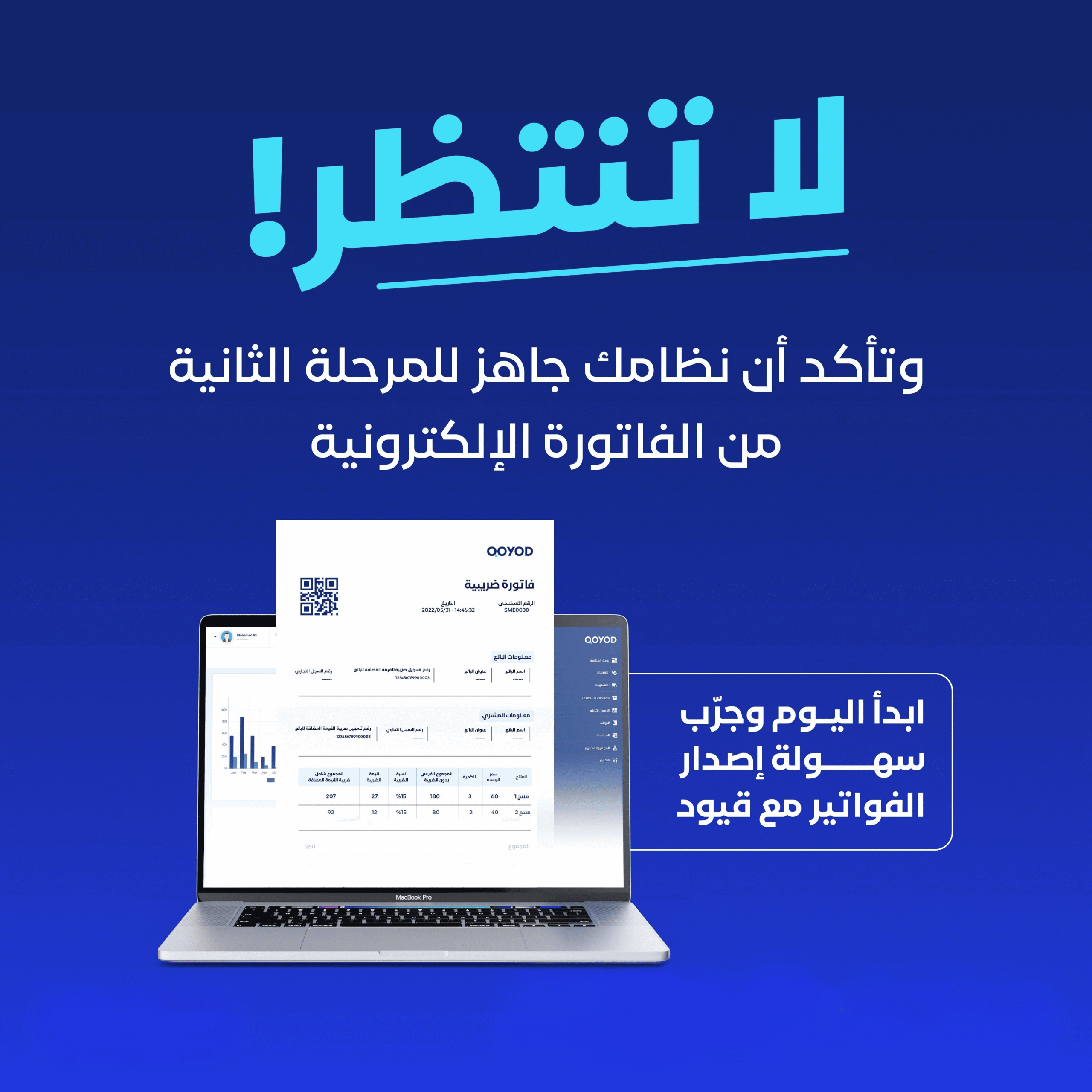
Phase two of ZATCA e-invoicing requires every traveler receipt and every B2B corporate invoice to be issued through a certified system connected to the Fatoora platform. Tour operators issue both simplified tax invoices on direct traveler receipts through the Reporting flow and B2B tax invoices on corporate-client packages through the Clearance flow. For a side-by-side view of vendor costs, read the guide on e-invoicing pricing in Saudi Arabia.
Every invoice must include the operator name and tax number, a sequential invoice number, the date and time, the traveler or corporate buyer name, an itemized list with the package and tour date, VAT at 15%, totals before and after VAT, and a QR code. A certified system generates the QR code, signs the invoice in XML, and transmits it to the Fatoora platform automatically inside the Reporting or Clearance window.
How to evaluate a ZATCA-certified system for a tour operator
When evaluating any e-invoicing vendor for a tour operator, verify these six criteria:
- Official ZATCA phase-two certification with a verifiable approval number on the Authority’s portal.
- Both Reporting (direct traveler) and Clearance (B2B corporate) flows in one system.
- Deposit liability handling that defers VAT until tour-completion.
- Multi-currency support for inbound corporate clients and supplier purchase orders.
- Long-term cloud storage of signed invoices for at least six years.
- Monthly input-VAT and output-VAT reports ready in time for the quarterly filing deadline.
Where Qoyod fits in specifically for tour operators
Qoyod brings together, inside one account: cloud accounting with package, supplier, and channel dimensions, deposit liability accounting with tour-date recognition, per-package supplier AP, multi-currency FX with daily revaluation, channel attribution, ZATCA-approved e-invoicing, payroll, and consolidated reports. Every traveler deposit, supplier purchase order, FX movement, and channel commission lands an automatic journal entry inside the same ledger.
The platform handles multi-branch tour operators serving inbound and outbound markets under one account, with shared master data (packages, suppliers, channels, COA), role-based permissions per branch, and either consolidated or per-branch reports. It runs entirely in the cloud, so owners, branch managers, and the external auditor share the same numbers from any device.
For operators launching new packages or migrating from spreadsheets, the setup service and the bookkeeping service are available as part of Qoyod Pro Services, alongside the app marketplace for connecting to reservation and channel-management partners.
Frequently asked questions
Does Qoyod handle traveler deposits correctly for tour operators?+
How does Qoyod calculate per-package gross margin?+
Does Qoyod support multi-currency for tour operators?+
How does Qoyod attribute revenue by channel?+
Does Qoyod work for multi-branch tour operators?+
Is technical support available 24/7?+
Running a tour operator does not need a generic accounting tool, it needs an operating ledger that ties deposits, per-package supplier AP, multi-currency FX, and ZATCA e-invoicing together inside one account. The operators that consistently grow are the ones that see per-package and per-channel margin every week. That capability is what makes Qoyod the right fit for tour operators in Saudi Arabia.