A private school or nursery in Saudi Arabia is a long-cycle business. Tuition is collected over a nine-month academic year, often in three to ten installments per family, with sibling discounts, scholarships, and transportation fees layered on top. The largest cost is payroll (typically 55% to 70% of revenue), and the accounting team must reconcile family balances every week. This guide explains what sets school accounting apart, and how the right software keeps tuition, deferred income, and payroll inside one ledger.
What makes school accounting different
A school sells a service that is delivered over nine months, but collected in chunks that rarely match the delivery schedule. A family can pay 100% in August, or 25% per quarter, or monthly. Each schedule produces a different deferred-revenue picture, and a single child can carry sibling discounts, transportation fees, after-school activities, and a scholarship that all need to settle on the same family ledger.
School accounting revolves around five connected pieces: family-level account with multiple students underneath, installment plans with due-date tracking, deferred revenue recognized month by month, scholarship and discount accounting (as either contra-revenue or expense), and payroll for teaching and admin staff. A simplified tax invoice is generally not required for tuition (education is VAT-exempt for Saudi citizens) but is required for ancillary services.
Daily reality is dozens of family movements: registration payments, installment due dates, late-payment letters, withdrawals mid-year (with pro-rata refunds), bus fee additions, and uniform sales. Each transaction sits on a family card, not a generic customer card, and a sibling discount cascades across multiple students.
The most common accounting challenges in schools
Every school operator in Saudi Arabia runs into the same four recurring accounting problems, and each one quietly costs hundreds of thousands of riyals across a single academic year if left unmanaged.
1. Wrong tuition revenue recognition. A school collects 50,000 SAR from a family in August and books the full amount as August revenue. The P&L looks healthy for one month and then collapses across the next nine. Without monthly recognition, every interim report misleads the board and the bank.
2. Installment collection drift. A family on a ten-installment plan misses month four. Without automatic reminders 7 days and 1 day before due, plus a 5-day-late escalation, late receivables compound until year-end when the school chases 1.5M SAR of overdue tuition in two weeks.
3. Sibling discounts and scholarships posted wrong. Sibling discounts are contra-revenue, scholarships are typically expenses (welfare or marketing). Mixing them inflates effective tuition price and distorts gross margin reporting. Auditors flag this every year.
4. Mid-year withdrawals with manual refunds. A family withdraws in February. The school owes back 4 months of tuition. Without a system that knows the recognized amount per month, refund calculations are spreadsheet errors that turn into legal disputes.
What a school actually needs from its accounting software
A generic accounting tool was built for invoicing on delivery, not for collecting in advance and delivering over nine months across a family hierarchy. The difference is concrete:
| Task | Generic accounting tool | What a school needs |
|---|---|---|
| Customer | Single contact | Family with multiple students underneath |
| Tuition revenue | Booked on payment | Recognized monthly across the term |
| Installments | Single invoice | Plan with auto reminders per due date |
| Sibling discount | Manual adjustment | Contra-revenue per student |
| Scholarship | Manual adjustment | Expense category with budget control |
| Withdrawal refund | Manual calculation | Pro-rata based on recognized amount |
Beyond the table, a school specifically needs three capabilities that generic platforms do not deliver:
- Family-and-student account structure, so tuition, bus fees, uniforms, and activities all settle on the right family card, with sibling discounts cascading correctly across children.
- Installment plans with automatic reminders at 7 days and 1 day before due, and a late escalation after 5 days, so the accounts-receivable team works only the exceptions instead of chasing every family manually.
- Automatic deferred-revenue recognition tied to the nine-month academic calendar, with the remaining balance visible at any moment for board reporting. ZATCA-certified simplified tax invoice on every taxable ancillary service (transportation, uniforms, paid activities).
How to organize a school’s books step by step
Moving from spreadsheets to integrated school accounting takes around two to three weeks. This is the sequence Qoyod applies with every new school customer:
E-invoicing and ZATCA compliance for schools
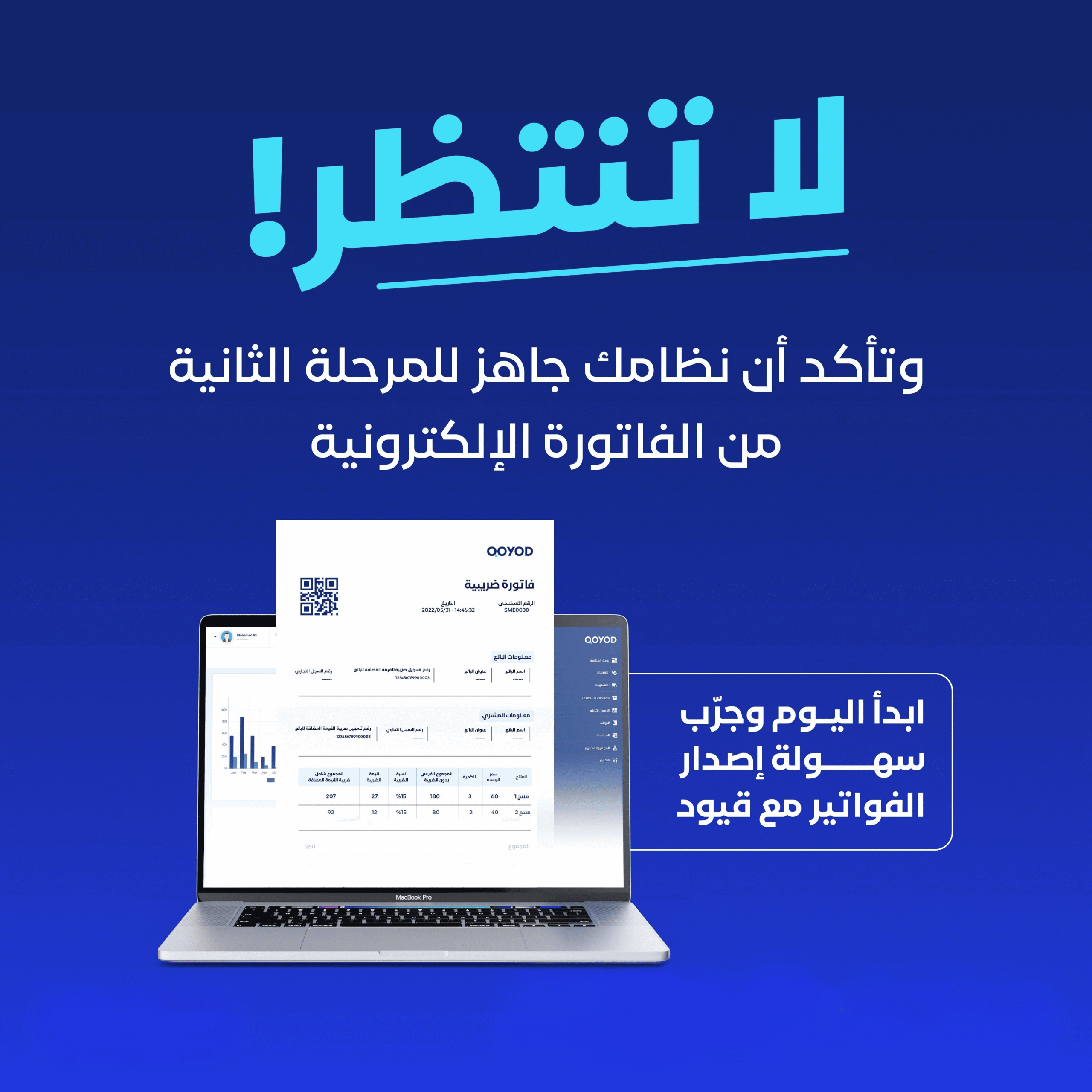
Under Saudi VAT rules, basic education provided to Saudi citizens is generally exempt, but ancillary services (transportation, uniforms, paid extracurricular activities) and education for non-citizens may be taxable. Phase two of ZATCA e-invoicing still requires every taxable invoice to be issued through a certified system connected to the Fatoora platform. For a side-by-side view of vendor costs, see the guide on e-invoicing pricing in Saudi Arabia.
Every taxable school invoice (transportation, paid activities, school store, uniforms) must include the school name and tax number, a sequential invoice number, the family name, the date, an itemized list with the correct VAT rate (15% standard), totals before and after VAT, and a QR code. A certified system generates the QR code, signs the invoice in XML, and transmits it to the Fatoora platform automatically inside the Reporting window.
How to evaluate a ZATCA-certified system for a school
When evaluating any e-invoicing vendor for a school, verify these six criteria:
- Official ZATCA phase-two certification with a verifiable approval number on the Authority’s portal.
- Per-line VAT treatment on a single family invoice (exempt tuition, 15% transportation, 15% uniforms).
- Both Reporting (B2C family invoices) and Clearance (B2B corporate sponsorships) flows in one system.
- Automatic deferred-revenue recognition tied to the academic calendar.
- Long-term cloud storage of signed invoices for at least six years.
- Monthly input-VAT and output-VAT reports ready in time for quarterly filings.
Where Qoyod fits in specifically for schools
Qoyod brings together, inside one account: cloud accounting, family-and-student account structure, installment plans with automatic reminders, deferred-revenue recognition across the academic year, scholarship and discount accounting, payroll with GOSI and end-of-service accrual, ZATCA-approved e-invoicing on ancillary services, and consolidated reports. Every charge and payment posts an automatic journal entry inside the same ledger.
The platform handles multi-campus school groups under one account, with shared family profiles across campuses, role-based permissions per campus, and either consolidated or per-campus reports. It runs entirely in the cloud, so head office, campus principals, and the external accountant share the same numbers from any device.
For schools opening new campuses or migrating off a legacy student-information system, the setup service and the bookkeeping service are available as part of Qoyod Pro Services, alongside the app marketplace for connecting to student-information and bus-tracking partners.
Frequently asked questions
Does Qoyod support family accounts with multiple students?+
How does Qoyod recognize tuition revenue?+
Can Qoyod handle installment plans with reminders?+
Does Qoyod handle sibling discounts and scholarships correctly?+
What happens if a family withdraws mid-year?+
Is technical support available 24/7?+
Running a school does not need a generic accounting tool, it needs an operating system that ties family billing, deferred tuition, scholarships, payroll, and ZATCA e-invoicing together inside one ledger. The schools that consistently grow are the ones that see overdue receivables and deferred balance every week. That capability is what makes Qoyod the right fit for schools and nurseries in Saudi Arabia.