Running a restaurant in Saudi Arabia is fundamentally different from any other retail business. A plate’s cost shifts the moment the price of a kilo of meat moves, inventory can vanish in a single holiday night, and the cashier handles dine-in, takeaway, and delivery orders all at once. This guide explains what sets restaurant accounting apart, and how the right software actually serves that reality.
What makes restaurant accounting different from any other business
A restaurant is a fast-moving operational engine. You hold raw ingredients with short shelf lives, recipes with multiple components, staff working in shifts, and customers who eat in, order over the counter, or order through delivery apps (HungerStation, Jahez, ToYou, Mrsool). A small drift in recipe cost or inventory control eats through your margin in a single week.
Restaurant accounting revolves around five connected pillars: cost of sales (food cost), which should stay between 28% and 32% for a healthy outlet; staff payroll, typically 22% to 30% of revenue; point of sale for the dining room and the takeaway window; e-invoicing on every order; and daily shift reports. The right software ties these pillars together automatically, instead of treating them as separate general ledgers.
On top of that, you run dozens of small daily transactions: receiving fresh produce in the morning, prepping recipes ahead of service, issuing dine-in invoices, accepting app orders with different commission rates, closing the cash drawer at the end of each shift, and reconciling sales against delivery-platform reports before closing the books. These details are the difference between a profitable restaurant and one that loses money without realizing it.
The most common accounting challenges in restaurants
Every restaurant operator in Saudi Arabia runs into the same four recurring accounting problems, and each of them quietly costs thousands of riyals a month when left unmanaged.
1. Volatile plate cost. The price of a kilo of meat jumps 8% this week, and the price of cooking oil drops 4%. If recipe prices in your system are not updated, you end up selling a burger at a 12% margin instead of 22%. A purpose-built system links every recipe to live purchase prices and recalculates plate cost the moment a new supplier invoice is posted.
2. Waste and the inventory gap. At month-end, the stock count says the kitchen consumed 320 kg of chicken, but sales reports say only 280 kg were sold. The 40-kg gap is either kitchen waste, theft, or a recipe-setup error. Without automatic tracking of theoretical versus actual inventory, the cause is almost impossible to isolate.
3. Reconciling delivery apps against the till. A restaurant selling on four delivery platforms deals with four different commission rates (15% to 30%) and four different settlement schedules. Matching platform reports against your sales data takes a full day a month if done manually, and the worst outcome is small discrepancies accumulating month after month.
4. Shift payroll. Restaurant staff work flexible shifts: head chef, sous chef, server, cashier, cleaner. Each one on different hours, different shifts. Calculating actual wages and overtime by hand in Excel produces inevitable errors and complicates GOSI and Zakat filings.
What a restaurant actually needs from its accounting software
A generic accounting tool is not enough to run a restaurant. The difference is not in the count of features, it is in how those features connect to the daily kitchen and dining-room workflow.
| Task | Generic accounting tool | What a restaurant needs |
|---|---|---|
| Plate cost | Manual, fixed pricing | Automatic, live calculation from ingredient costs |
| Recipe management | Not supported | Recipe card per item with ingredients and quantities |
| Point of sale | Separate application | POS integrated with kitchen and inventory |
| Delivery apps | Manual entry | Direct partner integration with automatic reconciliation |
| Shift close | Not supported | Cash plus card plus delivery plus refunds, per shift |
| Kitchen stocktake | Monthly general count | Daily for sensitive items, weekly for the rest |
Beyond the table above, a restaurant specifically needs three capabilities that generic accounting platforms simply do not have:
- An integrated operating system for restaurants such as Qoyod Q.Flavours, which links orders, kitchen, inventory, and accounting in a single environment with no manual handoffs.
- Recipe management with cost tracking, with automatic refresh when raw-material prices change and instant alerts when any plate falls below its target margin.
- Per-platform commission reporting for each delivery app (HungerStation, Jahez, ToYou, Mrsool) with automatic reconciliation between what was sold via the app and what was actually settled.
How to organize a restaurant’s books step by step
Organizing a restaurant’s books does not require a full-time accountant from day one. It requires a tidy system and six daily steps that take no more than an hour:
E-invoicing and ZATCA compliance for restaurants
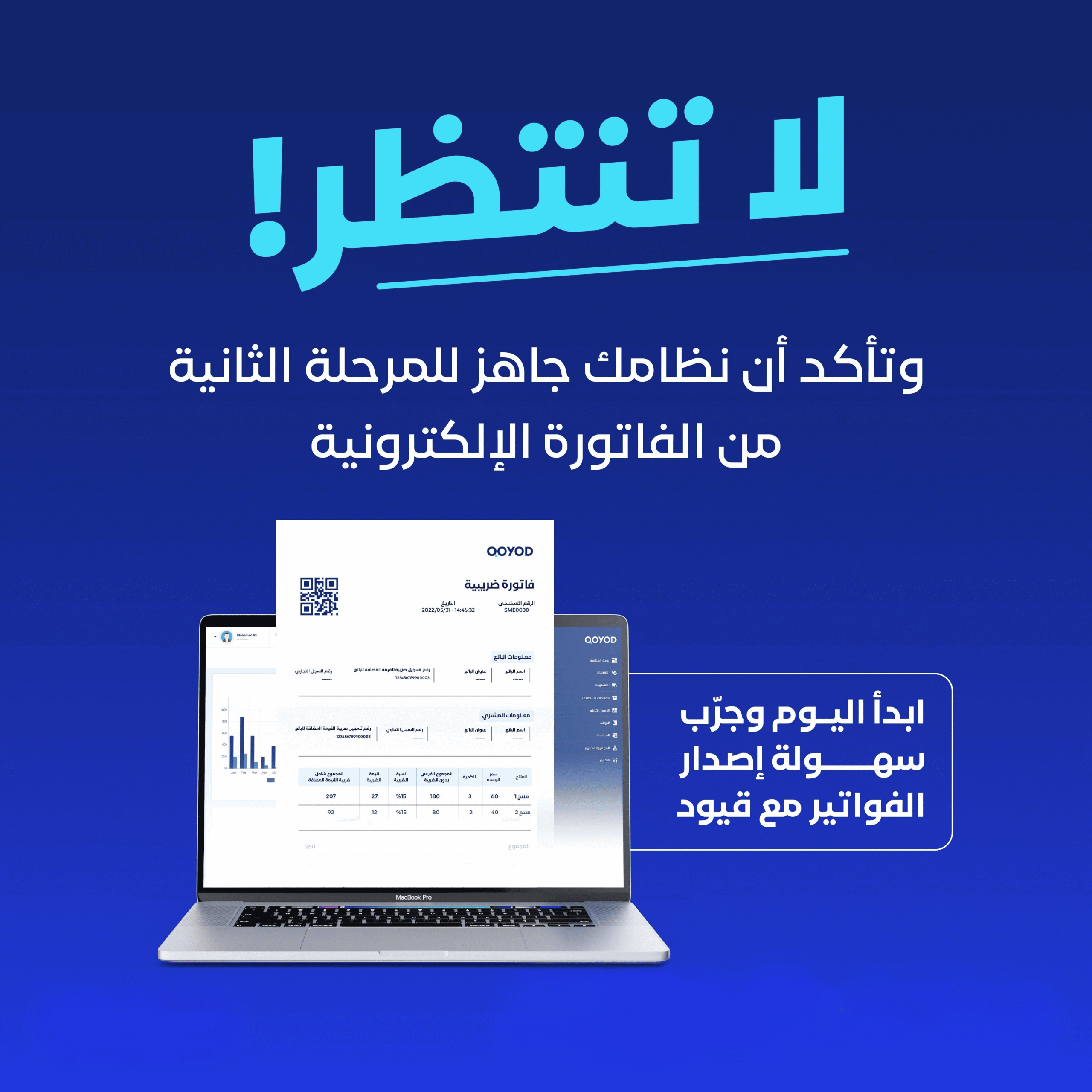
With phase two of ZATCA e-invoicing now in force, issuing every restaurant invoice through a system connected to the Fatoora platform is mandatory. Restaurants mostly use the simplified tax invoice because the end customer does not carry a tax number. For a side-by-side view of vendor costs, the guide on e-invoicing pricing in Saudi Arabia is worth reading.
Every restaurant invoice must include the restaurant name and tax number, a sequential invoice number, the date and time, an itemized list, the VAT rate (15%), totals before and after VAT, and a QR code. A certified system generates all of this automatically and submits the invoice to the Fatoora platform in XML format within 24 hours (Reporting flow for simplified invoices).
How to evaluate a ZATCA-certified system for restaurants
When you evaluate any e-invoicing vendor for a restaurant, verify these six criteria:
- Official ZATCA certification for phase two, with a verifiable approval number on the Authority’s portal.
- Automatic submission of invoices in XML within the time windows allowed for simplified invoices.
- Long-term cloud storage of digitally signed invoices (no less than six years).
- A simulation environment to test invoices before going live in production.
- Invoice issuance in under two seconds, so the cashier is never delayed during peak hours.
- Monthly input-VAT reports ready in time for on-deadline tax filings.
Where Qoyod fits in specifically for restaurants
Qoyod Q.Flavours is the integrated solution for the restaurant sector: cloud accounting, point of sale, recipe and plate-cost management, direct delivery-app integration, and ZATCA-approved e-invoicing. All of it inside one account, so data moves between the kitchen, the dining room, the cashier, and accounting with no manual transfer.
The point-of-sale system supports trusted local cashier hardware such as SUNMI V2s, runs offline when the network drops, and syncs automatically when it returns. The kitchen display system (KDS) routes orders in real time by priority, reducing prep errors and speeding up service.
Auto-generated food-cost reports, most-profitable-dish reports, per-cashier shift reports, and per-delivery-app commission reports are all one click away. For those who prefer to delegate filings, the VAT filing service and the bookkeeping service are available as part of Qoyod Pro Services.
Frequently asked questions
Does Qoyod work for a small restaurant with a single outlet?+
How does Qoyod link delivery apps to accounting?+
What happens if the internet drops during service?+
Can I track the cost of every recipe accurately?+
How does Qoyod handle shift-based payroll?+
Is technical support available 24/7?+
Running a restaurant does not need a generic accounting tool, it needs a single connected operating system that links recipes, point of sale, delivery apps, and accounting in one account. Margins in this sector are tight, and the difference between a profitable restaurant and a losing one is driven by control over plate cost and daily shift close. That capability is what makes Qoyod and Q.Flavours the right fit for restaurants in Saudi Arabia.