A real-estate developer in Saudi Arabia runs multi-year projects with hundreds of millions of riyals tied up in land, construction, infrastructure, and finance costs before a single unit is delivered. Every project capitalizes its costs into work-in-progress, every off-plan sale collects buyer cash that under the Wafi off-plan escrow program sits in a regulated account until milestones are certified by the authority, and every delivered unit recognizes revenue on handover with the matching cost of sales. ZATCA e-invoicing applies on every sale, every milestone billing, and every consultant fee, and the difference between a developer that finances itself and one that runs into a working-capital crisis comes down to accounting discipline on project capitalization, escrow reconciliation, and unit-level revenue recognition.
What makes real-estate-developer accounting different
A real-estate developer is not a regular construction contractor and not a property trader. Its largest balance-sheet item is work-in-progress, built up over three to five years from land cost, soft costs, hard costs, infrastructure, marketing, and capitalized finance costs. Its revenue waits until unit handover (or until percentage-of-completion criteria are met for committed sales), and its cash flows through a regulated escrow account that the Real Estate General Authority oversees through the Wafi off-plan program. Generic accounting tools cannot capitalize project costs by unit, run the Wafi escrow ledger, or recognize unit-level revenue.
Real-estate-developer accounting revolves around five connected pieces: project-level cost capitalization with allocation down to the unit, Wafi off-plan escrow reconciliation against milestone releases, unit-level revenue recognition on handover or percentage-of-completion, milestone billing on committed sales and government clients, and ZATCA tax invoice issuance on every sale, deposit, milestone, and consultant fee. Each connects directly to a journal entry.
Daily reality is hundreds of postings per developer: land transactions, contractor progress payments, soft-cost invoices, infrastructure costs, marketing spend, finance-cost capitalization, unit reservations, down payments, escrow deposits, escrow releases, milestone certifications, unit handovers, and post-handover service charges. Each missed cost allocation distorts unit-level margin.
The most common accounting challenges in real-estate development
Every real-estate developer in Saudi Arabia hits the same four recurring problems. They share one root cause: project costs sit in a development-management system, escrow lives in a bank portal, and unit sales run in a separate CRM.
1. Costs not capitalized down to the unit. A 600-unit residential project absorbs 850 million SAR of hard costs, soft costs, infrastructure, and capitalized finance. Without an allocation engine that pushes shared costs down to each unit on a fair driver (saleable area, plot value), the developer cannot tell which units are profitable and which are loss-making.
2. Wafi escrow not reconciled to the books. The off-plan escrow holds buyer deposits under the Real Estate General Authority’s rules, releasing funds only as the authority certifies construction milestones. Without integrated escrow reconciliation, escrow movements and project payables drift apart, milestone applications stall, and cash flow seizes mid-project.
3. Unit-level revenue recognized incorrectly. A unit reserved off-plan, paid in stages over 36 months, and handed over after construction completion should recognize revenue at handover (or pro-rata under specific IFRS criteria). Without unit-level revenue tracking, the developer books revenue on cash collection, distorting every monthly result and creating audit exposure.
4. Marketing and finance costs not capitalized correctly. Pre-completion marketing and borrowing costs that meet IFRS capitalization criteria belong in work-in-progress, not in the period P&L. Without integrated capitalization rules, costs hit the income statement too early, project margin looks fictional, and audit adjustments multiply at year-end.
What a real-estate developer actually needs from its accounting software
A generic accounting tool was built for short-cycle businesses, not for multi-year capitalized projects with regulated escrow. The difference is concrete:
| Task | Generic accounting tool | What a developer needs |
|---|---|---|
| Project cost | Period expense | Capitalized to WIP, allocated to unit |
| Escrow | Standard bank | Wafi-reconciled milestone ledger |
| Revenue recognition | On invoice | Unit handover or POC |
| Finance cost | Period expense | Capitalized to WIP under IFRS |
| Marketing | Period expense | Capitalized pre-completion under IFRS |
| VAT | Flat 15% | Per-line, including new residential treatment |
Beyond the table, a real-estate developer specifically needs three capabilities that generic platforms do not deliver:
- Project cost capitalization with unit allocation, where every contractor payment, soft cost, infrastructure cost, and capitalized finance cost lands on the right project, allocates to units on a defined driver, and feeds unit-level margin at handover.
- Wafi escrow reconciliation, integrating the bank escrow ledger with buyer deposits, milestone certifications, and authorized releases, so the regulator’s view and the books always match line by line.
- Unit-level revenue recognition with ZATCA e-invoicing, recognizing revenue on handover or under approved POC criteria, posting matching cost of sales from allocated WIP, and issuing ZATCA-certified tax invoices on every deposit, milestone, and final sale.
How to organize a developer’s books step by step
Moving a real-estate developer to integrated accounting takes around eight to twelve weeks depending on project count and Wafi exposure. This is the sequence Qoyod applies with every new developer customer:
E-invoicing and ZATCA compliance for real-estate developers
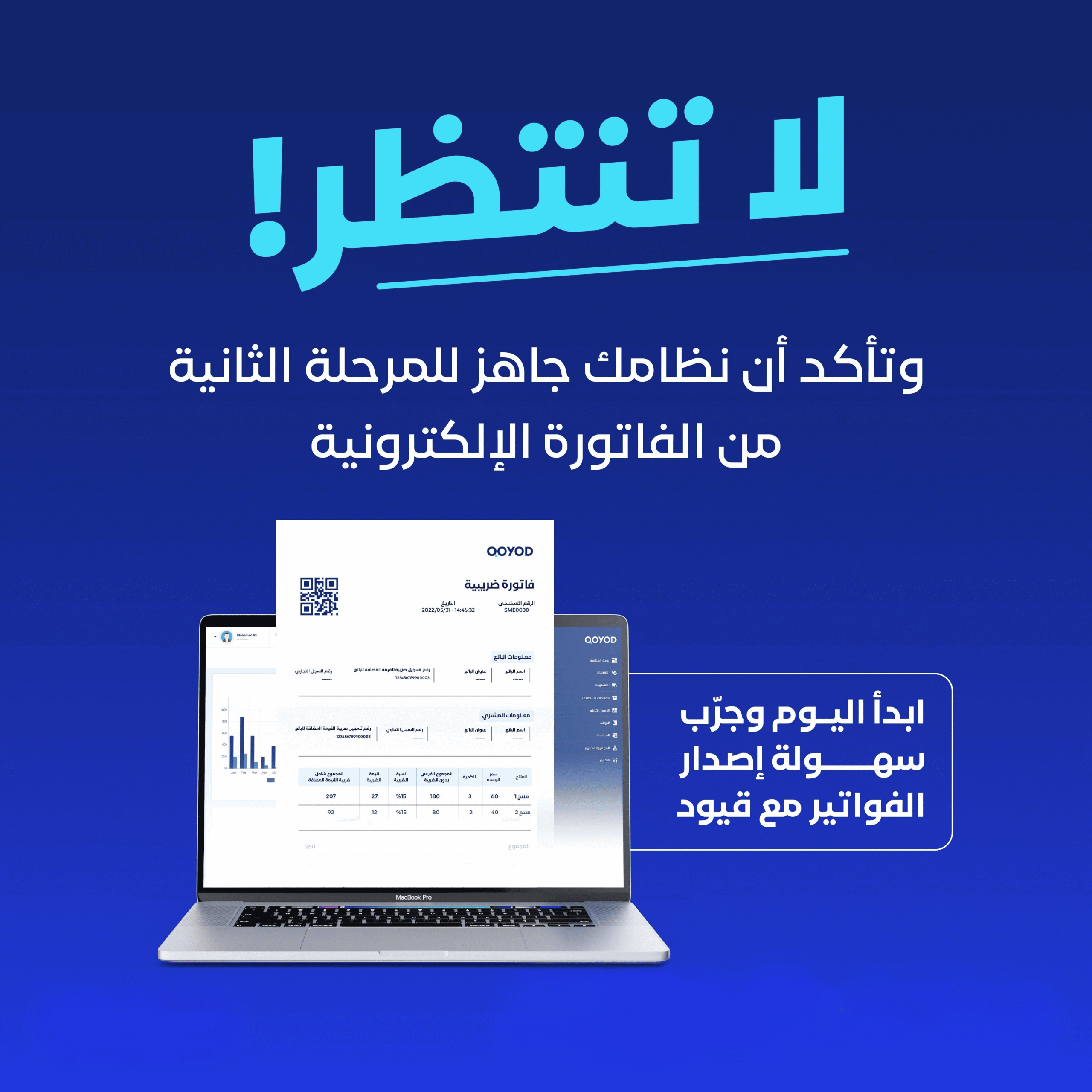
Phase two of ZATCA e-invoicing requires every unit sale, every deposit receipt, and every milestone billing to be issued through a certified system connected to the Fatoora platform. Real-estate developers in Saudi Arabia issue mostly B2C simplified tax invoices on individual buyers and B2B tax invoices to corporate and government buyers through the Clearance flow. For a side-by-side view of vendor costs, read the guide on e-invoicing pricing in Saudi Arabia.
Every invoice must include the developer name and tax number, a sequential invoice number, the date and time, the buyer name (and tax number on B2B), the project name and unit identifier, an itemized list of the sale price or milestone amount, VAT treatment correct for the unit category (new residential is specifically treated under Saudi VAT rules, with first-supply exemption where applicable), totals before and after VAT, and a QR code. A certified system generates the QR code, signs the invoice in XML, and transmits it to the Fatoora platform automatically inside the Reporting or Clearance window.
How to evaluate a ZATCA-certified system for a real-estate developer
When evaluating any e-invoicing vendor for a real-estate developer, verify these six criteria:
- Official ZATCA phase-two certification with a verifiable approval number on the Authority’s portal.
- Both Reporting (B2C buyer receipts) and Clearance (B2B buyer and government invoices) flows in one system.
- Per-unit VAT treatment with new-residential and commercial categories flagged correctly.
- Project-code and unit-code fields required on every invoice line.
- Long-term cloud storage of signed invoices for at least six years.
- Monthly input-VAT and output-VAT reports ready in time for the quarterly filing deadline.
Where Qoyod fits in specifically for real-estate developers
Qoyod brings together, inside one account: cloud accounting with project and unit dimensions, WIP capitalization with allocation drivers, Wafi escrow reconciliation, unit-level revenue recognition, milestone billing on corporate and government deals, ZATCA-approved e-invoicing, payroll, and consolidated reports. Every contractor payment, soft cost, capitalized finance posting, escrow deposit, milestone release, unit handover, and post-handover service charge lands an automatic journal entry inside the same ledger.
The platform handles multi-project developers and multi-entity holding structures under one account, with shared master data (projects, units, buyers, COA), role-based permissions per project, and either consolidated or per-project reports. It runs entirely in the cloud, so owners, project directors, finance, and the external auditor share the same numbers from any device.
For developers launching new projects or migrating from a legacy project-control system, the setup service and the bookkeeping service are available as part of Qoyod Pro Services, alongside the app marketplace for connecting to project-control and CRM partners.
Frequently asked questions
Does Qoyod support project WIP capitalization with unit allocation?+
How does Qoyod handle Wafi off-plan escrow?+
Can Qoyod recognize unit-level revenue?+
Does Qoyod handle the special VAT treatment of residential units?+
Does Qoyod work for multi-project developers?+
Is technical support available 24/7?+
Running a real-estate development business does not need a generic accounting tool, it needs an operating ledger that ties project capitalization, escrow, unit-level revenue, milestone billing, and ZATCA e-invoicing together inside one account. The developers that consistently scale are the ones that see project cash, escrow, and unit margin every week. That capability is what makes Qoyod the right fit for real-estate developers in Saudi Arabia.