An interior-design office in Saudi Arabia runs each project through a sequence of phases (concept, design development, procurement, supervision, handover), buys materials and furniture from dozens of suppliers at negotiated trade rates and re-bills clients at a markup, and approves change orders mid-project that re-cast the entire budget. A single villa project can run 380,000 SAR with 18 suppliers, four phases, and three approved change orders. Without phase-based costing, supplier markup tracking, and a draw schedule tied to milestones, the office cannot tell which phase ate the margin or how the change orders affected the bottom line.
What makes interior-design accounting different
An interior-design office is half consultancy, half procurement business. Revenue mixes design fees on a phase schedule with procurement re-bills at a markup. Cost is part labor (designers, draftsmen, site supervisors) and part pass-through procurement that should never inflate the office’s gross margin without a clean markup ledger. Generic accounting tools blur the two.
Interior-design accounting revolves around five connected pieces: phase-based design fees with a draw schedule, procurement re-bills with supplier markup, change orders that re-cast the budget without losing history, time tracking by project and role, and ZATCA tax invoice on every phase milestone and procurement re-bill.
Daily reality is dozens of postings per project: phase milestones invoiced, supplier purchase orders, material deliveries, client procurement re-bills with markup, change orders signed off, time logged by designer and draftsman, and site visits expensed to the right project.
The most common accounting challenges in interior-design offices
Every interior-design office in Saudi Arabia runs into the same four recurring problems. They share the same gap: phases live in a Gantt chart, suppliers live in WhatsApp, and change orders live in PDF email attachments, none of them tied to the ledger.
1. Phase margin unknown. A 60,000 SAR design-development phase sells at a target 65% margin, but a senior designer logs 180 hours instead of the planned 90 and the phase closes at 22% margin. Without phase-level time tracking, the slip surfaces only at project close.
2. Supplier markup eroded. The office buys a sofa at 18,500 SAR trade and re-bills the client at 24,000 SAR, a 30% markup. But the supplier ships a higher-grade fabric without re-pricing, the real cost lands at 21,200 SAR, and the markup drops to 13%. Without supplier-PO-to-client-re-bill tracking, the erosion goes unseen.
3. Change orders re-cast without history. A signed-off scope change adds 45,000 SAR of marble. The change order overwrites the original budget, history is lost, and project P&L compares apples to oranges at close. Change orders should layer on top of a baseline, never replace it.
4. Draw schedule mismatched with cash needs. Designers are paid monthly but client draws land on phase completion, two to four months apart. Without a draw schedule tied to phase milestones, the office floats supplier payments and salaries out of working capital and a slow project blocks a new pitch.
What an interior-design office actually needs from its accounting software
A generic accounting tool was built for selling discrete services, not for running five-phase villa projects with 18 suppliers and three change orders. The gap is concrete:
| Task | Generic accounting tool | What an interior-design office needs |
|---|---|---|
| Billing | Single invoice | Phase milestones with draw schedule |
| Procurement | Generic AP | Supplier PO with markup re-bill |
| Change orders | Edits the invoice | Layered on a baseline |
| Time tracking | Not supported | By project, phase, and role |
| Cash forecasting | Bank balance | Draw schedule versus AP aging |
| VAT | Flat 15% | Per-line, design and procurement separate |
Beyond the table, an interior-design office specifically needs three capabilities generic platforms do not deliver:
- Phase-based billing with a draw schedule, so each phase invoices on completion or on a date, the draw schedule lines up cash needs against AP aging, and project gross margin is visible per phase.
- Supplier-PO-to-client-re-bill tracking, where every supplier PO links to a client re-bill at a markup, real cost on delivery updates the markup automatically, and procurement margin stays visible.
- Change-order layering on a frozen baseline, where each signed change order adds to scope, budget, and timeline without overwriting the original, with ZATCA-certified tax invoice on every phase milestone, procurement re-bill, and change-order invoice.
How to organize an interior-design office’s books step by step
Moving an interior-design office to integrated accounting takes around three to five weeks depending on project volume and supplier roster. This is the sequence Qoyod applies with every new design-office customer:
E-invoicing and ZATCA compliance for interior-design offices
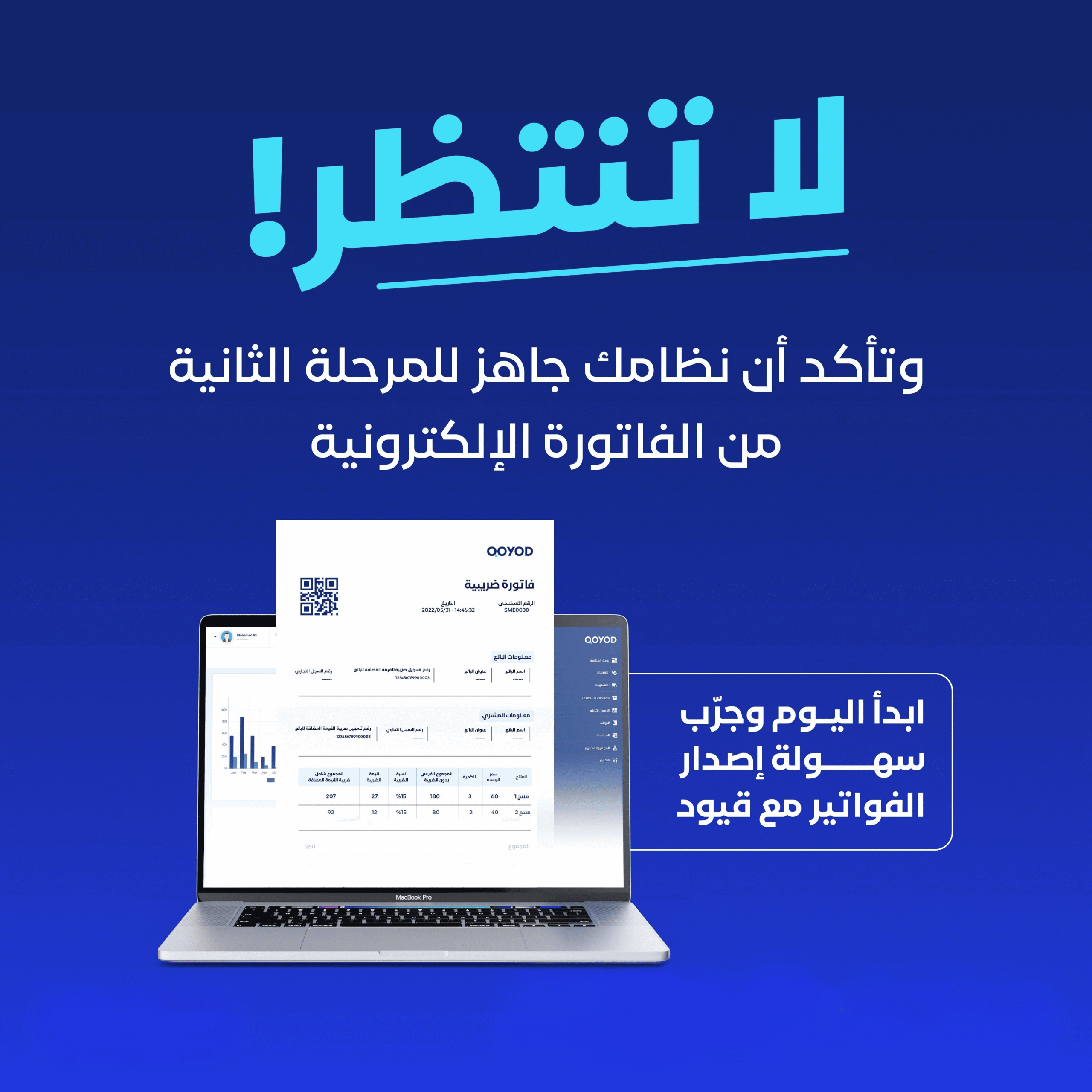
Phase two of ZATCA e-invoicing requires every client invoice and every procurement re-bill to be issued through a certified system connected to the Fatoora platform. Interior-design offices issue mostly B2B tax invoices to client households and corporates through the Clearance flow, with occasional simplified tax invoices on retail bookings. For a side-by-side view of vendor costs, read the guide on e-invoicing pricing in Saudi Arabia.
Every invoice must include the office name and tax number, the client name and tax number on B2B invoices, a sequential invoice number, the date, an itemized list of phase milestones or procurement lines with VAT at 15%, totals before and after VAT, and a QR code. A certified system generates the QR code, signs the invoice in XML, and transmits it to the Fatoora platform inside the Clearance window.
How to evaluate a ZATCA-certified system for an interior-design office
When evaluating any e-invoicing vendor for a design office, verify these six criteria:
- Official ZATCA phase-two certification with a verifiable approval number on the Authority’s portal.
- Both Reporting (small bookings) and Clearance (B2B phase and procurement billings) flows in one system.
- Per-line VAT on mixed design-fee and procurement invoices.
- Supplier-PO-to-client-re-bill chain preserved on every procurement line.
- Long-term cloud storage of signed invoices for at least six years.
- Monthly input-VAT and output-VAT reports ready in time for the quarterly filing deadline.
Where Qoyod fits in specifically for interior-design offices
Qoyod brings together, inside one account: cloud accounting with project, phase, and discipline dimensions, phase-based billing with draw schedule, supplier-PO-to-client-re-bill flow with markup tracking, change orders layered on a baseline, time tracking by designer and phase, ZATCA-approved e-invoicing, payroll, and consolidated reports. Every milestone, supplier PO, re-bill, change order, and time log lands an automatic journal entry inside the same ledger.
The platform handles multi-studio offices under one account, with shared master data (clients, suppliers, COA, design templates), role-based permissions per studio, and either consolidated or per-studio reports. It runs entirely in the cloud, so designers, project managers, and the external auditor share the same numbers from any device.
For offices launching new studios or migrating from a legacy ERP, the setup service and the bookkeeping service are available as part of Qoyod Pro Services, alongside the app marketplace for connecting to project-management and procurement partners.
Frequently asked questions
Does Qoyod support phase-based billing for interior-design offices?+
How does Qoyod handle supplier markups?+
Can Qoyod manage change orders without overwriting the baseline?+
Does Qoyod track designer time by phase?+
Does Qoyod work for multi-studio design offices?+
Is technical support available 24/7?+
Running an interior-design office does not need a generic accounting tool, it needs an operating ledger that ties phase billing, supplier markups, change orders, time tracking, and ZATCA e-invoicing together inside one account. The offices that consistently grow are the ones that see project margin and cash projection every week. That capability is what makes Qoyod the right fit for interior-design offices in Saudi Arabia.