An insurance company or brokerage in Saudi Arabia does not sell a product, it sells a promise priced today and settled later. Every policy collects a premium that earns over the policy period, every claim reserves against a future cash outflow, every broker earns commission on signed business that must accrue at policy inception, and every reinsurance treaty cedes part of the premium and the risk to another carrier. ZATCA e-invoicing applies on every premium invoice and every broker commission, and the Saudi Central Bank (SAMA) sets capital and solvency requirements that demand accurate unearned premium reserves, claim reserves, and cash position every month. The difference between a profitable insurer and one that fails an audit comes down to accounting discipline on premium earning, commission accrual, and claim reserving.
What makes insurance accounting different
An insurance company is not a regular service business. Its revenue is earned over time, not at the cash register, so the day a 12-month policy is sold is the day eleven-twelfths of the cash collected becomes a liability called unearned premium. Its largest costs (claim payments) are unknown at the time of sale and must be estimated as reserves. Generic accounting tools cannot prorate unearned premium, accrue a claim reserve, or settle a reinsurance treaty.
Insurance accounting revolves around five connected pieces: an earning engine that recognizes premium pro-rata over the policy period, commission accruals at inception with clawback on cancellation, claim reserves with case-level and IBNR estimates, reinsurance ceded premium and recoveries on the same policies, and ZATCA tax invoice issuance on every premium and every broker commission. Each connects directly to a journal entry that affects both the income statement and the regulatory solvency calculation.
Daily reality is hundreds of postings per company: policy issuance, policy endorsement, policy cancellation, premium collection, commission accrual, commission payment, claim notification, claim reserve adjustment, claim payment, reinsurance cession, and reinsurance recovery. Each missed entry distorts both the monthly P&L and the SAMA solvency report.
The most common accounting challenges in insurance companies
Every insurance company and brokerage in Saudi Arabia hits the same four recurring problems. They share one root cause: premium earns on a calendar that generic accounting cannot follow, commissions accrue on policies that may cancel, and claim reserves require operational data that lives in the underwriting system.
1. Unearned premium not prorated. A 12-month motor policy sold on March 20 should recognize 11 days of earned premium in March and the remainder over the following twelve months. Without an automated earning engine, the entire premium hits revenue at issuance and unearned premium is missing from the balance sheet, which fails the next SAMA solvency review.
2. Commission accruals without clawback discipline. A broker earns commission at policy inception, but if the customer cancels in month two, two-thirds of that commission must be clawed back. Without an integrated commission ledger tied to the policy, clawbacks are missed, brokers are overpaid, and recovery becomes a year-end fight.
3. Claim reserves estimated outside the books. The claims team holds case-level reserve estimates in a spreadsheet and the actuarial team adds an IBNR (incurred but not reported) reserve on top. Without an integrated claim reserve ledger, the books understate liabilities, technical reserves fail SAMA checks, and underwriting profit looks inflated.
4. Reinsurance cessions not reconciled. A quota-share treaty cedes 40% of premium and 40% of claims to a reinsurer. Without reinsurance accounting tied to each policy, ceded premiums and ceded claim recoveries drift apart, monthly statements to the reinsurer mismatch, and balances become unrecoverable when the treaty year closes.
What an insurance company actually needs from its accounting software
A generic accounting tool was built for cash-register revenue, not for prorated premium earning and claim reserves. The difference is concrete:
| Task | Generic accounting tool | What an insurance company needs |
|---|---|---|
| Revenue recognition | On invoice | Pro-rata over policy period |
| Commission accrual | Manual | At policy inception with clawback |
| Claim reserves | Not handled | Case reserve + IBNR ledger |
| Reinsurance | Not handled | Ceded premium + recoveries by treaty |
| Regulatory reporting | Generic P&L | SAMA solvency-ready |
| VAT | Flat 15% | Per-line, including reinsurance treatment |
Beyond the table, an insurance company specifically needs three capabilities that generic platforms do not deliver:
- Premium earning engine, where every policy automatically earns premium pro-rata over its period, unearned premium reserves appear on the balance sheet at every month-end, and endorsements adjust earning correctly forward and backward.
- Commission ledger with clawback, accruing broker commission at policy inception, paying on schedule, and clawing back automatically on cancellation or mid-term endorsement that lowers the premium.
- Claim and reinsurance accounting with ZATCA e-invoicing, holding case-level claim reserves and IBNR on the books, posting reinsurance cessions and recoveries by treaty, and issuing ZATCA-certified tax invoices on every premium and every commission payment.
How to organize an insurance company’s books step by step
Moving an insurance company to integrated accounting takes around six to ten weeks depending on product lines and treaty count. This is the sequence Qoyod applies with every new insurance customer:
E-invoicing and ZATCA compliance for insurance companies
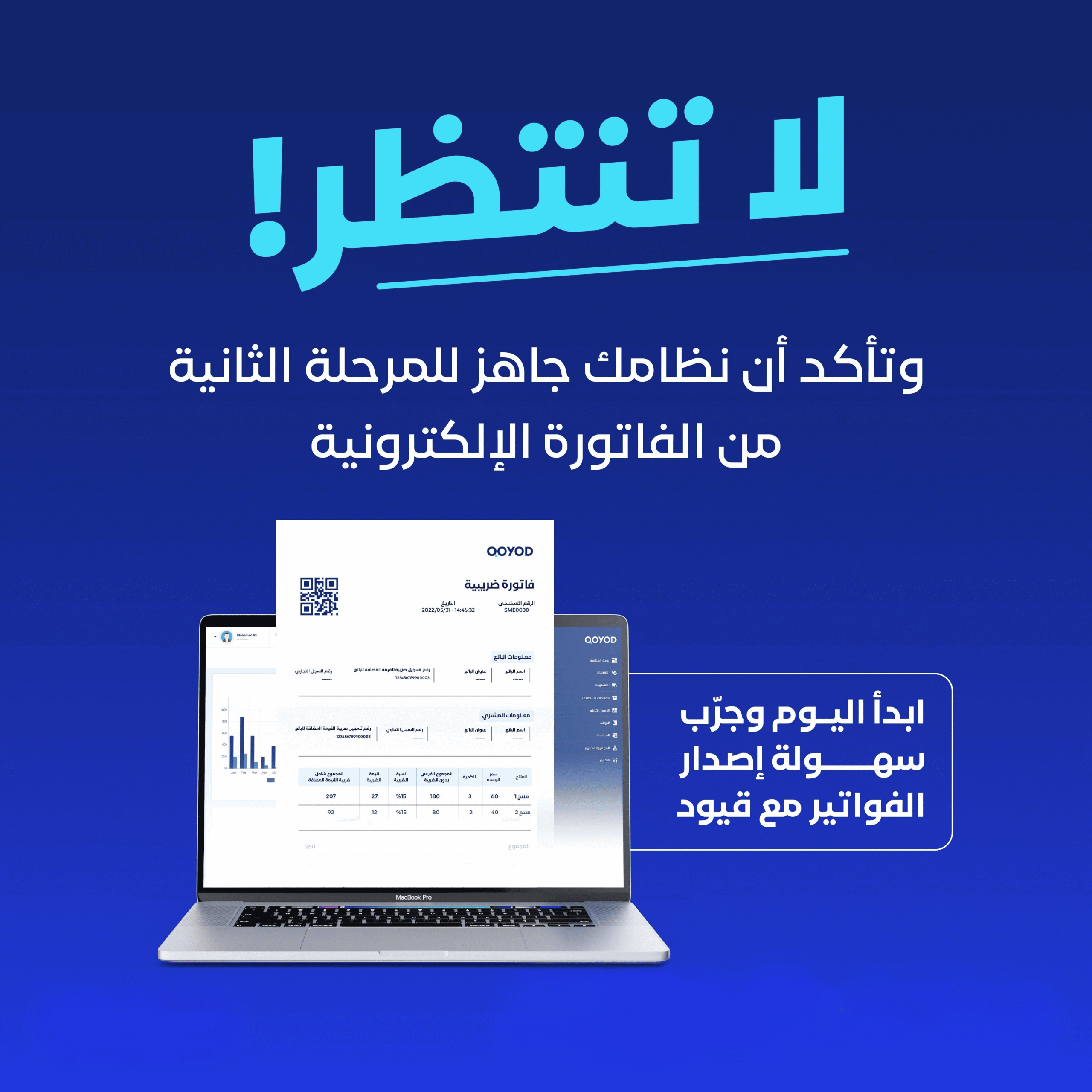
Phase two of ZATCA e-invoicing requires every premium invoice and every commission payment to be issued through a certified system connected to the Fatoora platform. Insurance companies in Saudi Arabia issue mostly B2C simplified tax invoices on retail policies and B2B tax invoices to corporate clients and brokers through the Clearance flow. For a side-by-side view of vendor costs, read the guide on e-invoicing pricing in Saudi Arabia.
Every invoice must include the insurer name and tax number, a sequential invoice number, the date and time, the policyholder name (and tax number on B2B), the policy number and period, an itemized list of premium and fees, VAT at 15% on standard-rated lines, totals before and after VAT, and a QR code. A certified system generates the QR code, signs the invoice in XML, and transmits it to the Fatoora platform automatically inside the Reporting or Clearance window.
How to evaluate a ZATCA-certified system for an insurance company
When evaluating any e-invoicing vendor for an insurance company, verify these six criteria:
- Official ZATCA phase-two certification with a verifiable approval number on the Authority’s portal.
- Both Reporting (B2C policyholder receipts) and Clearance (B2B corporate and broker invoices) flows in one system.
- Per-line VAT treatment with endorsement credits and reinsurance treatment handled correctly.
- Policy-number field required on every invoice line.
- Long-term cloud storage of signed invoices for at least six years.
- Monthly input-VAT and output-VAT reports ready in time for the quarterly filing deadline.
Where Qoyod fits in specifically for insurance companies
Qoyod brings together, inside one account: cloud accounting with line-of-business and channel dimensions, premium earning engine, commission ledger with clawback, case-level claim reserves and IBNR, reinsurance accounting by treaty, ZATCA-approved e-invoicing, payroll, and consolidated reports. Every policy issuance, endorsement, commission accrual, claim movement, and reinsurance cession lands an automatic journal entry inside the same ledger.
The platform handles multi-branch insurance networks under one account, with shared master data (products, brokers, treaties, COA), role-based permissions per branch, and either consolidated or per-branch reports. It runs entirely in the cloud, so owners, finance directors, actuaries, and the external auditor share the same numbers from any device.
For insurance companies launching new product lines or migrating from a legacy policy-administration system, the setup service and the bookkeeping service are available as part of Qoyod Pro Services, alongside the app marketplace for connecting to policy-administration partners.
Frequently asked questions
Does Qoyod support pro-rata premium earning for insurance policies?+
How does Qoyod handle broker commissions and clawback?+
Can Qoyod hold claim reserves and IBNR?+
Does Qoyod support reinsurance accounting?+
Does Qoyod work for multi-branch insurance networks?+
Is technical support available 24/7?+
Running an insurance company does not need a generic accounting tool, it needs an operating ledger that ties premium earning, commissions, claim reserves, reinsurance, and ZATCA e-invoicing together inside one account. The insurers that consistently grow are the ones that see underwriting result by line every week. That capability is what makes Qoyod the right fit for insurance companies and brokers in Saudi Arabia.