A hotel in Saudi Arabia is a multi-revenue operation running 24 hours a day. Rooms, food and beverage, banquets, laundry, spa, and minibar each generate their own revenue line, while online travel agencies (Booking.com, Agoda, Expedia) take 15% to 25% commission and settle weeks after the stay. Add the nightly night-audit process, a city ledger of corporate accounts, advance deposits, and ZATCA e-invoicing on every folio, and the difference between a profitable hotel and a struggling one is purely accounting discipline. This guide explains what sets hotel accounting apart, and how the right software keeps rooms, F&B, and OTA settlements inside one ledger.
What makes hotel accounting different
A hotel is not a single business. It is a set of revenue centers (rooms, F&B, banquet, spa, laundry, minibar) sharing one building, one staff roster, and one set of books. Each center has its own gross margin, its own supplier base, and its own posting rules. The night-audit process closes every day at 3 a.m., and a single missed posting becomes a folio dispute the moment the guest checks out.
Hotel accounting revolves around five connected pieces: room revenue with rate plan, day, and channel detail, F&B revenue with cost of sales and recipe management, OTA receivable reconciliation per channel, advance deposits as deferred income, and the city ledger for corporate accounts. ZATCA-certified simplified tax invoice runs on every guest folio.
Daily reality is hundreds of touchpoints: check-ins, check-outs, room-service orders, restaurant covers, banquet events, laundry charges, spa treatments, no-shows, late departures, and the nightly audit that consolidates all of it into one closing balance. Each missed posting shows up later as either a folio dispute or an OTA reconciliation variance.
The most common accounting challenges in hotels
Every hotel operator in Saudi Arabia runs into the same four recurring problems. They share one root cause: a single ledger does not link the property management system, the OTA settlements, and the F&B point of sale.
1. OTA reconciliation drift. A hotel sells 60% of room nights through OTAs at 18% commission. Booking.com settles 30 days after the stay, Agoda settles 14 days, Expedia 21 days. Without an automated reconciliation per channel, small variances accumulate every week, and at year-end the receivables file shows hundreds of thousands of riyals of unmatched balances.
2. F&B revenue not tied to the right cost center. A guest charges a 280 SAR restaurant dinner to the room folio. Without a clean revenue split between rooms and F&B, the restaurant manager has no idea whether the outlet is profitable, and the rooms division gets credit for revenue it did not produce.
3. Advance deposits booked as revenue. A guest pays a 1,500 SAR deposit two weeks before arrival. Booking it as revenue on the deposit day inflates the P&L, mis-states the balance sheet (the hotel still owes the stay), and creates Zakat exposure. Advance deposits are liabilities until the night is consumed.
4. Night audit run as a manual spreadsheet. The night auditor closes the day, but the closing balance lands in an Excel file that gets re-keyed into accounting next morning. Errors creep in at every re-key, and the morning report disagrees with the property management system more often than not.
What a hotel actually needs from its accounting software
A generic accounting tool was built for single-revenue trading, not for a 24-hour multi-center hospitality operation. The difference is concrete:
| Task | Generic accounting tool | What a hotel needs |
|---|---|---|
| Revenue posting | Single income account | Per-revenue-center with rate plan and channel |
| F&B revenue | Single line | Recipe-based with cost of sales per outlet |
| OTA reconciliation | Manual | Automated per channel with commission split |
| Advance deposits | Booked as revenue | Liability until the night is consumed |
| Night audit | Manual spreadsheet | Integrated close with auto-posting |
| City ledger | Generic AR | Corporate accounts with credit limits |
Beyond the table, a hotel specifically needs three capabilities that generic platforms do not deliver:
- Per-revenue-center P&L with shared cost allocation, so rooms, F&B, banquet, spa, and minibar each carry their own gross margin and gross-margin trend, with operating costs allocated by floor area or by FTE.
- OTA reconciliation per channel, with the commission posted as expense, the settlement matched against the original room night, and the receivable cleared automatically as each channel settles.
- Advance deposit accounting as deferred revenue, with the night-audit close converting deposits to revenue as each night is consumed, and ZATCA-certified simplified tax invoice on every folio.
How to organize a hotel’s books step by step
Moving a hotel to integrated accounting takes around three to six weeks depending on size. This is the sequence Qoyod applies with every new hotel customer:
E-invoicing and ZATCA compliance for hotels
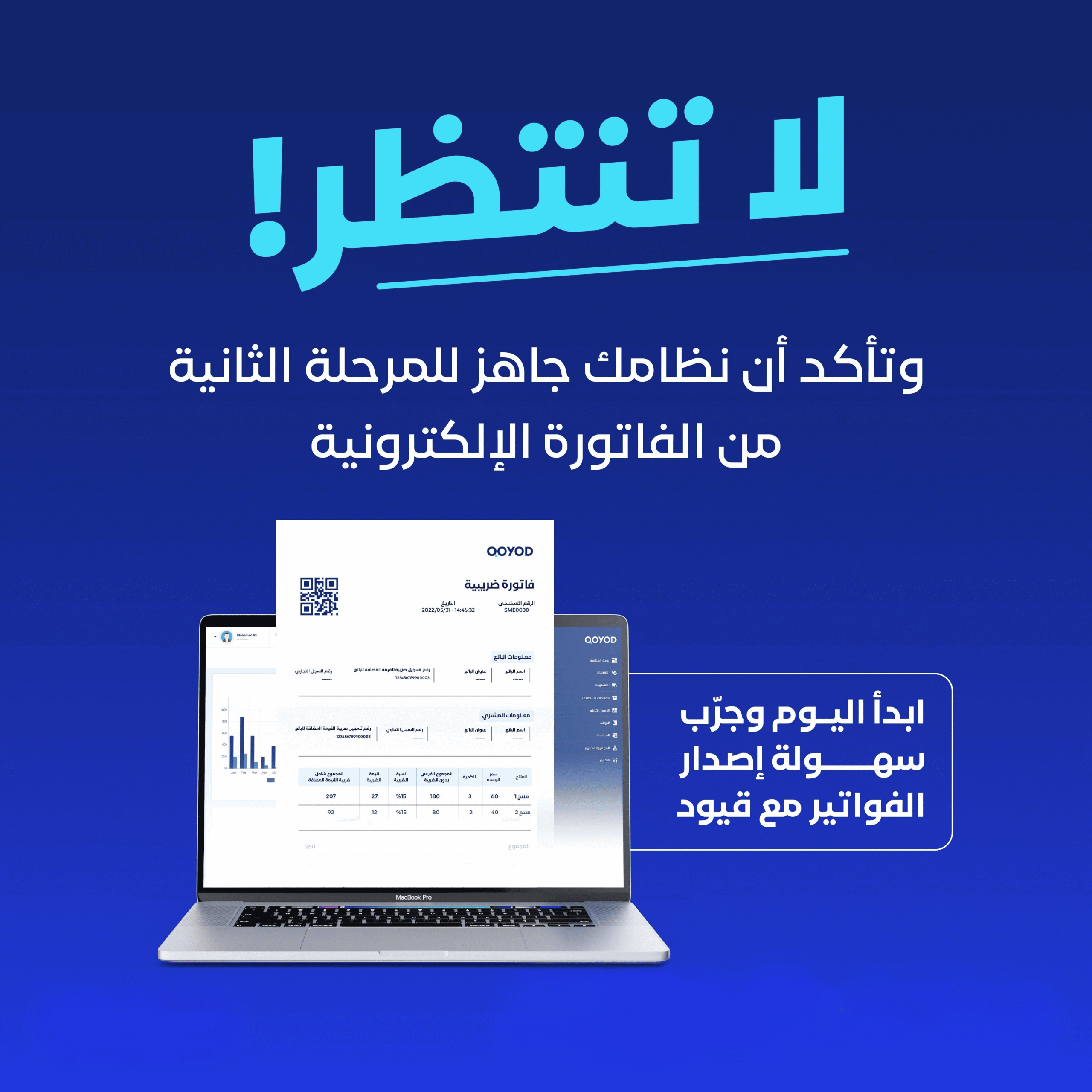
Phase two of ZATCA e-invoicing requires every hotel folio to be issued through a certified system connected to the Fatoora platform. Hotels issue both simplified tax invoices on individual guest check-out and B2B tax invoices to corporate accounts and OTAs through the Clearance flow. For a side-by-side view of vendor costs, read the guide on e-invoicing pricing in Saudi Arabia.
Every hotel folio must include the hotel name and tax number, a sequential invoice number, the date and time, the guest name and stay dates, an itemized list of room nights, F&B charges, and other folio postings with the correct VAT rate per line (15% standard), totals before and after VAT, and a QR code. A certified system generates the QR code, signs the invoice in XML, and transmits it to the Fatoora platform automatically inside the Reporting window.
How to evaluate a ZATCA-certified system for a hotel
When evaluating any e-invoicing vendor for a hotel, verify these six criteria:
- Official ZATCA phase-two certification with a verifiable approval number on the Authority’s portal.
- Both Reporting (B2C guest folios) and Clearance (B2B corporate and OTA invoices) flows in one system.
- Per-revenue-center posting on every folio line (rooms, F&B, spa, banquet).
- Folio link to the property management system, with real-time posting at check-out.
- Long-term cloud storage of signed invoices for at least six years.
- Monthly input-VAT and output-VAT reports ready in time for the quarterly filing deadline.
Where Qoyod fits in specifically for hotels
Qoyod brings together, inside one account: cloud accounting with revenue-center dimensions, OTA reconciliation per channel, advance-deposit accounting as deferred revenue, F&B recipe management and cost of sales, city-ledger AR for corporate accounts, integrated night-audit close, ZATCA-approved e-invoicing, payroll, and consolidated reports. Every folio posting lands an automatic journal entry inside the same ledger.
The platform handles multi-property hotel groups under one account, with shared master data (rate plans, OTAs, supplier catalog, COA), role-based permissions per property and revenue center, and either consolidated or per-property reports. It runs entirely in the cloud, so executives, GMs, and the external auditor share the same numbers from any device.
For hotels opening new properties or migrating from a legacy PMS-only setup, the setup service and the bookkeeping service are available as part of Qoyod Pro Services, alongside the app marketplace for connecting to PMS and channel-manager partners.
Frequently asked questions
Does Qoyod support per-revenue-center P&L for hotels?+
How does Qoyod reconcile OTA settlements?+
Does Qoyod treat advance deposits correctly?+
Does Qoyod connect to the property management system?+
Does Qoyod work for multi-property hotel groups?+
Is technical support available 24/7?+
Running a hotel does not need a generic accounting tool, it needs an operating ledger that ties room revenue, F&B, OTA reconciliation, advance deposits, night audit, and ZATCA e-invoicing together inside one account. The hotels that consistently grow are the ones that see per-revenue-center margin and OTA aging every week. That capability is what makes Qoyod the right fit for hotels in Saudi Arabia.