A hospital in Saudi Arabia is a multi-department enterprise running on insurer settlement. Revenue flows from outpatient consultations, inpatient admissions, surgeries, pharmacy, laboratory, imaging, and emergency, with a separate cost center, profit margin, and clinical workflow behind each one. The largest share of revenue is collected from insurers six to ten weeks after the service is delivered, and the books must keep every claim visible by department, by insurer, and by status. This guide explains what sets hospital accounting apart, and how the right software keeps departments, claims, and inventory inside one ledger.
What makes hospital accounting different
A hospital is not one business. It is a portfolio of clinical departments sharing one infrastructure, one staff roster, and one set of books. Each department has different revenue per case, different gross margin, different supplier base, and different insurer reimbursement schedule. A spreadsheet-based accounting team disappears under the volume within the first year.
Hospital accounting revolves around five connected pieces: department-level P&L (with shared cost allocation), inpatient and outpatient billing on the same patient record, insurer claim lifecycle from submission to settlement, pharmacy and lab inventory with batch and expiry tracking, and consolidated payroll across hundreds of staff. ZATCA-certified e-invoicing runs on every taxable line.
Daily reality is hundreds of patient touchpoints: outpatient consultations, inpatient admissions, surgical procedures, lab tests, imaging studies, pharmacy dispensing, ER cases, and discharge summaries. Every event generates a revenue line, a cost line, and an insurance claim component. Without a single ledger that ties all of these to the right department and the right insurer, the hospital cannot calculate true profitability.
The most common accounting challenges in hospitals
Every hospital operator in Saudi Arabia runs into the same four recurring problems. They share one root cause: departmental visibility is lost in a single consolidated ledger.
1. No department-level P&L. A hospital books all revenue into one income account and all supplies into one expense account. At year-end the consolidated P&L looks fine, but management has no idea whether outpatient is subsidizing inpatient or imaging is funding the loss in ER. Strategic decisions become guesses.
2. Unsettled insurance claims compound across departments. A 200-bed hospital submits 12,000 claims a month worth 14M SAR. Six weeks later, 8% are pending or partially denied (around 1.1M SAR). Without a claim-aging report broken down by insurer and by department, the receivables file becomes unreadable, and the AR team chases the wrong claims first.
3. Pharmacy and lab inventory drift. A 1,200-SKU hospital pharmacy and an 800-SKU lab between them carry over 4M SAR of inventory at any moment. Without batch- and expiry-level tracking with FEFO dispensing, 1% to 2% of inventory expires every quarter (80,000 SAR per quarter) and is silently written off.
4. Payroll allocation between departments. A consultant works 60% in outpatient, 30% in surgery, 10% in ER. Without time tracking and allocation rules, the consultant’s 80,000 SAR monthly cost lands entirely in one department, distorting every gross margin number.
What a hospital actually needs from its accounting software
A generic accounting tool was built for a single trading entity, not for a multi-department clinical operation with insurer settlement and batched inventory. The difference is concrete:
| Task | Generic accounting tool | What a hospital needs |
|---|---|---|
| Revenue posting | Single income account | Per-department revenue with shared cost allocation |
| Patient billing | Single invoice | Outpatient, inpatient, surgery, pharmacy on one patient ledger |
| Insurance claim | Treated as cash revenue | Claim with status by insurer and by department |
| Pharmacy inventory | Quantity only | Batch number and expiry date per lot |
| Staff cost allocation | Single department | Split across multiple departments by time |
| Asset register | Single line | Per-equipment depreciation by department |
Beyond the table, a hospital specifically needs three capabilities that generic platforms do not deliver:
- Department-level P&L with shared cost allocation, so every revenue and every cost lands on the right cost center, and gross margin per department is visible at every month-end without manual rework.
- An insurer claim lifecycle ledger, following every claim from submission to settlement, with status, expected versus actual reimbursement, denial reason, and resubmission history visible per insurer and per department.
- Batch- and expiry-tracked pharmacy and lab inventory, with FEFO dispensing enforced, 60-day expiry alerts, and full traceability from supplier delivery to patient dispensing. ZATCA-certified simplified tax invoice on every receipt.
How to organize a hospital’s books step by step
Moving a hospital from a legacy stack to integrated accounting takes around six to ten weeks. This is the sequence Qoyod applies with hospital customers:
E-invoicing and ZATCA compliance for hospitals
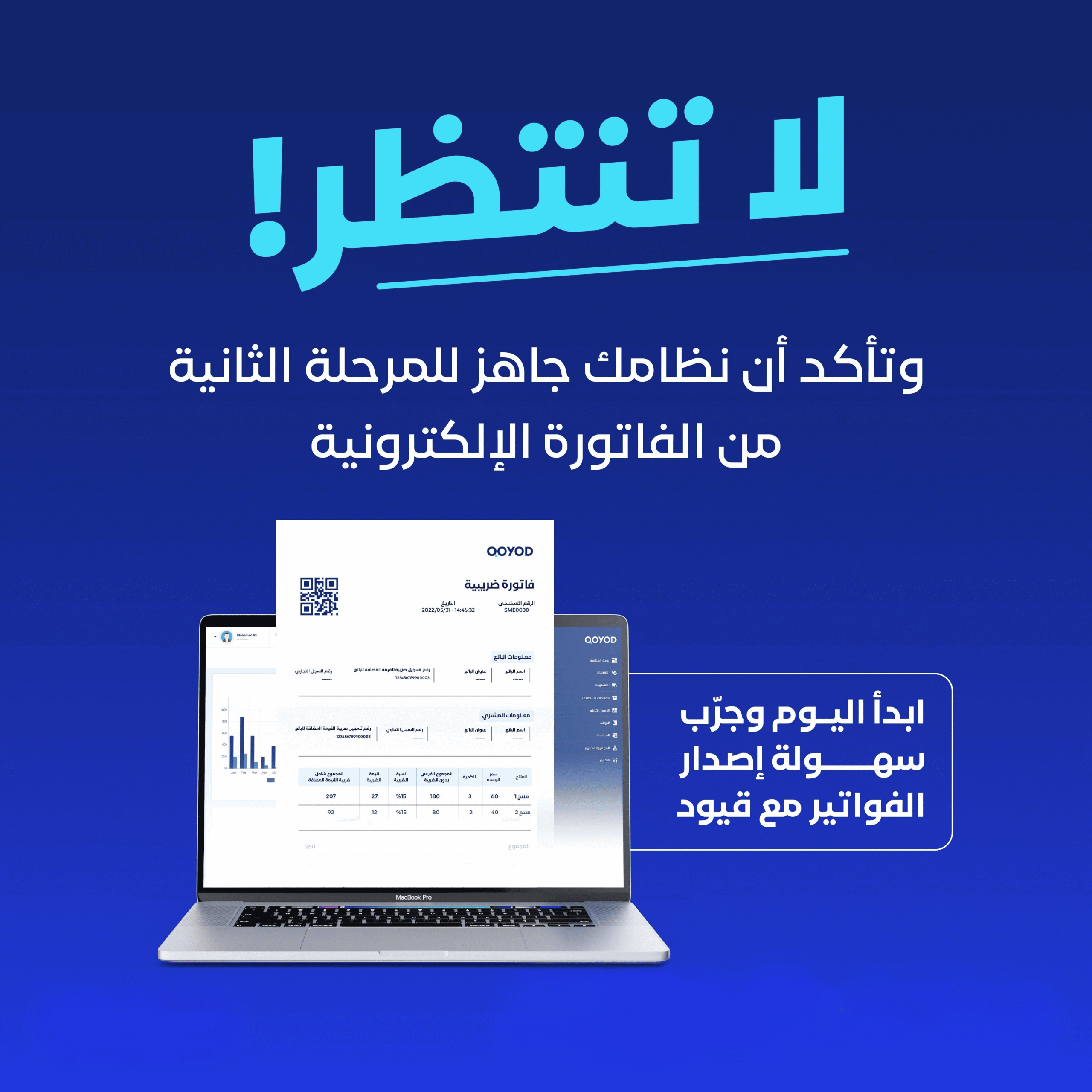
Phase two of ZATCA e-invoicing requires every hospital invoice to be issued through a certified system connected to the Fatoora platform. Hospitals issue both simplified tax invoices (B2C patient receipts) and B2B tax invoices through the Clearance flow (insurer monthly invoices). Healthcare services for Saudi citizens are largely VAT-exempt, but pharmacy retail, optional services, and services for non-citizens are taxable. For a side-by-side view of vendor costs, read the guide on e-invoicing pricing in Saudi Arabia.
Every patient invoice must include the hospital name and tax number, a sequential invoice number, the date and time, the patient name, an itemized list of services and supplies with the correct VAT treatment per line, totals before and after VAT, and a QR code. A certified system generates the QR code, signs the invoice in XML, and transmits it to the Fatoora platform automatically inside the Reporting window.
How to evaluate a ZATCA-certified system for a hospital
When evaluating any e-invoicing vendor for a hospital, verify these six criteria:
- Official ZATCA phase-two certification with a verifiable approval number on the Authority’s portal.
- Per-line VAT treatment on a single patient invoice (exempt services, 15% retail, zero-rated specific items).
- Both Reporting (B2C patient receipts) and Clearance (B2B insurer invoices) flows in one system.
- Long-term cloud storage of signed invoices for at least six years.
- A simulation environment for testing invoices before going live.
- Monthly input-VAT and output-VAT reports ready in time for the quarterly filing deadline.
Where Qoyod fits in specifically for hospitals
Qoyod brings together, inside one account: cloud accounting with department dimensions, patient billing across outpatient, inpatient, surgery, pharmacy, lab, imaging, and ER, insurance claim lifecycle tracking by insurer and by department, batch-and-expiry pharmacy and lab inventory with FEFO dispensing, payroll with allocation rules, ZATCA-approved e-invoicing, and consolidated reports. Every clinical event posts an automatic journal entry inside the same ledger.
The platform handles multi-facility hospital groups under one account, with role-based permissions per facility and department, shared master data (insurers, supplier catalog, COA), and either consolidated or per-facility reports. It runs entirely in the cloud, so executives, department heads, and the external auditor share the same numbers from any device.
For hospitals opening new facilities or migrating from a legacy hospital-information system, the setup service and the bookkeeping service are available as part of Qoyod Pro Services, alongside the app marketplace for connecting to clinical-information and lab-result partners.
Frequently asked questions
Does Qoyod support department-level P&L for hospitals?+
How does Qoyod handle insurer claims for hospitals?+
Does Qoyod track pharmacy and lab inventory by batch and expiry?+
Can Qoyod allocate staff cost across multiple departments?+
Does Qoyod work for multi-facility hospital groups?+
Is technical support available 24/7?+
Running a hospital does not need a generic accounting tool, it needs an operating ledger that ties departments, insurer claims, pharmacy inventory, and ZATCA e-invoicing together. The hospitals that consistently grow are the ones that see per-department margin and aging claims every week. That capability is what makes Qoyod the right fit for hospitals in Saudi Arabia.