A gas station in Saudi Arabia operates two businesses at once: fuel retail at regulated prices and a convenience-store operation that drives most of the actual margin. Three or four grades of fuel sit in underground tanks, dispensed through pumps that have to reconcile against tank dips every morning. Fleet customers pay via cards on monthly credit, while walk-in customers settle by card or cash. Add the convenience-store SKU catalog, ZATCA e-invoicing on every dispenser receipt, and the fact that fuel margins are razor-thin, and the difference between a profitable station and a struggling one comes down to accounting discipline on tank reconciliation, fleet credit, and store-side margin.
What makes gas-station accounting different
A gas station is not a regular retail business. Fuel is a regulated commodity sold at narrow margins (often 0.05 to 0.20 SAR per liter), where a single tank dip error of 200 liters can wipe out an entire day’s gross profit. The convenience store sells hundreds of SKUs at much fatter margins, but the two operations share the same labor, the same forecourt, and the same ledger. Generic accounting tools cannot handle either side cleanly.
Gas-station accounting revolves around five connected pieces: daily tank reconciliation against pump throughput, fleet-card B2B customers with monthly credit and per-vehicle reporting, convenience-store SKU inventory and shrinkage, supplier credit on fuel deliveries with price-protection clauses, and ZATCA simplified tax invoice on every dispenser receipt plus B2B tax invoices to fleet customers.
Daily reality is hundreds of postings per station: morning tank dips, pump throughput at end of shift, convenience-store sales, fleet-card transactions, fuel-delivery receipts, evening tank dips, the reconciliation variance, and the next morning’s fuel order. Each missed tank reconciliation becomes a fuel shrinkage loss the operator will never recover.
The most common accounting challenges in gas stations
Every gas station in Saudi Arabia runs into the same four recurring problems. They share one root cause: tank reconciliation runs on paper, fleet credit is tracked outside accounting, and convenience-store inventory is counted quarterly at best.
1. Tank reconciliation done on paper. The night shift dips the tank, the morning shift dips the tank, and the difference is supposed to match pump throughput. Without an integrated system, the dips land in a notebook, the variance gets ignored, and a 200-liter daily shrinkage turns into a 73,000-liter annual loss the operator never sees in the ledger.
2. Fleet credit tracked outside accounting. The station runs fleet cards for 40 to 80 corporate and government customers. Without an integrated AR module, fleet transactions live in the card-terminal report, monthly invoices are typed by hand, and credit limits are not enforced. One fleet customer slipping to 120 days becomes a six-figure write-off.
3. Convenience-store inventory counted quarterly. The store sells 600 to 1,200 SKUs across snacks, drinks, oils, and accessories. Without a per-SKU inventory module, shrinkage runs at 4% to 7% of sales, expired stock sits on the shelf, and the operator has no idea which categories actually pay the rent.
4. Fuel-delivery price protection not reconciled. The supplier delivers at the price prevailing on the delivery date. If the regulated retail price changes between delivery and sale, the margin compresses or expands. Without integrated price-protection reconciliation, the operator either over-pays the supplier or leaves margin on the table on every delivery.
What a gas station actually needs from its accounting software
A generic accounting tool was built for buying and selling discrete units, not for managing underground tanks with daily dips. The difference is concrete:
| Task | Generic accounting tool | What a gas station needs |
|---|---|---|
| Fuel inventory | Single SKU | Per-tank, per-grade, daily dipped |
| Pump throughput | Manual | Integrated with tank reconciliation |
| Fleet credit | Generic AR | Per-card with per-vehicle reporting |
| Convenience-store stock | Quarterly count | Per-SKU with shrinkage tracking |
| Fuel-delivery pricing | Frozen at order | Price-protection reconciliation |
| VAT | Flat 15% | Per-line, fuel and store separate |
Beyond the table, a gas station specifically needs three capabilities that generic platforms do not deliver:
- Daily tank reconciliation tied to pump throughput, where every shift logs tank dips, pumps post their throughput automatically, and the variance is surfaced as a separate fuel-shrinkage line.
- Fleet-card B2B credit management with per-vehicle reporting, generating monthly statements per fleet customer with per-vehicle and per-driver detail, credit-limit enforcement, and aged AR buckets.
- Convenience-store SKU inventory with shrinkage tracking, integrated to point of sale, with ZATCA-certified simplified tax invoice on every dispenser receipt plus B2B tax invoices to fleet customers.
How to organize a gas station’s books step by step
Moving a gas station to integrated accounting takes around three to five weeks depending on station count. This is the sequence Qoyod applies with every new gas-station customer:
E-invoicing and ZATCA compliance for gas stations
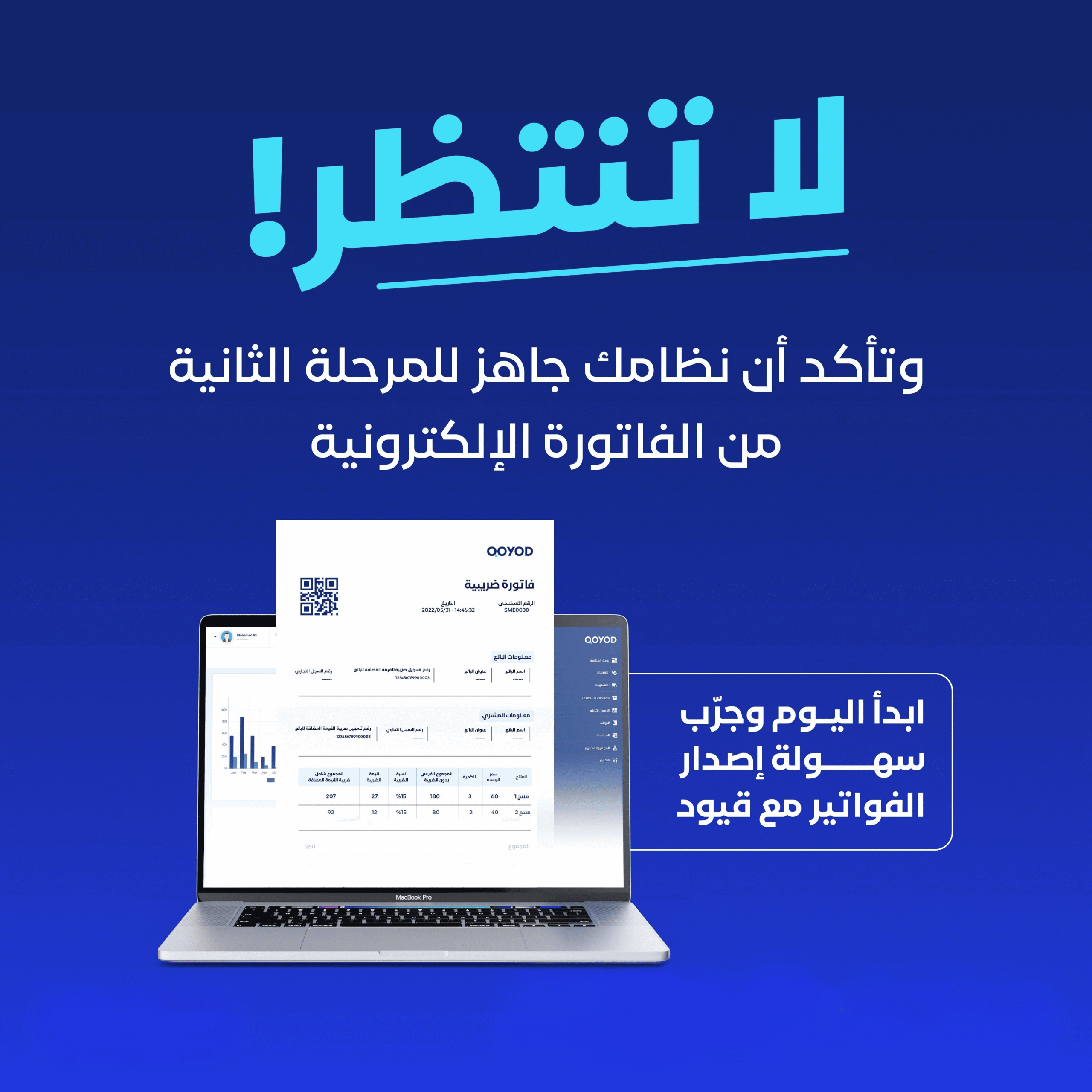
Phase two of ZATCA e-invoicing requires every dispenser receipt and every fleet invoice to be issued through a certified system connected to the Fatoora platform. Gas stations issue both simplified tax invoices on individual customer sales and B2B tax invoices to fleet customers through the Clearance flow. For a side-by-side view of vendor costs, read the guide on e-invoicing pricing in Saudi Arabia.
Every dispenser receipt must include the station name and tax number, a sequential invoice number, the date and time, the fuel grade and liters dispensed, the unit price, VAT at 15%, totals before and after VAT, and a QR code. A certified system generates the QR code, signs the invoice in XML, and transmits it to the Fatoora platform automatically inside the Reporting or Clearance window.
How to evaluate a ZATCA-certified system for a gas station
When evaluating any e-invoicing vendor for a station, verify these six criteria:
- Official ZATCA phase-two certification with a verifiable approval number on the Authority’s portal.
- Both Reporting (B2C dispenser receipts) and Clearance (B2B fleet invoices) flows in one system.
- Direct integration with dispenser controllers and forecourt POS.
- Per-line VAT treatment with fuel and convenience-store revenue tagged separately.
- Long-term cloud storage of signed invoices for at least six years.
- Monthly input-VAT and output-VAT reports ready in time for the quarterly filing deadline.
Where Qoyod fits in specifically for gas stations
Qoyod brings together, inside one account: cloud accounting with station and business-line dimensions, daily tank reconciliation with pump-throughput integration, fleet-card B2B credit with per-vehicle reporting, convenience-store SKU inventory with shrinkage tracking, fuel-delivery price-protection reconciliation, ZATCA-approved e-invoicing, payroll, and consolidated reports. Every dispense, fleet transaction, store sale, and fuel delivery lands an automatic journal entry inside the same ledger.
The platform handles multi-station networks under one account, with shared master data (fleet customers, store SKUs, suppliers, COA), role-based permissions per station, and either consolidated or per-station reports. It runs entirely in the cloud, so owners, station managers, and the external auditor share the same numbers from any device.
For operators opening new stations or migrating from legacy point-of-sale, the setup service and the bookkeeping service are available as part of Qoyod Pro Services, alongside the app marketplace for connecting to dispenser controllers and fleet-card partners.
Frequently asked questions
Does Qoyod support daily tank reconciliation?+
How does Qoyod manage fleet-card B2B credit?+
Does Qoyod handle convenience-store SKU inventory?+
Can Qoyod reconcile fuel-delivery prices?+
Does Qoyod work for multi-station networks?+
Is technical support available 24/7?+
Running a gas station does not need a generic accounting tool, it needs an operating ledger that ties tank reconciliation, fleet credit, convenience-store inventory, fuel-delivery pricing, and ZATCA e-invoicing together inside one account. The stations that consistently grow are the ones that see fuel-shrinkage and fleet-AR aging every week. That capability is what makes Qoyod the right fit for gas stations in Saudi Arabia.