A farm in Saudi Arabia runs multiple crop cycles, manages livestock herds, consumes inputs (seeds, fertilizers, feed, water, diesel) at high volume, and sells harvest into wholesale markets or B2B contracts with food processors. A mid-size Riyadh-area farm can grow 320 dunums of tomatoes producing 28 tons per dunum and run a layer-hen flock of 18,000 birds. Without crop-and-livestock cost centers, harvest-yield capture, and biological-asset valuation, the operator cannot tell which cycle paid back or how much input subsidy was actually realized against the irrigation and fertilizer spend.
What makes farm accounting different
A farm is a long-cycle manufacturing operation. Inputs flow in across months before any harvest, biological assets (crops, herds) grow on the books with their own valuation logic, and output volume varies with weather, water, and yield per dunum or per bird. Generic accounting tools cannot run a crop cost center or value a growing flock.
Farm accounting revolves around five connected pieces: per-crop and per-flock cost centers with input consumption, harvest-yield capture against planted area or head count, biological-asset valuation that updates as crops and herds grow, input-subsidy tracking against eligible spend, and ZATCA tax invoice on every wholesale or B2B sale.
Daily reality is hundreds of postings per farm: seed and fertilizer purchases allocated to crop cycles, feed and veterinary purchases allocated to flocks, irrigation and labor logged against the right field, harvest volumes captured at the gate, wholesale sales invoiced to traders, and subsidy claims filed with MEWA against eligible input lines.
The most common accounting challenges in farms
Every farm in Saudi Arabia runs into the same four recurring problems. They share the same gap: inputs flow in without cycle attribution, harvest is captured on a paper sheet, and biological assets sit on the books at last year’s value.
1. Per-crop margin unknown. A tomato cycle on 80 dunums uses 14,000 SAR of seeds, 62,000 SAR of fertilizers, 38,000 SAR of irrigation labor and water, 22,000 SAR of casual harvest labor, and yields 2,150 tons sold at an average 1,420 SAR per ton. Without per-cycle cost capture, the farm cannot tell whether the tomato margin paid back versus running cucumber on the same plots.
2. Harvest yield not reconciled. A field is planted with 12,000 layer hens. The flock should produce 1.08 million eggs per cycle. Actual sales clear 920,000 eggs. Without yield reconciliation, the 160,000-egg gap (some real, some shrinkage, some theft) goes unmeasured.
3. Biological assets stale on the books. A breeding herd of 240 dairy cows sits at the value carried two years ago. Without periodic re-valuation, balance-sheet asset value drifts from real market value and depreciation expense is wrong on the P&L.
4. Input subsidy not claimed in full. MEWA subsidizes specific fertilizer, seed, and feed categories. Without per-input-category capture against subsidy-eligible flags, claim submissions miss eligible lines and the farm leaves money on the table.
What a farm actually needs from its accounting software
A generic accounting tool was built for selling discrete goods, not for running a tomato cycle and a layer-hen flock on the same balance sheet. The gap is concrete:
| Task | Generic accounting tool | What a farm needs |
|---|---|---|
| Cost centers | One P&L | Per-crop, per-flock, per-field |
| Inputs | Generic expense | Allocated to cycle with subsidy flag |
| Harvest | Sales invoice | Yield reconciled against expected |
| Biological assets | Static fixed asset | Live valuation as crop or herd grows |
| Subsidies | Manual | Claim file from eligible input lines |
| VAT | Flat 15% | Per-line, agricultural exempt aware |
Beyond the table, a farm specifically needs three capabilities generic platforms do not deliver:
- Per-crop and per-flock cost centers, where every input (seed, fertilizer, feed, water, labor) attaches to a cycle, and per-cycle gross margin is visible at harvest without manual reclassification.
- Harvest-yield reconciliation, where expected yield from planted area or head count compares against actual sold volume and shrinkage, so variances are visible per cycle rather than at year-end.
- Biological-asset valuation, where crops and herds re-value as they grow under IFRS or local-GAAP logic, with ZATCA-certified tax invoice on every wholesale and B2B sale and input-subsidy claims generated from eligible input lines.
How to organize a farm’s books step by step
Moving a farm to integrated accounting takes around three to six weeks depending on cycle count, livestock operations, and field structure. This is the sequence Qoyod applies with every new farm customer:
E-invoicing and ZATCA compliance for farms
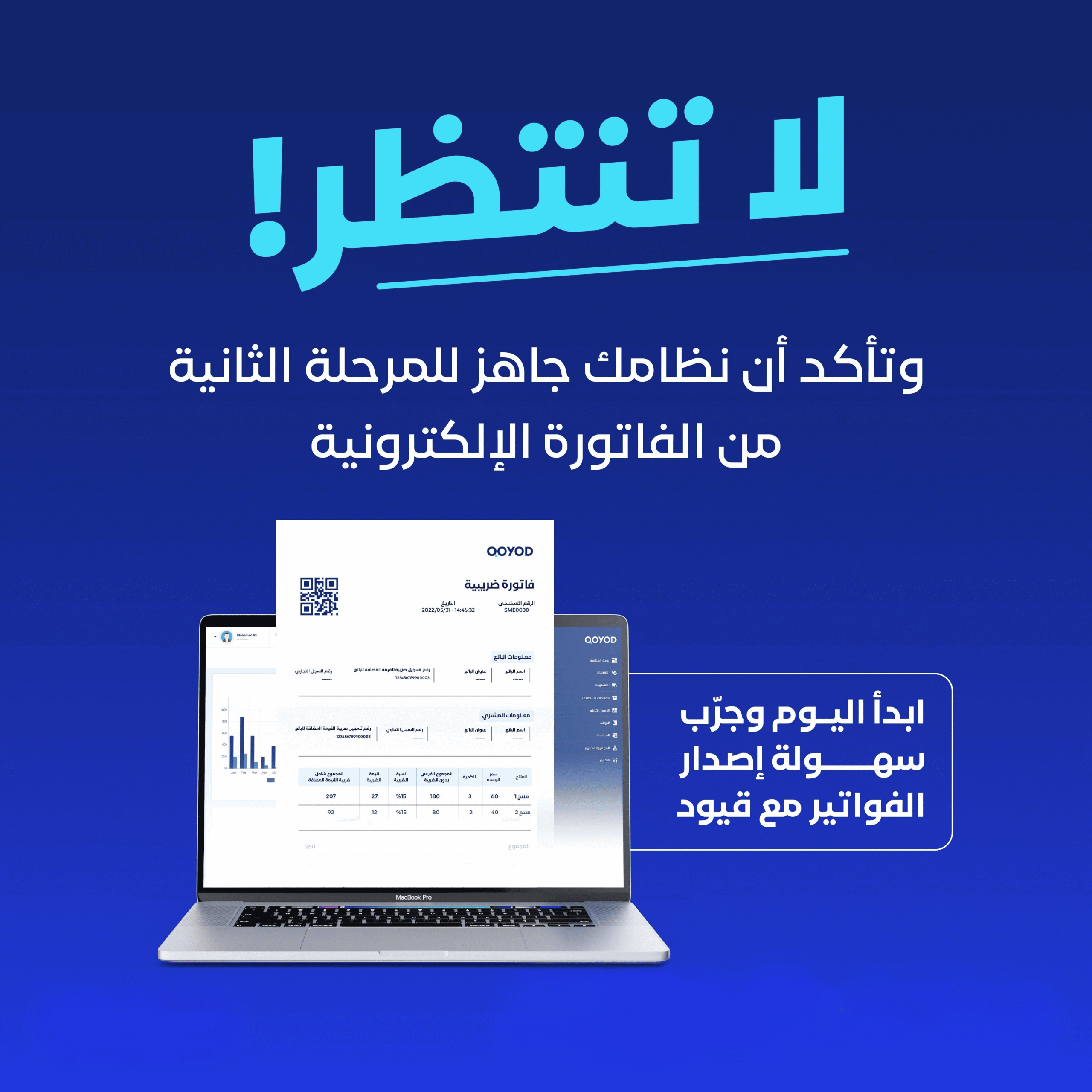
Phase two of ZATCA e-invoicing requires every wholesale invoice and every B2B contract billing to be issued through a certified system connected to the Fatoora platform. Farms issue mostly B2B tax invoices to traders, processors, and supermarket chains through the Clearance flow, with occasional simplified receipts on retail farm-gate sales. For a side-by-side view of vendor costs, read the guide on e-invoicing pricing in Saudi Arabia.
Every invoice must include the farm name and tax number, the buyer name and tax number on B2B invoices, a sequential invoice number, the date, an itemized list of harvest products with VAT at 15% on standard-rated lines (with exempt agricultural lines flagged separately), totals before and after VAT, and a QR code. A certified system generates the QR code, signs the invoice in XML, and transmits it to the Fatoora platform inside the Clearance window.
How to evaluate a ZATCA-certified system for a farm
When evaluating any e-invoicing vendor for a farm, verify these six criteria:
- Official ZATCA phase-two certification with a verifiable approval number on the Authority’s portal.
- Both Reporting (farm-gate retail) and Clearance (B2B trader and processor) flows in one system.
- Per-line VAT treatment with exempt agricultural lines flagged separately.
- Crop-cycle and flock attribution on every output invoice.
- Long-term cloud storage of signed invoices for at least six years.
- Monthly input-VAT and output-VAT reports ready in time for the quarterly filing deadline.
Where Qoyod fits in specifically for farms
Qoyod brings together, inside one account: cloud accounting with crop, flock, and field dimensions, per-cycle cost centers with input allocation, harvest-yield reconciliation, biological-asset valuation, input-subsidy claim files, ZATCA-approved e-invoicing, payroll, and consolidated reports. Every input purchase, harvest sale, herd movement, and subsidy claim lands an automatic journal entry inside the same ledger.
The platform handles multi-farm operations under one account, with shared master data (inputs, suppliers, traders, COA), role-based permissions per farm, and either consolidated or per-farm reports. It runs entirely in the cloud, so owners, farm managers, and the external auditor share the same numbers from any device.
For farms opening new sites or migrating from a legacy ERP, the setup service and the bookkeeping service are available as part of Qoyod Pro Services, alongside the app marketplace for connecting to irrigation-management and supply-chain partners.
Frequently asked questions
Does Qoyod support per-crop and per-flock cost centers?+
How does Qoyod reconcile harvest yield?+
Can Qoyod value biological assets?+
Does Qoyod track input subsidies?+
Does Qoyod work for multi-farm operations?+
Is technical support available 24/7?+
Running a farm does not need a generic accounting tool, it needs an operating ledger that ties cycle cost centers, harvest yields, biological-asset valuation, subsidies, and ZATCA e-invoicing together inside one account. The farms that consistently grow are the ones that see per-cycle margin every season. That capability is what makes Qoyod the right fit for farms and agricultural companies in Saudi Arabia.