An electronics store in Saudi Arabia carries high-ticket goods with serial numbers, manufacturer warranties, and 7-to-14 day return windows. Margins on smartphones and TVs are typically 6% to 12%, so a single mispriced SKU or a single warranty claim badly handled erases the profit on twenty other units. Add Tabby and Tamara installments, multi-brand purchasing terms, and ZATCA e-invoicing on every receipt, and the difference between a profitable electronics store and a struggling one is purely accounting discipline. This guide explains what sets electronics store accounting apart, and how the right software keeps inventory, warranty, and returns inside one ledger.
What makes electronics store accounting different
An electronics store is a low-margin high-velocity retail business. Each unit has a serial number, a warranty period, a return policy, and a supplier rebate cycle. Sales fall into three streams: cash-now, installment (Tabby, Tamara, mada Atheer), and B2B invoices to companies. A unit returned within 14 days has to reverse revenue, restore inventory, and reverse VAT, all in the same workflow.
Electronics store accounting revolves around five connected pieces: serial-number-tracked inventory, warranty lifecycle per unit, installment receivable per BNPL provider with the right commission deduction, return and refund accounting with VAT reversal, and B2B invoicing for corporate customers. ZATCA-certified simplified tax invoice runs on every receipt.
Daily reality is a stream of small high-value transactions: receiving a shipment of 100 smartphones with serial ranges, selling a 4,500 SAR TV on a 12-month installment, processing a return on a defective laptop, paying out a supplier rebate, and reconciling the BNPL settlement file at week-end. Each missed step shows up later as either an inventory variance or a denied warranty claim.
The most common accounting challenges in electronics stores
Every electronics store operator in Saudi Arabia runs into the same four recurring problems. They share one root cause: serial-number tracking and BNPL reconciliation are not native to generic accounting tools.
1. Inventory variance on serial-tracked SKUs. A 200-unit smartphone shipment turns into 197 units after three weeks of trading, but the system shows 199. The two missing units are either theft, a return exchanged without paperwork, or a warranty replacement gone untracked. Without serial-level tracking, the cause is impossible to isolate.
2. BNPL reconciliation drift. A store sells 800,000 SAR on Tabby in one month. Tabby settles 780,000 SAR (after 2.5% commission) seven days later. Without an automated reconciliation between sales and settlements, small variances accumulate month after month, and the receivables file becomes unauditable.
3. Return windows and VAT reversal. A customer returns a laptop on day 10 of the 14-day window. The store must reverse revenue, restore inventory, refund the customer, and reverse the 15% output VAT. Manual processing produces VAT reporting errors that auditors flag every cycle.
4. Warranty claim accounting. A defective unit is replaced under manufacturer warranty. The store ships the unit to the supplier, receives credit, and gives the customer a new unit. Without a warranty ledger that links the customer unit to the supplier credit, the inventory is wrong and the supplier reconciliation is wrong.
What an electronics store actually needs from its accounting software
A generic accounting tool was built for goods without serial numbers and without warranty obligations. The difference is concrete:
| Task | Generic accounting tool | What an electronics store needs |
|---|---|---|
| Inventory | Quantity only | Serial number per unit |
| Warranty | Not tracked | Lifecycle per unit with supplier link |
| Installment sale | Treated as cash | Receivable per BNPL provider with commission split |
| Returns | Manual reversal | Workflow with VAT reversal and inventory restore |
| B2B invoicing | Single template | Tax invoice through Clearance flow |
| Supplier rebate | Manual journal | Accrual against eligible volume |
Beyond the table, an electronics store specifically needs three capabilities that generic platforms do not deliver:
- Serial-number-tracked inventory, so every smartphone, TV, and laptop is tracked from supplier delivery through retail sale to customer, with warranty and return windows visible per unit.
- BNPL reconciliation per provider (Tabby, Tamara, mada Atheer), with the commission posted as an expense line, the settlement matched against the original sale, and the receivable cleared automatically.
- Returns workflow with automatic VAT reversal, so a return within the policy window restores inventory, refunds the customer, and reverses the 15% output VAT in one step. Generated alongside a ZATCA-certified credit note that links to the original simplified tax invoice.
How to organize an electronics store’s books step by step
Moving from quantity-only inventory to serial-tracked electronics retail takes around one to two weeks. This is the sequence Qoyod applies with every new electronics store customer:
E-invoicing and ZATCA compliance for electronics stores
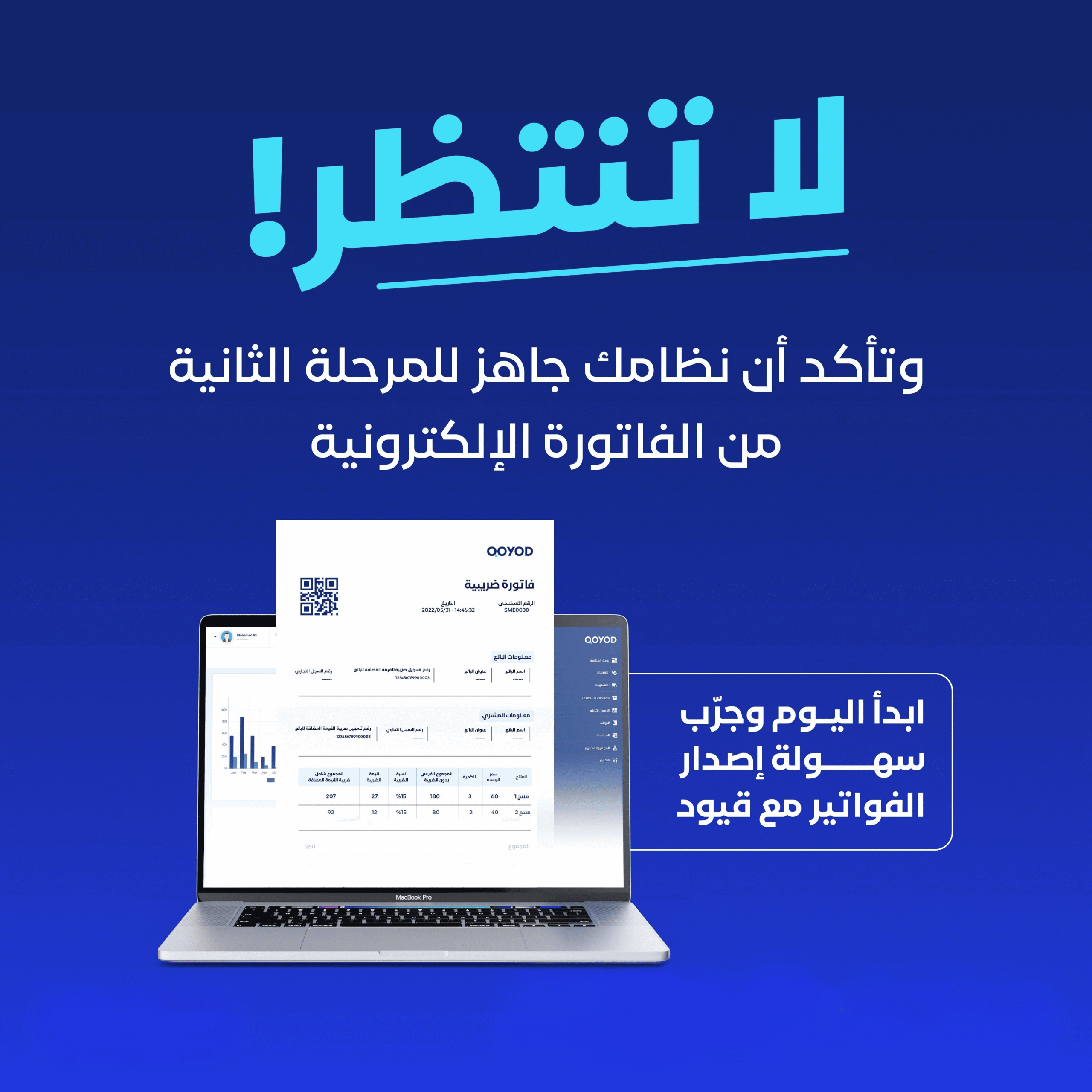
Phase two of ZATCA e-invoicing requires every electronics sale to be issued through a certified system connected to the Fatoora platform. Electronics stores issue mostly simplified tax invoices at the till because the walk-in customer does not carry a tax number, and B2B tax invoices to corporate customers through the Clearance flow. For a side-by-side view of vendor costs, read the guide on e-invoicing pricing in Saudi Arabia.
Every electronics receipt must include the store name and tax number, a sequential invoice number, the date and time, an itemized list with the serial number on serial-tracked SKUs, the VAT rate (15%), totals before and after VAT, and a QR code. A certified system generates the QR code, signs the invoice in XML, and transmits it to the Fatoora platform automatically inside the 24-hour Reporting window.
How to evaluate a ZATCA-certified system for an electronics store
When evaluating any e-invoicing vendor for an electronics store, verify these six criteria:
- Official ZATCA phase-two certification with a verifiable approval number on the Authority’s portal.
- Both Reporting (B2C till receipts) and Clearance (B2B corporate invoices) flows in one system.
- Credit notes linked to the original invoice for returns, with automatic VAT reversal.
- Serial number on every receipt line for serial-tracked SKUs.
- Long-term cloud storage of signed invoices for at least six years.
- Monthly input-VAT and output-VAT reports ready in time for the quarterly filing deadline.
Where Qoyod fits in specifically for electronics stores
Qoyod brings together, inside one account: cloud accounting, serial-number-tracked inventory, warranty lifecycle per unit, BNPL reconciliation per provider, returns workflow with VAT reversal, B2B invoicing through Clearance, supplier rebate accruals, ZATCA-approved e-invoicing, and consolidated reports. Every sale and every return posts an automatic journal entry inside the same ledger.
The platform handles multi-branch electronics retailers under one account, with inter-branch stock transfers (useful for redistributing slow-movers), role-based permissions per branch, and either consolidated or per-branch reports. It runs entirely in the cloud, so head office, branch managers, and the external accountant share the same numbers from any device.
For stores opening new branches or migrating from a legacy POS, the setup service and the bookkeeping service are available as part of Qoyod Pro Services, alongside the app marketplace for connecting to BNPL, e-commerce, and supplier-portal partners.
Frequently asked questions
Does Qoyod track inventory by serial number?+
How does Qoyod handle Tabby, Tamara, and mada Atheer?+
Does Qoyod process returns with VAT reversal?+
Can Qoyod handle manufacturer warranty claims?+
Does Qoyod support multi-branch electronics retailers?+
Is technical support available 24/7?+
Running an electronics store does not need a generic accounting tool, it needs an operating ledger that ties serial inventory, warranty, BNPL reconciliation, returns, and ZATCA e-invoicing together. The electronics stores that consistently grow are the ones that see serial variance and BNPL aging every week. That capability is what makes Qoyod the right fit for electronics stores in Saudi Arabia.