A dental clinic in Saudi Arabia is a service business with three uncommon traits: treatment runs over many sessions and months (orthodontics, implants, root canal series), revenue is split between cash patients and insurer-funded patients, and a meaningful share of every case is an outsourced lab cost (crowns, bridges, dentures). On top of that, each dentist earns a commission on services delivered (typically tracked manually using custom fields on the invoice), and every receipt must be a ZATCA-certified simplified tax invoice. This guide explains what sets dental accounting apart, and how the right software keeps per-session invoicing, lab cost, and insurance inside one ledger.
What makes dental clinic accounting different
A dental clinic is not a single-visit business. An implant case is six visits and 18,000 SAR over four months. An orthodontic case is 24 months of monthly visits and 12,000 SAR. The accounting team must split that revenue across separate per-session invoices, track the open balance per patient through the customer ledger, and reconcile every visit against the insurer share and the patient share.
Dental clinic accounting revolves around five connected pieces: a customer ledger per patient covering the running balance across sessions, separate per-session invoicing on long-cycle cases, insurance claims with status from submitted to settled, dentist commission per service delivered (tracked manually via custom fields), and outsourced lab cost tracking. A simplified tax invoice is issued on every payment captured at reception.
Daily reality is dozens of patient touchpoints: opening a new patient file, scheduling a series of visits, issuing a separate invoice and capturing the copay at each session, sending the lab order with a unit cost, submitting the insurance claim, and reconciling the cash drawer at end of day. Each missed step shows up later as either a write-off (lab cost not billed to the patient) or a denied insurance claim.
The most common accounting challenges in dental clinics
Every dental clinic operator in Saudi Arabia runs into the same four recurring problems. They share one root cause: a single ledger does not link the treatment plan, the lab order, the insurance claim, and the patient receipt.
1. Lab cost not tied to the case. A crown costs the clinic 600 SAR from the lab and is billed to the patient at 1,800 SAR. Without a per-case lab cost ledger, the clinic cannot calculate true gross margin per dentist, per service, or per case. Pricing decisions become guesses.
2. Unsettled insurance claims. A clinic submits 800 claims a month worth 400,000 SAR. Six weeks later, 9% are still pending or partially denied (around 36,000 SAR). Without a live claim-aging ledger per insurer, those receivables age out and quietly shrink margin.
3. Long cases lose follow-through. A patient is mid-orthodontic with 14 monthly visits remaining. Without a disciplined customer ledger and a weekly aged-receivables review, missed payments and no-shows accumulate, and patients fall off the schedule without anyone noticing until they show up six months later asking why the case is incomplete.
4. Dentist commission errors. Each dentist earns 30% to 45% on services delivered, after lab cost. The calculation itself is manual, but it depends on every invoice carrying the right tags (executing dentist, procedure type, lab cost). When those tags sit in a clean custom-field workflow on the invoice instead of a side spreadsheet, the monthly calculation stays accurate. Without that discipline, payroll overpayment can hit 8% to 12% of revenue.
What a dental clinic actually needs from its accounting software
A generic accounting tool was built for single-event invoicing, not for a multi-session course of care with insurer co-pay and outsourced lab cost. The difference is concrete:
| Task | Generic accounting tool | What a dental clinic needs |
|---|---|---|
| Patient ledger | Treated as customer | Customer with aged ledger per session |
| Lab cost | Generic expense | Tied to the specific case and patient |
| Insurance claim | Treated as cash revenue | Claim with status: submitted, partial, settled, denied |
| Dentist commission | Manual Excel on the side | Invoices tagged with the executing dentist via custom fields |
| Per-session invoicing | One invoice for the whole case | A separate invoice on the day each session is delivered |
| Patient receipt | Single line | Split between copay and insurer share |
Beyond the table, a dental clinic specifically needs three capabilities that generic platforms do not deliver:
- A patient ledger that handles long cases, so a 14-visit orthodontic case sits as a clean sequence of session invoices and payments with a running balance, visible in the customer account.
- Outsourced lab cost tracking per case, with the supplier invoice posted against the specific crown or bridge, so true gross margin is calculable per case, per dentist, and per service line.
- An insurance claim ledger following every claim from submission to settlement, with status, expected versus actual reimbursement, denial reason, and resubmission history visible side by side. ZATCA-certified simplified tax invoice on every patient receipt.
How to organize a dental clinic’s books step by step
Moving from a paper appointment book to integrated dental accounting takes around two weeks. This is the sequence Qoyod applies with every new dental clinic customer:
E-invoicing and ZATCA compliance for dental clinics
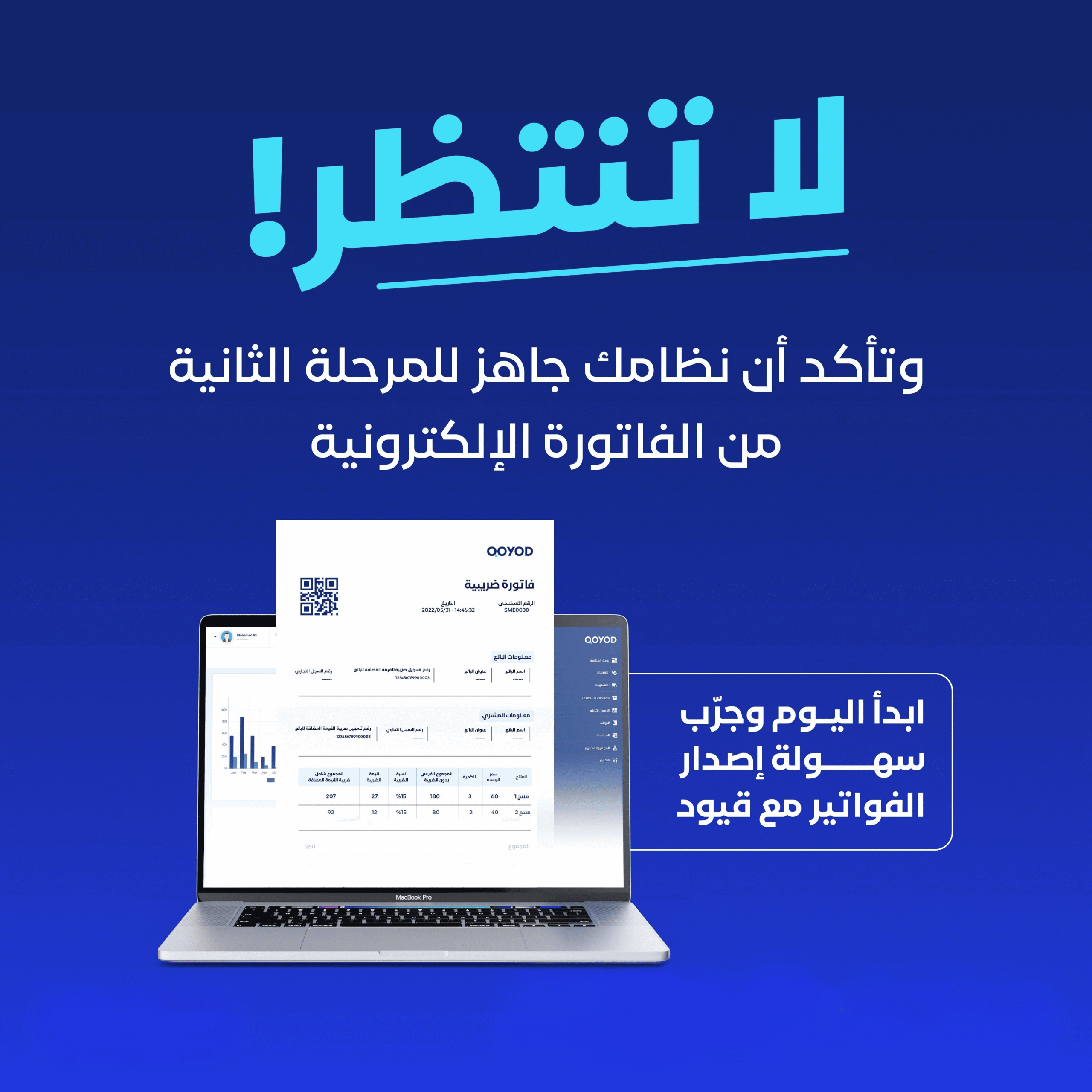
Phase two of ZATCA e-invoicing requires every dental clinic receipt to be issued through a certified system connected to the Fatoora platform. Clinics issue mostly simplified tax invoices at reception because the patient does not carry a tax number, and B2B tax invoices to insurers through the Clearance flow. For a side-by-side view of vendor costs, read the guide on e-invoicing pricing in Saudi Arabia.
Every patient receipt must include the clinic name and tax number, a sequential invoice number, the date and time, the patient name, an itemized list of services delivered today with the correct VAT rate (15% standard), totals before and after VAT, and a QR code. A certified system generates the QR code, signs the invoice in XML, and transmits it to the Fatoora platform automatically inside the 24-hour Reporting window.
How to evaluate a ZATCA-certified system for a dental clinic
When evaluating any e-invoicing vendor for a dental clinic, verify these six criteria:
- Official ZATCA phase-two certification with a verifiable approval number on the Authority’s portal.
- Both Reporting (B2C patient receipts) and Clearance (B2B insurer invoices) flows in one system.
- A linked customer ledger on every invoice, so reception sees the patient’s running balance at checkout.
- Long-term cloud storage of signed invoices for at least six years.
- A simulation environment for testing invoices before going live.
- Monthly input-VAT and output-VAT reports ready in time for the quarterly filing deadline.
Where Qoyod fits in specifically for dental clinics
Qoyod brings together, inside one account: cloud accounting, a customer ledger per patient with full aged receivables, insurance claim follow-up, custom fields on invoices to tag the executing dentist and procedure type, lab cost recording, ZATCA-approved e-invoicing, payroll, and consolidated reports. Standard transactions post automatic journal entries inside the same ledger.
The platform handles multi-branch dental clinic groups under one account, with shared patient files across branches (subject to consent), role-based permissions per branch, and either consolidated or per-branch reports. It runs entirely in the cloud, so head office, branch managers, and the external accountant share the same numbers from any device.
For clinics opening new branches or migrating off legacy clinic-management software, the setup service and the bookkeeping service are available as part of Qoyod Pro Services, alongside the app marketplace for connecting to clinic-management partners.
Frequently asked questions
How does Qoyod handle dental treatment that runs over multiple visits?+
How does Qoyod track lab cost per case?+
Does Qoyod handle insurance claims with full lifecycle?+
How is dentist commission calculated?+
Does Qoyod work for multi-branch dental clinic groups?+
Is technical support available 24/7?+
Running a dental clinic does not need a generic accounting tool, it needs an operating system that ties per-session invoicing, lab cost, insurance claims, and ZATCA e-invoicing together inside one ledger. The dental clinics that consistently grow are the ones that review aged patient balances and aging claims every week. That capability is what makes Qoyod the right fit for dental clinics in Saudi Arabia.