A consulting firm in Saudi Arabia sells the time of senior advisors and analysts, not a physical product. Every engagement is priced as a fixed-fee project, a time-and-materials engagement, a milestone-based deliverable, or a monthly retainer, and every consultant’s hour either lands on a billable project or on internal time that erodes margin. ZATCA e-invoicing applies on every fee invoice, and the difference between a profitable firm and one that runs at break-even comes down to accounting discipline on utilization, project costing, and milestone revenue recognition.
What makes consulting accounting different
A consulting firm is not a regular service business. Its revenue is a portfolio of projects with very different commercial structures (fixed fee, time-and-materials, milestone, retainer), and its only cost-of-service is labor with fully-loaded hourly rates that include benefits, overhead, and bench time. Every consultant has a target billable utilization (typically 60% to 75%), and every percentage point of shortfall is a percentage point of gross margin. Generic accounting tools cannot track utilization or recognize milestone revenue.
Consulting accounting revolves around five connected pieces: project costing with fully-loaded labor rates, billable utilization per consultant per week, milestone-based revenue recognition on fixed-fee engagements, retainer accounting with unused-balance roll-forward, and ZATCA tax invoice issuance on every fee invoice. Each connects directly to a journal entry that affects both the project P&L and the firm-wide income statement.
Daily reality is hundreds of postings per firm: timesheet entries by project and task, expense reports, milestone certifications, retainer drawdowns, fixed-fee progress billing, time-and-materials invoicing, and contractor settlements. Each missed timesheet entry distorts project margin, each missed milestone delays cash, and each retainer drawdown that goes unposted creates a future commercial dispute.
The most common accounting challenges in consulting firms
Every consulting firm in Saudi Arabia hits the same four recurring problems. They share one root cause: time is logged in a tool disconnected from accounting, milestones are tracked in slide decks, and retainers run on spreadsheet balances.
1. Utilization not measured weekly. A consultant has 40 hours a week and a target of 28 billable. Without an integrated timesheet tied to project codes, utilization is computed at month-end, shortfalls are discovered too late to redeploy, and 10% to 20% of labor cost slips into unbillable time.
2. Project margin estimated, not measured. A fixed-fee engagement was scoped at 480 hours and the team is at 620 hours with two deliverables outstanding. Without project cost-to-complete tracking, the partner discovers a loss after the engagement closes instead of escalating mid-flight.
3. Milestone revenue recognized incorrectly. A 600,000 SAR fixed-fee project has four milestones at 25% each. Without milestone-based revenue recognition, the firm books revenue on cash receipt or full invoice, distorting monthly results and failing IFRS revenue-recognition standards at audit.
4. Retainer balances drift. A client pays a 50,000 SAR monthly retainer for 25 hours of advisory and uses only 18 in some months. Without retainer accounting with unused-balance roll-forward, the client claims unused hours, the firm cannot reconcile, and the relationship deteriorates over a ledger problem.
What a consulting firm actually needs from its accounting software
A generic accounting tool was built for selling goods, not for billing time and recognizing milestone revenue. The difference is concrete:
| Task | Generic accounting tool | What a consulting firm needs |
|---|---|---|
| Revenue recognition | On invoice | Milestone or percentage of completion |
| Project cost | Generic expense | Fully-loaded labor + expenses by project |
| Utilization | Not tracked | Per consultant, per week |
| Retainers | Standard AR | Drawdown ledger with roll-forward |
| Time and materials | Manual | Timesheet to invoice with rate cards |
| VAT | Flat 15% | Per-line, including export of services |
Beyond the table, a consulting firm specifically needs three capabilities that generic platforms do not deliver:
- Timesheet engine with project and task codes, where every consultant logs daily time against a project and task, the system computes fully-loaded labor cost and billable utilization per consultant per week, and weekly reports surface low-utilization names before the month closes.
- Milestone-based revenue recognition, with project setup that defines milestones and percentages, automatic revenue posting on milestone certification, and percentage-of-completion computation as a control on milestone-heavy engagements.
- Retainer ledger with ZATCA e-invoicing, drawing down monthly retainer hours against logged time, rolling unused balances forward per the contract, and issuing ZATCA-certified tax invoices on every retainer cycle and every time-and-materials billing run.
How to organize a consulting firm’s books step by step
Moving a consulting firm to integrated accounting takes around three to five weeks depending on practice count and engagement complexity. This is the sequence Qoyod applies with every new consulting customer:
E-invoicing and ZATCA compliance for consulting firms
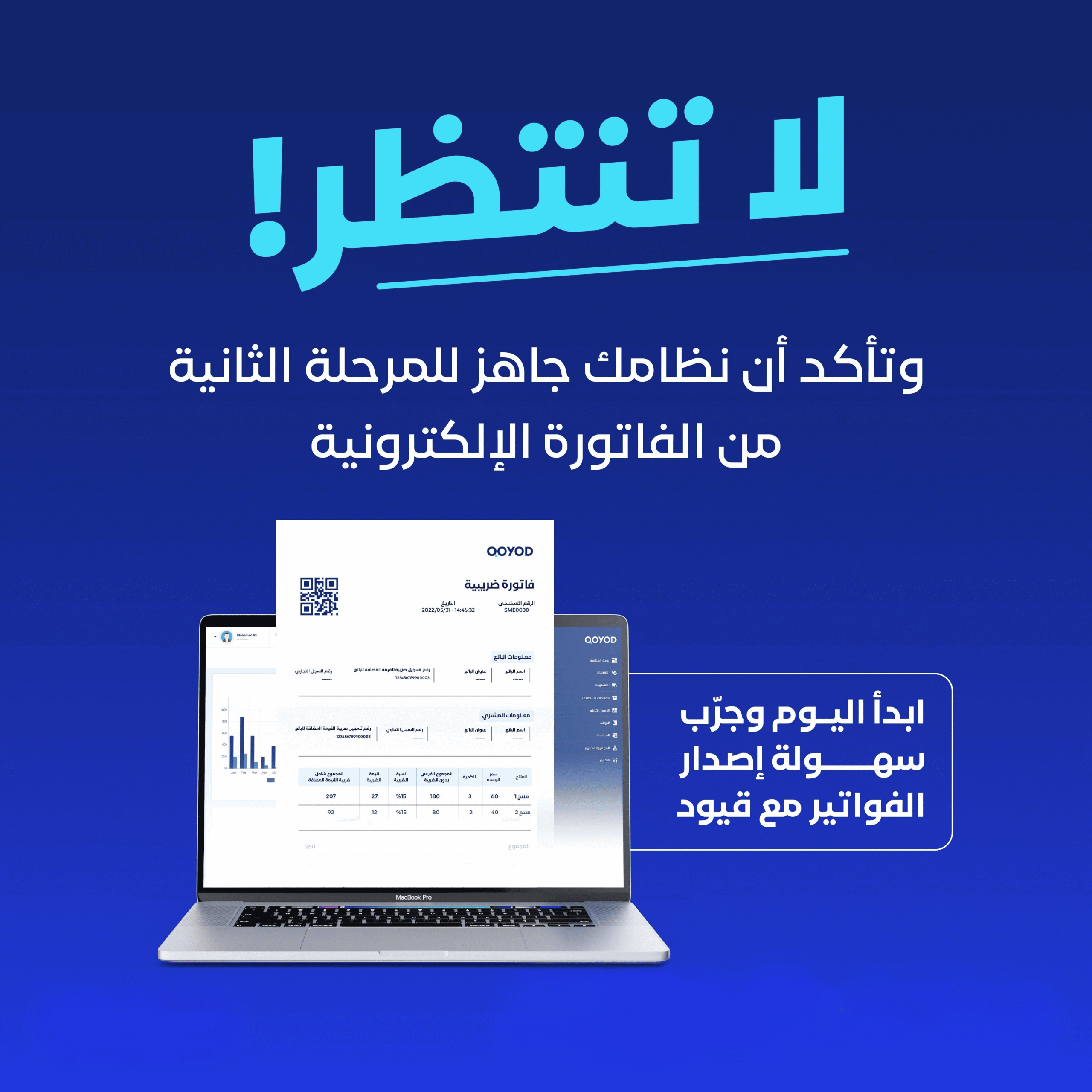
Phase two of ZATCA e-invoicing requires every fee invoice and every retainer billing to be issued through a certified system connected to the Fatoora platform. Consulting firms in Saudi Arabia issue mostly B2B tax invoices to corporate clients through the Clearance flow, with occasional simplified tax invoices on small individual advisory engagements. For a side-by-side view of vendor costs, read the guide on e-invoicing pricing in Saudi Arabia.
Every invoice must include the firm name and tax number, a sequential invoice number, the date and time, the client name and tax number, an itemized list of services (or hours by consultant and rate, or milestones with percentages), VAT at 15% on standard-rated lines (with export of services flagged at 0% when applicable), totals before and after VAT, and a QR code. A certified system generates the QR code, signs the invoice in XML, and transmits it to the Fatoora platform automatically inside the Clearance window.
How to evaluate a ZATCA-certified system for a consulting firm
When evaluating any e-invoicing vendor for a consulting firm, verify these six criteria:
- Official ZATCA phase-two certification with a verifiable approval number on the Authority’s portal.
- Clearance flow on B2B client invoices plus Reporting flow on B2C simplified invoices.
- Per-line VAT treatment with export of services handled at the correct rate.
- Project-code field required on every invoice line.
- Long-term cloud storage of signed invoices for at least six years.
- Monthly input-VAT and output-VAT reports ready in time for the quarterly filing deadline.
Where Qoyod fits in specifically for consulting firms
Qoyod brings together, inside one account: cloud accounting with practice and project dimensions, timesheet engine with billable utilization, fully-loaded project costing, milestone-based revenue recognition, retainer ledger with roll-forward, ZATCA-approved e-invoicing, payroll, and consolidated reports. Every timesheet entry, expense report, milestone certification, retainer drawdown, and invoice lands an automatic journal entry inside the same ledger.
The platform handles multi-office consulting networks under one account, with shared master data (clients, projects, rate cards, COA), role-based permissions per practice, and either consolidated or per-office reports. It runs entirely in the cloud, so partners, project managers, and the external auditor share the same numbers from any device.
For consulting firms launching new practices or migrating from a legacy professional-services automation tool, the setup service and the bookkeeping service are available as part of Qoyod Pro Services, alongside the app marketplace for connecting to project-management partners.
Frequently asked questions
Does Qoyod support timesheet-driven project costing?+
How does Qoyod handle milestone-based revenue recognition?+
Can Qoyod track billable utilization per consultant?+
Does Qoyod manage retainer balances with roll-forward?+
Does Qoyod work for multi-office consulting networks?+
Is technical support available 24/7?+
Running a consulting firm does not need a generic accounting tool, it needs an operating ledger that ties timesheets, project costing, utilization, milestones, retainers, and ZATCA e-invoicing together inside one account. The firms that consistently grow are the ones that see utilization and project margin every week. That capability is what makes Qoyod the right fit for consulting firms in Saudi Arabia.