A construction or real-estate development company in Saudi Arabia runs projects that span months or years, with cash flowing out on materials, labor, and subcontractors long before milestone payments are received. The point where most firms lose grip is the gap between project budget, actual cost to date, and the tax invoices issued against each milestone. This guide explains what sets construction accounting apart, and how the right accounting software for construction companies keeps every project, progress claim, and retention visible inside one ledger.
Last updated: 2 August 2026
What makes construction and real-estate accounting different
A construction company is a project-based business with the most fragmented cost structure in the Saudi economy. Each project has its own budget, its own contract value, its own milestone schedule, and its own subcontractor mix. A single firm running ten projects is effectively running ten small businesses inside one company.
Construction accounting revolves around five connected pieces: per-project cost tracking (materials, labor, subcontractors, equipment), separate tax invoices for each milestone, supplier and subcontractor ledgers with aging, equipment recorded as fixed assets with depreciation, and per-project gross margin. The right software ties all of these inside one ledger, with each project as its own cost center and inventory for project materials.
Day-to-day, a project manager juggles dozens of moving parts: a material delivery to site, a supplier invoice, a milestone tax invoice to the client, a customer statement reconciliation, and the rolling forecast of cost-to-complete. Every missed entry distorts the project’s real margin and the company’s cash forecast.
This page is written for contracting and construction firms and for companies holding investment property. If your business is brokerage and real-estate marketing on commission, accounting software for real estate offices is the closer fit; if you develop and sell units off-plan, see accounting software for real estate developers.
The four recurring accounting problems in Saudi construction firms
Every Saudi construction operator runs into the same four recurring accounting problems. They share one root cause: no single ledger that follows each project from contract signing through every milestone invoice.
1. Cost cross-contamination between projects. Materials, labor, and overheads get posted into one generic account. By month-end, no one knows which project carried which expense, and project-level margin becomes guesswork. The fix is per-project cost centers from day one.
2. Revenue booked by feel. Long-term contracts get summarized into a single invoice at handover. The right discipline is to issue a separate tax invoice for each agreed milestone, link it to the project cost center, and let cumulative invoices tell the revenue story instead of one large end-of-job entry.
3. Subcontractor and supplier chaos. A project has 8 subcontractors and many material suppliers, each with their own commercial registration, tax number, and payment cycle. Without a single supplier ledger per project, payments get duplicated, statements drift, and the legal exposure on the firm grows.
4. Equipment and asset blind spots. Cranes, mixers, and site vehicles are large capital items. Without registering them as fixed assets with periodic depreciation, and without allocating their running cost to the project that used them, the company’s balance sheet and per-project P&L both stay wrong.
What a construction firm actually needs from its accounting software
A general accounting program is not enough for a construction firm. The gap is not feature count; it is the ability to route every expense to a project and to issue a separate tax invoice for each milestone, fully ZATCA-compliant.
| Capability | Generic accounting program | What a construction firm needs |
|---|---|---|
| Cost centers | Single account | One independent cost center per project |
| Customer invoicing | One invoice on handover | A separate tax invoice for each milestone, linked to the project |
| Supplier and subcontractor ledgers | Manual journal entries | Per-supplier statement with aging |
| Equipment and fixed assets | Generic asset bucket | Fixed assets with periodic depreciation per item |
| Progress claims and retention | Not modeled | One invoice per certified claim, retention in its own account |
| Per-project margin reports | Not available | Cost-center report per project |
| E-invoicing | Often not certified | ZATCA phase-two certified solution |
Beyond the table above, a construction firm specifically needs three capabilities a generic accounting program does not provide:
- Per-project cost centers that tie every purchase invoice, every labor expense, and every indirect cost to a specific project, so per-project cost and margin appear on a dedicated report.
- ZATCA-certified tax invoicing that issues a separate invoice for each milestone, linked to the project cost center, with signed XML and the B2B Clearance flow.
- Structured supplier and subcontractor records, with a file per vendor, an account statement with aging, and every invoice tied to the project it serves.
Step-by-step setup for construction accounting
Organizing construction accounts needs structure from the first project. Six methodical steps shorten the work and surface real margin:
Contracting accounting: progress claims, retention, and bank guarantees
Contracting revenue in Saudi Arabia is never collected in a single payment. It moves through three instruments a generic ledger does not model: the progress claim, the retention, and the bank guarantee. Any accounting software for construction companies that ignores them leaves a gap between the work you have actually delivered and what your books report.
Progress claims
A progress claim is a statement of the work completed in a period, certified by the consultant or the owner, and only then converted into a financial claim. The correct treatment is one standalone tax invoice per certified claim, at the certified value, tied to the project’s cost center and the client’s account. For how these are prepared and the types you will encounter, see the guide to contracting invoices.
Before certification, a claim is not revenue. Recognising it early inflates revenue and distorts the income statement, and it is the most common error in contracting accounting.
Retention
Contracts typically retain a share of every certified claim, usually between 5% and 10%, until the defects-liability period ends. That share is revenue you have earned but not collected, and it belongs in its own receivable account rather than being netted off the invoice and disappearing. Without that separation your receivables read lower than reality, and you lose track of sums that can run into millions of riyals spread across several projects.
Bank guarantees
A bid bond or a performance bond is a contingent liability, not an expense. What you post as an expense is the bank’s issuance fee and commission, alongside any cash cover frozen against it. Tracking expiry dates and releasing guarantees on time returns working capital that would otherwise sit idle.
E-invoicing and ZATCA compliance for construction and real-estate firms
Phase two of ZATCA e-invoicing requires every construction milestone invoice to be issued through a certified system connected to the Fatoora platform. Most construction invoices are B2B tax invoices to corporate or government clients (with the buyer’s tax number), which means they go through the Clearance flow: ZATCA clears the signed XML before the invoice is delivered to the client. For a side-by-side comparison of vendor costs, the guide on e-invoicing pricing in Saudi Arabia is the best starting point.
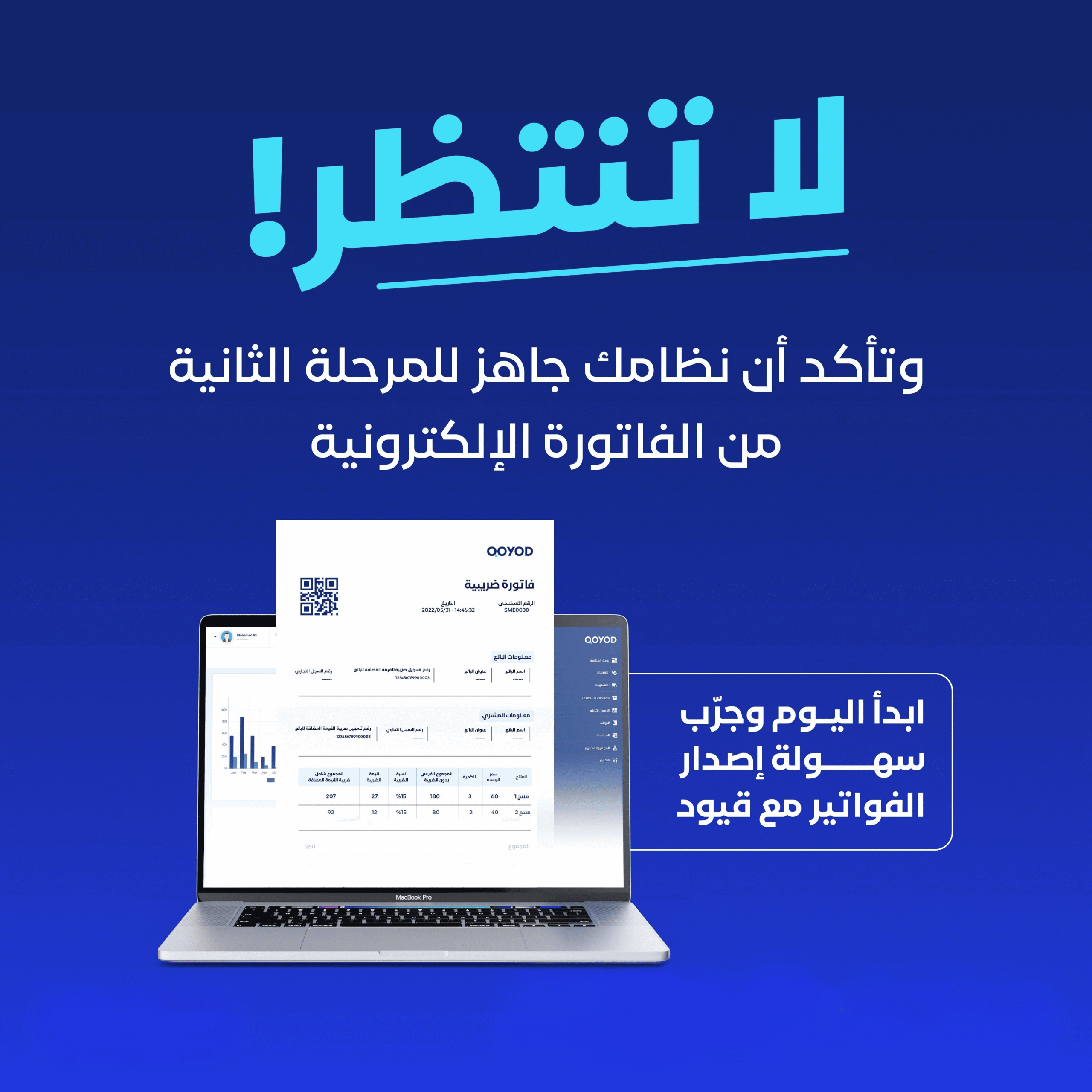
Every milestone invoice must include the contractor’s name and tax number, the client’s name and tax number, a sequential invoice number, the date and time, the milestone description, the VAT rate (15%), the totals before and after VAT, and a QR code. The system generates and submits the signed XML to the Fatoora platform automatically for Clearance, and only issues the invoice once ZATCA has cleared it.
Six criteria for choosing a ZATCA-certified system
When evaluating an e-invoicing system for a construction firm, confirm the following six criteria:
- Formal ZATCA phase-two certification with a verifiable certificate number.
- Full B2B support with pre-issuance Clearance through the Fatoora platform.
- Issue a separate signed-XML tax invoice for each milestone of a project.
- Link every invoice to a project cost center so per-project margin is visible.
- Long-term cloud archival of signed invoices (at least six years).
- Monthly input and output VAT reports ready for the return filing.
Where Qoyod specifically helps construction and real-estate firms
Qoyod brings together, inside one account: cloud accounting, per-project cost centers, milestone tax invoices linked to projects, supplier and subcontractor ledgers with aging, equipment registered as fixed assets with depreciation, project material inventory, and ZATCA-approved e-invoicing in both Clearance and Reporting flows. Every project transaction posts to a specific project inside the same ledger, with per-project cost and margin visible on a dedicated report.
The platform handles dozens of projects under one account and runs fully in the cloud, so head office, site managers, and the external accountant share the same numbers from any device. Cost-center reports show actual cost versus budget, invoices issued, and the remaining receivable per project.
Income statement, balance sheet, customer statements, and supplier statements are all one click away. For firms that prefer to delegate review work, the VAT filing service and the bookkeeping service from Qoyod Pro Services are available.
Frequently asked questions
Does Qoyod support project-based accounting with cost centers?+
How does Qoyod handle milestone invoices?+
How are subcontractors and suppliers tracked?+
Can Qoyod show per-project margin?+
Does the e-invoicing support B2B Clearance for milestone invoices?+
How are progress claims recorded in construction accounting?+
Where do retention and bank guarantees belong?+
Is technical support available 24/7?+
Running a construction firm does not need a generic accounting tool, it needs a project-based operating system that ties per-project cost centers, an invoice per certified progress claim, separately tracked retention, and supplier statements together inside one ledger. The firms that consistently deliver on time and on margin are the ones that see budget versus actual per project in real time. That capability is what makes Qoyod the right fit for construction and real-estate companies in Saudi Arabia.