A barber shop or salon in Saudi Arabia is a service business with a retail tail. Revenue comes from haircuts, beard grooming, and styling on one side, and from retail product sales (pomade, beard oil, shampoo) on the other. Most of the workforce is paid on a commission split, the chair occupancy rate moves with the calendar, and every transaction still needs a simplified tax invoice with a QR code. This guide explains what sets salon accounting apart, and how the right software keeps services, staff commission, and retail in one ledger.
What makes salon accounting different
A salon sells time, not stock. Each chair has a finite number of bookable hours per day, each stylist has a commission percentage, and a missed appointment is revenue you cannot recover. Profitability is decided by chair occupancy and average ticket size, not by inventory turnover.
Salon accounting revolves around five connected pieces: appointment-based revenue with no-show tracking, per-stylist commission with tiered rates, retail product sales on the same invoice as the service, daily till reconciliation across cash, card, and STC Pay, and ZATCA simplified tax invoices on every ticket. The right software ties all five into one general ledger.
Daily reality is dozens of small touchpoints: confirming morning appointments, walking in a stylist, ringing the first ticket at the cash register, adding a retail item to the same invoice, splitting the tip, paying out a commission at week-end, and reconciling the cash drawer before lock-up. Each missed step shows up later as either a payroll dispute or a tax filing headache.
The most common accounting challenges in salons
Every salon operator in Saudi Arabia runs into the same four recurring problems, and each one quietly drains thousands of riyals a month when ignored.
1. Stylist commission errors. Each stylist works on a tiered commission (35% on services up to 10,000 SAR per month, 40% above). Manual Excel sheets miss tiered jumps and the bonus on retail attachment, and every payroll cycle ends in a dispute. A system-tracked commission engine eliminates the argument.
2. Mixing service revenue with retail revenue. A 250 SAR ticket can include 180 SAR of cut-and-shave and 70 SAR of beard oil. Without a clean split between service revenue and retail revenue, gross margin reporting is meaningless: you will think the salon is making 60% margins when it is actually making 45% on services and 25% on retail.
3. No-shows and idle chairs. A chair sitting empty for 30 minutes during prime time is gone revenue. Without a no-show rate per stylist and per slot, owners never know which clients to require deposits from and which slots to overbook.
4. Cash drawer drift. A salon takes cash, card, and STC Pay tips, plus pays out small purchases (coffee, refills) from the same till. Without a same-day shift close that splits the four flows correctly, the drawer drifts by 50 to 200 SAR every week until the owner stops counting.
What a salon actually needs from its accounting software
A generic accounting tool was built for invoicing goods, not for running a chair-by-chair appointment book alongside a small retail counter. The difference is concrete:
| Task | Generic accounting tool | What a salon needs |
|---|---|---|
| Appointment book | Not supported | Per-stylist calendar with slot duration |
| Commission | Manual Excel | Tiered engine with retail attachment bonus |
| Service vs retail | Single revenue line | Split lines on every ticket |
| Tip handling | Treated as revenue | Pass-through to stylist, off P&L |
| Shift close | Single cash total | Cash, card, STC Pay, refunds, pay-outs |
| Repeat clients | Not tracked | Client profile with visit history and average ticket |
Beyond the table, a salon specifically needs three capabilities that generic accounting platforms simply do not have:
- An integrated appointment-and-billing engine that links the calendar to the cash register, so every booking becomes a ticket the moment the stylist marks it complete.
- A commission engine with tiered rules, retail attachment bonus, and an automatic month-end payroll feed, so commission disputes disappear and payroll closes in under an hour.
- Per-line VAT and category mapping on every ticket, so services and retail post to the right P&L accounts and the simplified tax invoice is generated automatically with the correct QR code.
How to organize a salon’s books step by step
Moving from a paper appointment book to integrated accounting takes around one week. This is the sequence Qoyod applies for every new salon customer:
E-invoicing and ZATCA compliance for salons
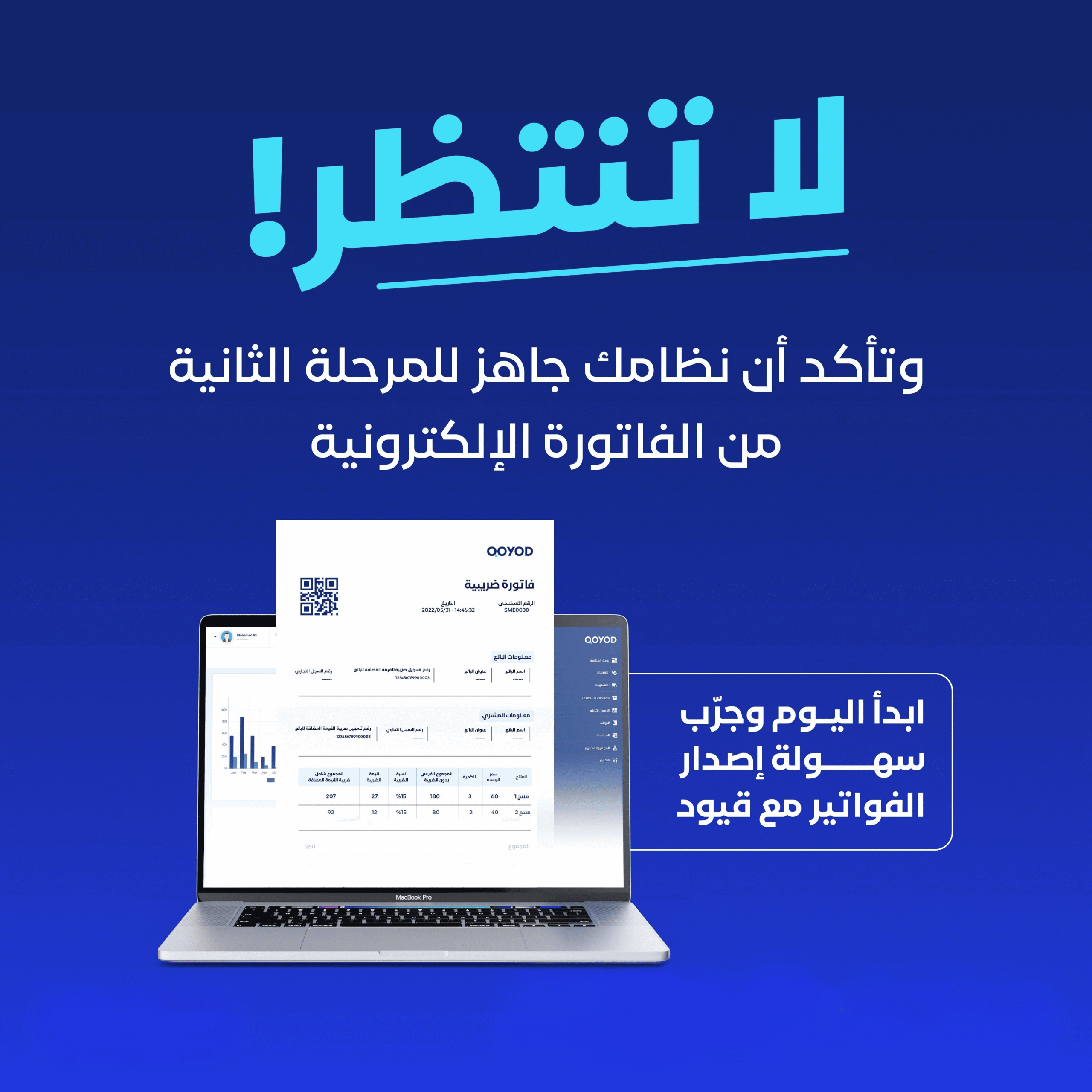
Phase two of ZATCA e-invoicing requires every salon ticket to be issued through a certified system connected to the Fatoora platform. Salons issue almost exclusively simplified tax invoices because the walk-in client does not carry a tax number. For a side-by-side view of vendor costs, the guide on e-invoicing pricing in Saudi Arabia is worth reading first.
Every salon ticket must include the salon name and tax number, a sequential invoice number, the date and time, an itemized list of services and retail products with the correct VAT rate per line (15% standard), totals before and after VAT, and a QR code. A certified system generates the QR code, signs the invoice in XML, and transmits it to the Fatoora platform automatically within the 24-hour window for simplified invoices.
How to evaluate a ZATCA-certified system for a salon
When evaluating any e-invoicing vendor for a salon, verify these six criteria:
- Official ZATCA phase-two certification with a verifiable approval number on the Authority’s portal.
- Invoice issuance in under two seconds, so the cashier is not delayed during peak hours.
- Automatic submission of invoices in signed XML within the 24-hour Reporting window for simplified invoices.
- Long-term cloud storage of signed invoices for at least six years.
- A simulation environment for testing invoices before going live in production.
- Monthly input-VAT reports ready in time for on-deadline filings.
Where Qoyod fits in specifically for salons
Qoyod brings together, inside one account: cloud accounting, appointment book linked to the till, tiered commission engine for stylists, service-and-retail ticketing, daily shift close, ZATCA-approved e-invoicing, payroll, and consolidated reports. Every ticket posts an automatic journal entry inside the same ledger.
The platform handles multi-branch salon groups under one account, with role-based permissions per branch, centralized client profile across branches, and either consolidated or per-branch reports. It runs entirely in the cloud, so the head office, branch managers, and the external accountant share the same numbers from any device.
For salons opening new locations or migrating from spreadsheets, the setup service and the bookkeeping service are available as part of Qoyod Pro Services, alongside the app marketplace for connecting to booking and loyalty partners.
Frequently asked questions
Does Qoyod include an appointment book?+
How does Qoyod calculate stylist commission?+
Can the system split a ticket between services and retail?+
Does Qoyod handle tips correctly?+
Does Qoyod work for a salon group with several branches?+
Is technical support available 24/7?+
Running a salon does not need a generic accounting tool, it needs an operating system that ties appointment book, stylist commission, retail counter, and ZATCA e-invoicing together inside one ledger. The salons that consistently grow are the ones that see chair occupancy and average ticket every week. That capability is what makes Qoyod the right fit for barber shops and salons in Saudi Arabia.