



An arbitration or mediation center in Saudi Arabia administers commercial dispute resolution under the Saudi Center for Commercial Arbitration (SCCA) framework, charges registration and administration fees on a case-value scale, manages panels of accredited arbitrators paid from case-specific deposits, splits cost between two or more parties, and operates under tight confidentiality rules with strict documentation requirements. Revenue mixes one-time registration fees with hourly arbitrator time logged against case deposits, and ZATCA e-invoicing applies on every case fee invoice issued to parties.
What makes arbitration-center accounting different
An arbitration center is not a regular professional-services firm. The center holds case deposits in escrow on behalf of arbitrators (not as revenue), arbitrator time is logged against case deposits and paid out as the panel works, multi-party billing splits invoices 50-50 (or per agreement) between claimant and respondent, and confidentiality rules require strict per-case ledger segregation. Generic accounting tools cannot handle escrow deposits or split-party billing.
Arbitration-center accounting revolves around five connected pieces: case-fee schedule by case value with registration and administration components, arbitrator-deposit escrow accounting (held in trust, not revenue), multi-party split billing with separate invoices, arbitrator payment workflow from deposits, and ZATCA tax invoice on every party invoice with the right party tax number.
Daily reality is per-case postings: case registration, registration-fee invoicing (split 50-50 by default), deposit collection, arbitrator timesheet entries against case deposits, arbitrator payment runs, administration-fee invoicing at case milestones, and per-case ledger reconciliation. Every uncollected deposit blocks a hearing, and every untracked arbitrator hour is a future panel dispute.
The most common accounting challenges in arbitration centers
Every arbitration and mediation center in Saudi Arabia runs into the same four recurring problems. They share one root cause: deposits get treated as revenue, and per-case ledgers live in spreadsheets.
1. Case deposits booked as revenue. A case with SR 2 million in dispute requires an arbitrator-deposit of SR 80,000 collected from both parties up front. Booking the deposit as revenue inflates the month, creates Zakat and VAT exposure on funds that belong to arbitrators not the center, and breaks the audit trail when the panel is paid out.
2. Multi-party billing split managed in spreadsheets. A case fee of SR 24,000 splits 50-50 by default but 70-30 if agreed. The center has to issue two ZATCA-compliant tax invoices with the right tax number for each party. Doing this manually creates VAT errors and audit findings the first time ZATCA queries an invoice.
3. Arbitrator panel payments without case-deposit reconciliation. Arbitrators log hours against a case and request payment from the deposit. Without integrated case-deposit accounting, the center either overpays (paying out more than the deposit holds) or underpays (leaving deposit balances stranded after case closure).
4. Per-case profitability invisible. Some cases settle in three months for SR 60,000 of center revenue with minimal admin cost; others drag 18 months and consume staff hours that exceed the administration fee. Without per-case cost allocation, the center cannot tell which case types are profitable and which subsidize others.
What an arbitration center actually needs from its accounting software
A generic accounting tool was built for one-time sales, not for case-level escrow and split-party billing. The difference is concrete:
| Task | Generic accounting tool | What an arbitration center needs |
|---|---|---|
| Case deposits | Booked as revenue | Escrow liability |
| Multi-party billing | Single invoice | Split invoices per party |
| Arbitrator payments | Generic vendor pay | Reconciled against case deposit |
| Per-case ledger | Not available | Strict per-case segregation |
| Per-case margin | Not available | Per-case cost vs. revenue |
| VAT compliance | Single invoice | Per-party tax number |
Beyond the table, an arbitration center specifically needs three capabilities that generic platforms do not deliver:
- Escrow-deposit accounting, where arbitrator deposits post to a per-case escrow liability, remain segregated from operating funds, and clear cleanly as the panel is paid.
- Multi-party split billing, where one case fee generates two (or more) ZATCA-compliant tax invoices with the right party tax number and split percentage, and per-party AR aging is exact.
- Per-case ledger segregation, generating accurate per-case margin and a defensible audit trail under confidentiality rules, with ZATCA-certified tax invoices on every party invoice.
How to organize an arbitration center’s books step by step
Moving an arbitration center to integrated accounting takes around three to four weeks depending on case volume. This is the sequence Qoyod applies with every new arbitration-center customer:
E-invoicing and ZATCA compliance for arbitration centers
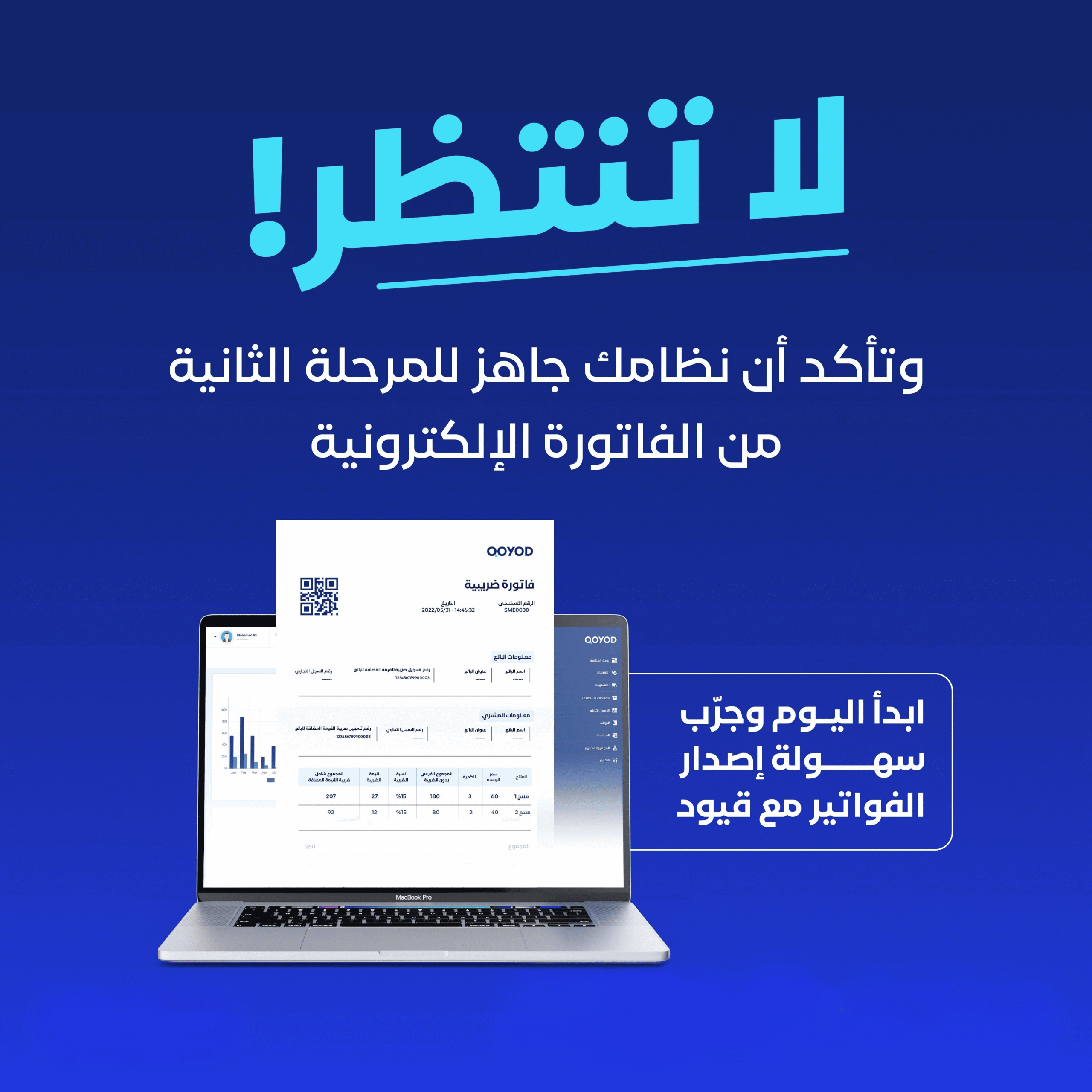
Phase two of ZATCA e-invoicing requires every party invoice issued by an arbitration center to flow through a certified system connected to the Fatoora platform. Arbitration centers issue B2B tax invoices to corporate parties through the Clearance flow with the right party tax number on each split invoice. For a side-by-side view of vendor costs, read the guide on e-invoicing pricing in Saudi Arabia.
Every party invoice must include the center name and tax number, the party name and tax number, the case reference, a sequential invoice number, the date and time, an itemized list with the fee component (registration, administration, or hearing), VAT at 15%, totals before and after VAT, and a QR code. A certified system generates the QR code, signs the invoice in XML, and transmits it to the Fatoora platform automatically inside the Clearance window.
How to evaluate a ZATCA-certified system for an arbitration center
When evaluating any e-invoicing vendor for an arbitration center, verify these six criteria:
- Official ZATCA phase-two certification with a verifiable approval number on the Authority’s portal.
- Clearance flow for B2B party invoices with multi-party split billing.
- Escrow segregation that keeps deposits outside VAT calculations.
- Per-case access controls aligned with confidentiality requirements.
- Long-term cloud storage of signed invoices for at least six years.
- Monthly input-VAT and output-VAT reports ready in time for the quarterly filing deadline.
Where Qoyod fits in specifically for arbitration centers
Qoyod brings together, inside one account: cloud accounting with case, party, and arbitrator dimensions, escrow-deposit accounting, multi-party split billing, arbitrator-payment workflow, per-case ledger segregation, ZATCA-approved e-invoicing, payroll, and consolidated reports. Every case registration, party invoice, deposit, and arbitrator payment lands an automatic journal entry inside the same ledger.
The platform handles multi-office arbitration centers and mediation subsidiaries under one account, with shared master data (arbitrators, fee schedules, COA), role-based permissions per office, and either consolidated or per-office reports. It runs entirely in the cloud, so administrators, registrars, and the external auditor share the same numbers from any device, with strict confidentiality controls.
For centers expanding case volume or migrating from spreadsheets, the setup service and the bookkeeping service are available as part of Qoyod Pro Services, alongside the app marketplace for connecting to case-management partners.
Frequently asked questions
Does Qoyod handle arbitrator deposits correctly for arbitration centers?+
How does Qoyod handle multi-party split billing?+
Can Qoyod track arbitrator panel payments against case deposits?+
Does Qoyod support strict per-case ledger segregation under confidentiality rules?+
Does Qoyod work for multi-office arbitration centers?+
Is technical support available 24/7?+
Running an arbitration or mediation center does not need a generic accounting tool, it needs an operating ledger that ties escrow accounting, multi-party billing, per-case ledger segregation, and ZATCA e-invoicing together inside one account. The centers that consistently grow are the ones that see per-case margin and deposit balances every week. That capability is what makes Qoyod the right fit for arbitration centers in Saudi Arabia.