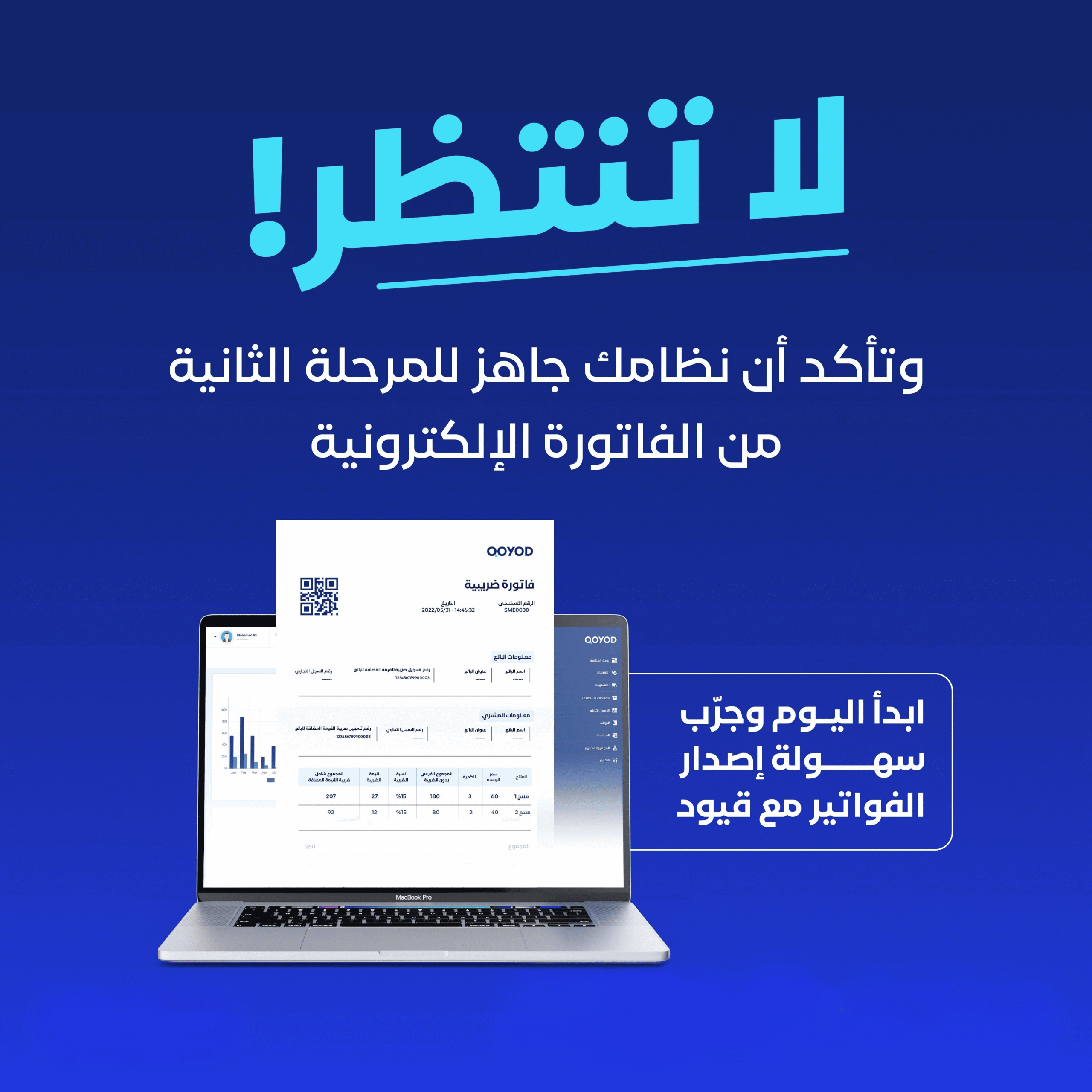
Electronic financial management software is the operating ledger of a modern Saudi company. It replaces paper journals, disconnected spreadsheets, and on-premise legacy tools with a single cloud account where invoicing, expenses, bank feeds, payroll, inventory, and ZATCA e-invoicing all post to the same general ledger in real time. A single mid-size company can run 2,400 sales invoices a month, 600 supplier bills, 4 bank accounts, 80 employees on payroll, and 12 cost centers, and still close the books in five days instead of fifteen. Without an electronic financial management platform, the company spends 30% to 40% of its finance team time on data entry, reconciliation, and report formatting that an automated system handles in the background.
What electronic financial management software actually means
Electronic financial management software is more than a digital ledger. It is a connected system where every business transaction becomes an automatic journal entry, every bank movement reconciles against an open invoice or bill, every payroll cycle generates the right GOSI and end-of-service accrual, and every invoice fires to ZATCA Fatoora without a manual step. The finance team stops typing and starts reviewing.
A complete electronic financial management platform covers five connected pieces: cloud accounting with multi-currency and multi-cost-center general ledger, automated bookkeeping where invoices, bills, and expenses post journal entries automatically, real-time bank feeds with rule-based reconciliation, ZATCA-certified e-invoicing on every customer transaction, and integrated payroll with GOSI and end-of-service calculations.
Daily reality for the finance team is review, not entry: bank-feed exceptions to investigate, supplier bills to approve in the inbox, automated invoices fired overnight to be reviewed, payroll variations to confirm, and the dashboard refreshed with yesterday’s numbers when the team logs in at 9 AM.
The most common problems with non-electronic financial management
Every mid-size company in Saudi Arabia running paper journals, spreadsheets, or disconnected on-premise tools runs into the same four recurring problems. They share the same root cause: data lives in too many places, none of them tied to the ledger in real time.
1. Month-end close takes two weeks. Without bank feeds, the finance team manually downloads statements from four banks, codes 1,200 transactions in a spreadsheet, posts journal entries one by one, reconciles, finds errors, and reopens. Two weeks evaporate every month on what an automated system handles in two days.
2. ZATCA compliance is a side project. Phase two of e-invoicing requires every B2B invoice to be cleared with Fatoora before delivery to the customer. Companies running non-electronic accounting maintain a parallel invoicing system, double-key invoice data, and manually reconcile between the two. Errors creep in, audit findings follow.
3. Reports lag the business by 30 days. Cash position, accounts receivable aging, and cost-center P&L are pulled together in a monthly pack two weeks after month-end. By the time leadership reads the September pack in mid-October, the issues are six weeks old and the corrective actions are reactive.
4. Audit support consumes the team for three weeks. External auditors request samples of invoices, bills, and journal entries. With paper journals and spreadsheets, the finance team spends three weeks pulling, scanning, and indexing supporting documents. With electronic financial management, the auditor has read-only access and the same exercise takes three days.
What companies actually need from electronic financial management
A Saudi mid-size company in 2026 needs more than a digital ledger. It needs a connected system that ties accounting, banking, invoicing, payroll, and compliance into one cloud account with real-time reporting. The gap between paper-or-spreadsheet bookkeeping and proper electronic financial management is concrete:
| Task | Paper or spreadsheet | Electronic financial management |
|---|---|---|
| Journal entries | Manual posting | Automatic from source documents |
| Bank reconciliation | Monthly manual | Real-time bank feeds |
| E-invoicing | Separate system | Native ZATCA Clearance and Reporting |
| Payroll | Separate spreadsheet | Integrated with GOSI and end-of-service |
| Reports | Monthly pack | Real-time dashboard |
| Audit | Three-week scramble | Read-only auditor access |
Beyond the table, a mid-size Saudi company specifically needs three capabilities a basic digital ledger does not deliver:
- Automated bookkeeping with bank-feed reconciliation, where every bank movement is matched to an open invoice or bill by rules, exceptions are flagged for human review, and the cash balance is correct at the end of every business day.
- Native ZATCA Clearance and Reporting, where every B2B invoice clears with Fatoora before delivery and every B2C invoice reports inside 24 hours, all from the same screen where the invoice is created.
- Multi-cost-center general ledger with real-time reports, where every transaction tags to a project, branch, or department, and financial reports are available filtered by any dimension without a custom export.
How to move a company to electronic financial management step by step
Migrating a mid-size company from paper journals or disconnected spreadsheets to electronic financial management software typically takes four to six weeks. This is the sequence Qoyod applies with every new corporate customer:
E-invoicing and ZATCA compliance for companies
Phase two of ZATCA e-invoicing requires every B2B invoice to clear with the Fatoora platform before delivery to the customer and every B2C invoice to be reported inside 24 hours. Electronic financial management software that is properly ZATCA-certified handles both flows natively from the invoicing screen, with no separate system to maintain.
Every invoice must include the company name and tax number, a sequential invoice number, the date and time, the buyer name and tax number on B2B invoices, an itemized list, VAT at 15%, totals before and after VAT, and a QR code. A certified system generates the QR code, signs the invoice in XML, and transmits it to Fatoora inside the Clearance or Reporting window.
How to evaluate electronic financial management software
When evaluating any electronic financial management platform, verify these six criteria:
- Official ZATCA phase-two certification with a verifiable approval number on the Authority’s portal.
- Native bank feeds for the major Saudi banks with rule-based reconciliation.
- Multi-cost-center general ledger with real-time reporting by dimension.
- Integrated payroll with GOSI and end-of-service automation.
- Long-term cloud storage of signed invoices for at least six years.
- Monthly input-VAT and output-VAT reports ready in time for the quarterly filing deadline.
Where Qoyod fits in as electronic financial management software
Qoyod brings together, inside one cloud account: full general ledger with multi-currency and multi-cost-center, automated bookkeeping from sales invoices, supplier bills, and expense receipts, real-time bank feeds for the major Saudi banks, ZATCA-approved Clearance and Reporting on every invoice, integrated payroll with GOSI and end-of-service, inventory across multiple warehouses, and a real-time dashboard. Every business transaction lands an automatic journal entry inside the same ledger.
The platform handles multi-entity and multi-branch groups under one account, with consolidated and per-entity reports, intercompany elimination, and role-based permissions per entity or per department.
For companies migrating from legacy on-premise tools or paper journals, the setup service and the bookkeeping service are available as part of Qoyod Pro Services, alongside the app marketplace for connecting to e-commerce platforms, POS systems, and payment gateways.
Frequently asked questions
What is electronic financial management software?+
How is it different from on-premise accounting?+
Is Qoyod ZATCA-certified for phase two?+
Does Qoyod connect to Saudi banks?+
Can Qoyod handle multi-entity groups?+
Is technical support available 24/7?+
Electronic financial management software is the operating ledger of a modern Saudi company. It ties accounting, banking, invoicing, payroll, and compliance into one cloud account with automated journal entries, real-time bank reconciliation, native ZATCA on every invoice, and real-time reporting by cost center. That is what makes Qoyod the right fit for companies in Saudi Arabia ready to leave paper journals and disconnected spreadsheets behind.