An electrical-supplies store in Saudi Arabia carries thousands of SKUs across cables, breakers, switches, sockets, lamps, conduits, and lighting fixtures, and sells much of its volume to electricians and contractors on credit terms. Most of these stores also sell home appliances alongside the electrical line (water heaters, fans, kitchenware, and small appliances), each with its own supplier, margin, and season. Without barcode-level SKU discipline, honest units of measure, weekly receivables follow-up on contractor accounts, and ZATCA e-invoicing, the store ends every quarter guessing at its margin and chasing overdue contractor invoices.
What makes electrical and home appliance store management different
An electrical-supplies store is a fast-moving B2B retailer. Cable is bought on the reel and sold by the meter, breakers sell by the piece with brand-and-amp matching, and a single electrician’s order can run to a long list of near-identical line items. Generic tools cannot hold two units of measure for the same item, keep brand-and-amp SKUs apart on the shelf, or show what a contractor still owes across several jobs.
Electrical-supplies accounting revolves around four connected pieces: SKU inventory with brand and specification matching, stored conversion factors so an item bought by the reel or the carton can be sold by the meter or the piece, electrician and contractor B2B accounts tracked on a customer aging report, and a ZATCA simplified tax invoice on counter sales plus standard tax invoice on B2B accounts through the Clearance flow.
Daily reality is dozens of postings per day: electrician orders at the counter or by phone, cable sold by the meter off the reel, breaker and switch pulls from shelf stock, contractor deliveries to job sites, supplier receipts, and the daily reconciliation of contractor balances against shelf stock.
The most common management challenges in electrical and home appliance stores
Every electrical-supplies store in Saudi Arabia runs into the same four recurring problems. They share the same gap: stock leaves the shelf in a unit nobody recorded, contractor balances live in the counter staff’s memory, and SKU specifications get mixed up at the bin.
1. Stock counted in the wrong unit. Cable arrives on the reel and leaves by the meter; cookware arrives by the carton and leaves by the piece. If the item carries only one unit of measure, every sale posts a quantity that does not match how the item was bought, and the stock count drifts further from reality with each transaction until the annual count exposes the gap.
2. Wrong brand and amp shipped. An electrician orders 12 Schneider 32-amp breakers. The counter staff ships ABB 32-amp breakers because the shelf bin is mixed. The contractor returns the shipment three days later, the store absorbs restocking, and the original sale is lost.
3. Contractor balances go unwatched. An electrician places his fifth order while three earlier deliveries are still unpaid, and nobody at the counter knows it because the balance was never looked up. The fix is procedural rather than automatic: pull the customer aging report before large B2B orders go out, so the decision to extend more credit is a decision, not an accident.
4. Seasonal appliance stock goes dead. Water heaters move in winter and fans and coolers move in summer, so a group that sold out last quarter can sit untouched for six months. Without an item movement report per group, the slow lines are only noticed when the cash they are holding is needed elsewhere.
What an electrical and home appliance store actually needs from its management software
A generic accounting tool was built for selling boxed items, not for buying cable on the reel and selling it by the meter, keeping 12 brand-specific breakers apart from their look-alikes, and shipping the whole order to a job site on contractor credit. The gap is concrete:
| Task | Generic accounting tool | What an electrical store needs |
|---|---|---|
| Inventory | Generic SKU | Brand and spec match |
| Units of measure | Generic stock | Stored conversion factor per item |
| Electricians | Generic customer | Customer aging report per contractor |
| B2B orders | Generic invoice | Multi-line job-site delivery |
| Replenishment | Manual | Reorder point per item and location |
| VAT | Flat 15% | Per-line on standard rated |
Beyond the table, an electrical-supplies store specifically needs three capabilities generic platforms do not deliver:
- Multiple units of measure on one item with a stored conversion factor, so cable bought on the reel and sold by the meter, or cookware bought by the carton and sold by the piece, leaves the stock count intact.
- A customer aging report per contractor, splitting every unpaid invoice into time buckets so the counter can see who is overdue before the next large order is promised.
- ZATCA-certified retail and B2B invoicing from one system, where every counter sale fires a simplified tax invoice through the Reporting flow and every B2B contractor order fires a standard tax invoice through the Clearance flow.
How to organize an electrical and home appliance store step by step
Moving an electrical-supplies store to integrated accounting takes around two to three weeks depending on SKU count and contractor mix. This is a sequence that works, each step building on the one before it:
E-invoicing and ZATCA compliance for electrical and home appliance stores
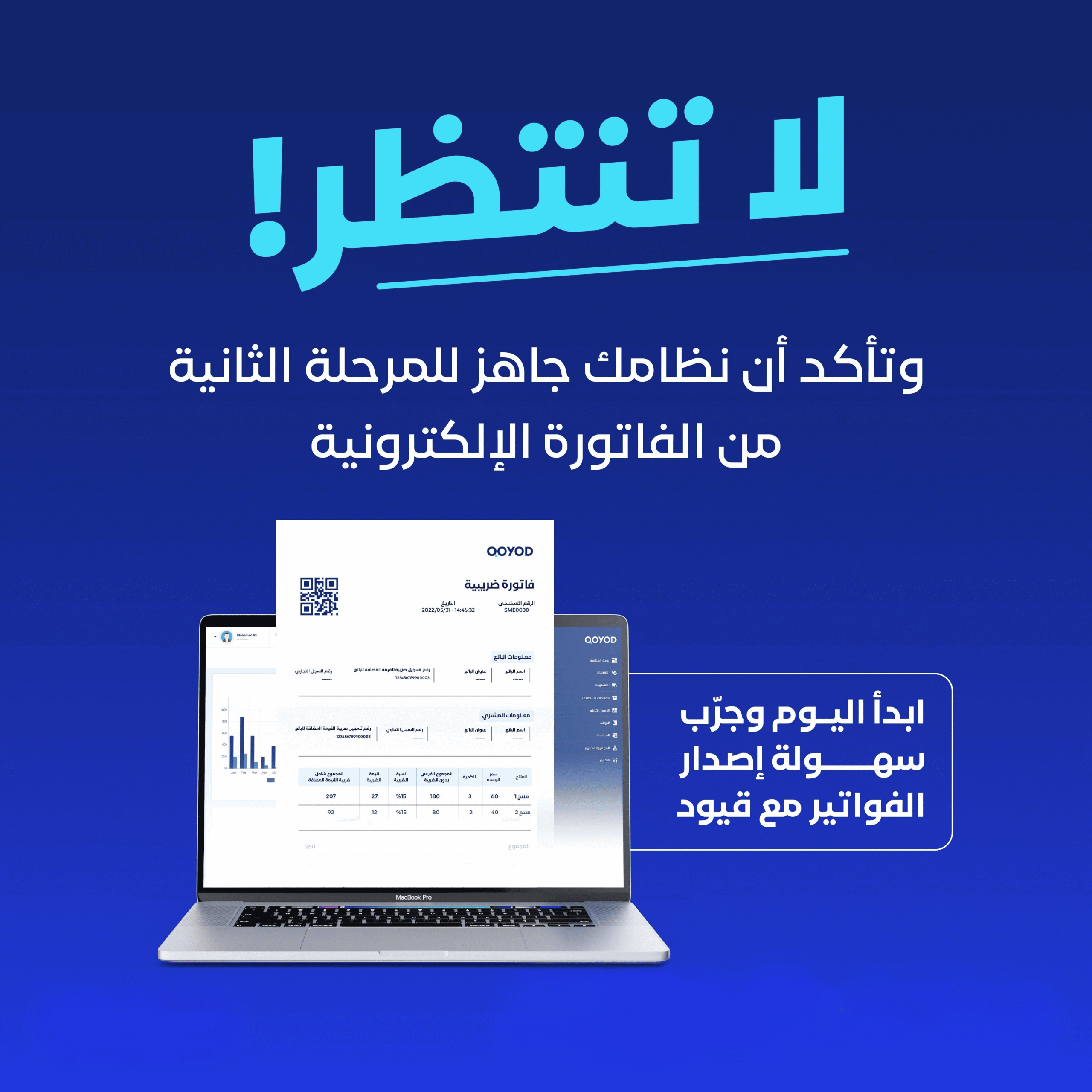
Phase two of ZATCA e-invoicing requires every counter sale and every B2B contractor delivery to be issued through a certified system connected to the Fatoora platform. Electrical-supplies stores issue simplified tax invoices at the counter and standard tax invoices for B2B orders through the Clearance flow.
Every invoice must include the store name and tax number, a sequential invoice number, the date and time, the buyer name on B2B invoices, an itemized list of items with brand and spec, VAT at 15%, totals before and after VAT, and a QR code. A certified system generates the QR code, signs the invoice in XML, and transmits it to the Fatoora platform inside the Reporting or Clearance window.
How to evaluate a ZATCA-certified system for an electrical-supplies store
When evaluating any e-invoicing vendor for an electrical-supplies store, verify these six criteria:
- Confirm the vendor itself is certified by the Zakat, Tax and Customs Authority for phase two, rather than taking a marketing badge at face value.
- Both Reporting (counter simplified) and Clearance (B2B contractor) flows in one system.
- Per-line VAT on multi-line orders with brand and spec print on each line.
- The selling unit preserved on the invoice line, so an item bought on the reel still bills in meters.
- Long-term cloud storage of signed invoices for at least six years.
- Monthly input-VAT and output-VAT reports ready in time for the quarterly filing deadline.
Managing home appliances alongside the electrical line
Very few stores in Saudi Arabia sell electrical supplies alone. The same floor carries water heaters, fans, kitchenware, and small appliances, and each group behaves differently on price, season, and supplier terms. That mix, not the SKU count on its own, is what makes the store harder to run than a single-category shop.
- Separate the electrical group from the home appliance group inside one item tree, then filter sales and stock reports by group to follow each one on its own.
- Home appliances turn seasonally: water heaters in winter, fans and coolers in summer. Item movement reports surface the dead stock before it locks up working capital.
- Different units of measure under one roof: cable by the meter and the reel, cookware by the piece, the set, and the carton. Stored conversion factors keep the stock count honest.
- Qoyod’s own point of sale serves both groups from the same screen, and stock is deducted at the moment of sale whether the item is a wall switch or a small appliance.
- ZATCA-compliant e-invoices for both groups from the same system: a simplified invoice for the walk-in customer and a full tax invoice for the electrical contractor.
The practical requirement is that electrical and home appliance store management software treats the shop as two item groups inside one entity, not as a single uniform inventory.
Where Qoyod fits in specifically for electrical and home appliance stores
Qoyod brings together, inside one account: cloud accounting, an SKU master with brand, spec and barcode, unit conversion and reorder points, a customer aging report for contractor balances, its own point of sale, ZATCA-approved e-invoicing, payroll, and a preset report library. Every counter sale, B2B order, and supplier receipt lands an automatic journal entry inside the same ledger.
The platform handles multi-branch electrical-supplies networks under one account, with shared master data (SKU master, brand list, customer database), role-based permissions per branch, and either consolidated or per-branch reports.
For stores opening new branches or migrating from a legacy POS, the setup service and the bookkeeping service are available as part of Qoyod Pro Services, alongside the app marketplace for connecting to e-commerce and CRM partners.
Frequently asked questions
Does Qoyod support selling an item in more than one unit?+
How does Qoyod help control electrician receivables?+
Can Qoyod track brand-and-spec SKU matching?+
Does Qoyod have its own point of sale?+
Does Qoyod work for multi-branch electrical-supplies networks?+
Is technical support available 24/7?+
Can Qoyod handle a store that sells both electrical supplies and home appliances?+
Running an electrical-supplies store does not need a generic POS, it needs an operating ledger that ties SKU discipline, units of measure, contractor receivables, and ZATCA e-invoicing together inside one account. The stores that consistently grow are the ones that read their item movement and contractor aging reports every week. That capability is what makes Qoyod the right fit for electrical-supplies stores in Saudi Arabia.