A coworking space in Saudi Arabia sells the same square meter five different ways: monthly hot-desk memberships, dedicated desks on annual contracts, private offices for teams, meeting-room hours by the booking, and virtual-office addresses for companies that only need the mailbox. A single Riyadh coworking hub can hold 320 hot-desk members, 80 dedicated desks, 18 private offices, 6 meeting rooms booked 90 hours a week, and 140 virtual-office subscribers. Without per-product subscription billing, meeting-room booking integration, prepaid credit tracking, multi-month contract management, and ZATCA e-invoicing, the space loses margin to unbilled meeting hours, churned members it never noticed, and prepaid credits that walk out the door.
What makes coworking-space accounting different
A coworking space is a subscription business with hourly add-ons. Memberships renew monthly or annually at the contracted rate, meeting rooms bill by the hour against included credits or paid overage, day passes settle at the counter, and virtual offices renew without any physical visit. The same member can carry a 1,200 SAR monthly hot-desk, book 6 hours of meeting rooms (3 included, 3 paid), and bring a guest on a 50 SAR day pass, all in one billing cycle. Generic accounting tools cannot model recurring billing with hourly overage on one statement.
Coworking-space accounting revolves around five connected pieces: subscription billing for hot-desks, dedicated desks, private offices, and virtual offices with their own renewal cycles, meeting-room booking integration with included credits and paid overage, day-pass POS at reception, churn and lifetime-value tracking by membership type, and ZATCA standard tax invoice on every B2B subscription through the Clearance flow.
Daily reality is dozens of postings per day: monthly subscription invoices fired automatically, meeting-room bookings against credits or as paid hours, day-pass tickets at reception, virtual-office renewals, supplier payments for utilities and cleaning, and the monthly close on active members and unbilled meeting overage.
The most common accounting challenges in coworking spaces
Every coworking space in Saudi Arabia runs into the same four recurring problems. They share the same gap: meeting-room hours live in a calendar plugin disconnected from billing, churn shows up in next month’s bank statement, and prepaid day-pass packs sit on the books as unredeemed credits.
1. Meeting-room overage unbilled. A dedicated-desk member with 8 included meeting hours uses 14 hours. The calendar plugin shows the bookings but does not post the 6 paid hours to the member account. On 80 dedicated desks averaging 3 overage hours a month at 50 SAR an hour, the space leaks 12,000 SAR a month.
2. Churn detected too late. A 12-month dedicated-desk contract auto-renews but the member moved out 45 days ago without notice. Without dunning workflows tied to badge access, the space discovers the churn on the next bounced direct debit and loses the notice period revenue.
3. Day-pass prepaid packs unrecognized. A startup buys 20 day passes for 800 SAR. Without deferred-revenue accounting, the full 800 SAR posts as revenue on sale day, the P&L overstates the month, and 14 unused passes still sit as liability on the balance sheet.
4. Virtual-office renewals missed. A virtual-office subscriber pays once a year for 120 SAR a month. Without automated renewal billing, the renewal email sits in a draft, the customer is not invoiced for the next year, and the address is still in use for 60 days before the issue is caught.
What a coworking space actually needs from its accounting software
A generic accounting tool was built for one-shot invoices, not for recurring subscriptions across five product types, meeting-room booking integration, deferred revenue on prepaid packs, and automated renewal workflows. The gap is concrete:
| Task | Generic accounting tool | What a coworking space needs |
|---|---|---|
| Memberships | One-shot invoice | Recurring with renewal cycle |
| Meeting rooms | Manual entry | Booking-to-invoice automation |
| Day passes | Single sale | Prepaid pack with deferred revenue |
| Virtual offices | Generic service | Auto-renewal on the anniversary |
| Dedicated desks | Generic invoice | Annual contract with notice |
| VAT | Flat 15% | Per-line on standard rated |
Beyond the table, a coworking space specifically needs three capabilities generic platforms do not deliver:
- Recurring subscription billing by product type, so hot-desks, dedicated desks, private offices, and virtual offices each carry their own renewal cycle, pro-ration on start-mid-month, and dunning workflow on failed payments.
- Meeting-room booking integration with included credits, so every booking either consumes a member credit or posts as paid overage on the member account, with the badge or door system reconciling utilization.
- ZATCA-certified B2B invoicing, where every corporate subscription fires a standard tax invoice through the Clearance flow with the buyer tax number and contract reference, while day passes fire simplified invoices under Reporting.
How to organize a coworking space’s books step by step
Moving a coworking space to integrated accounting takes around two to three weeks depending on member count and product mix. This is the sequence Qoyod applies with every new coworking-space customer:
E-invoicing and ZATCA compliance for coworking spaces
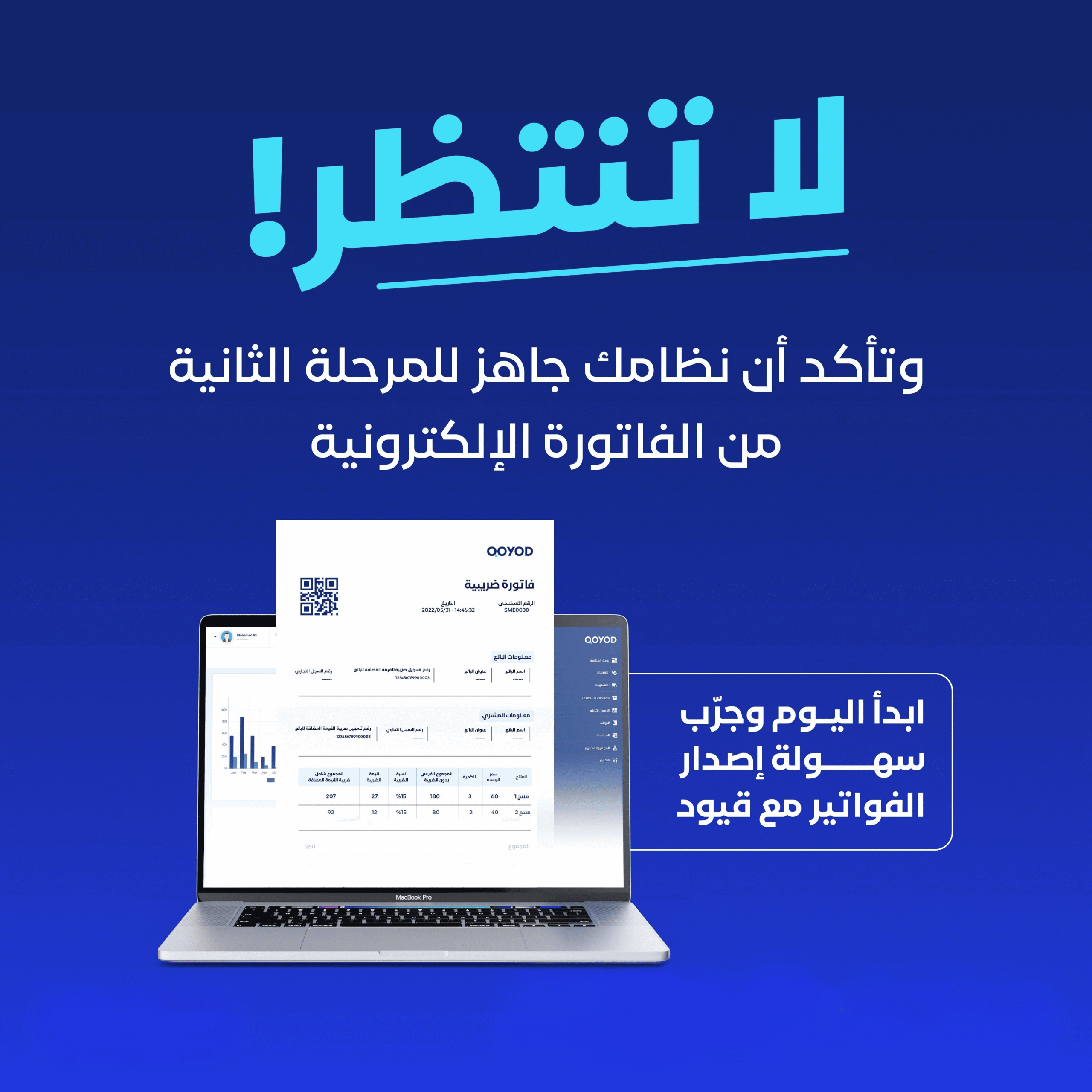
Phase two of ZATCA e-invoicing requires every membership invoice, meeting-room bill, and day-pass ticket to be issued through a certified system connected to the Fatoora platform. Coworking spaces issue standard tax invoices to corporate members through the Clearance flow and simplified tax invoices to walk-in day-pass customers under Reporting.
Every invoice must include the space name and tax number, a sequential invoice number, the date and time, the buyer name and tax number on B2B invoices, an itemized list with the product, the period, and the meeting-room overage hours if any, VAT at 15%, totals before and after VAT, and a QR code. A certified system generates the QR code, signs the invoice in XML, and transmits it to the Fatoora platform inside the Reporting or Clearance window.
How to evaluate a ZATCA-certified system for a coworking space
When evaluating any e-invoicing vendor for a coworking space, verify these six criteria:
- Official ZATCA phase-two certification with a verifiable approval number on the Authority’s portal.
- Both Clearance (B2B membership) and Reporting (day-pass) flows live without manual intervention.
- Recurring subscription billing with pro-ration and automatic renewal invoice firing.
- Deferred-revenue handling on prepaid packs preserved on the invoice line.
- Long-term cloud storage of signed invoices for at least six years.
- Monthly input-VAT and output-VAT reports ready in time for the quarterly filing deadline.
Where Qoyod fits in specifically for coworking spaces
Qoyod brings together, inside one account: cloud accounting with product and location dimensions, recurring subscription billing across all membership types, meeting-room booking integration with included credits and paid overage, deferred revenue on day-pass packs, automated renewal and dunning workflows, ZATCA-approved e-invoicing, payroll, and consolidated reports. Every subscription, booking, day pass, and supplier payment lands an automatic journal entry inside the same ledger.
The platform handles multi-location coworking chains under one account, with shared master data (product catalog, member panel, meeting-room inventory), role-based permissions per location, and either consolidated or per-location reports.
For spaces migrating from spreadsheets, the setup service and the bookkeeping service are available as part of Qoyod Pro Services, alongside the app marketplace for connecting to booking platforms, badge access systems, and payment gateways.
Frequently asked questions
Does Qoyod support recurring subscription billing?+
How does Qoyod handle meeting-room overage?+
Can Qoyod handle prepaid day-pass packs?+
Does Qoyod automate annual renewals?+
Does Qoyod work for multi-location coworking chains?+
Is technical support available 24/7?+
Running a coworking space does not need a generic ledger, it needs an operating system that ties recurring subscriptions, meeting-room booking, deferred revenue on prepaid packs, automated renewals, and ZATCA e-invoicing together inside one account. The spaces that consistently grow are the ones that see churn and meeting utilization every week. That capability is what makes Qoyod the right fit for coworking spaces in Saudi Arabia.