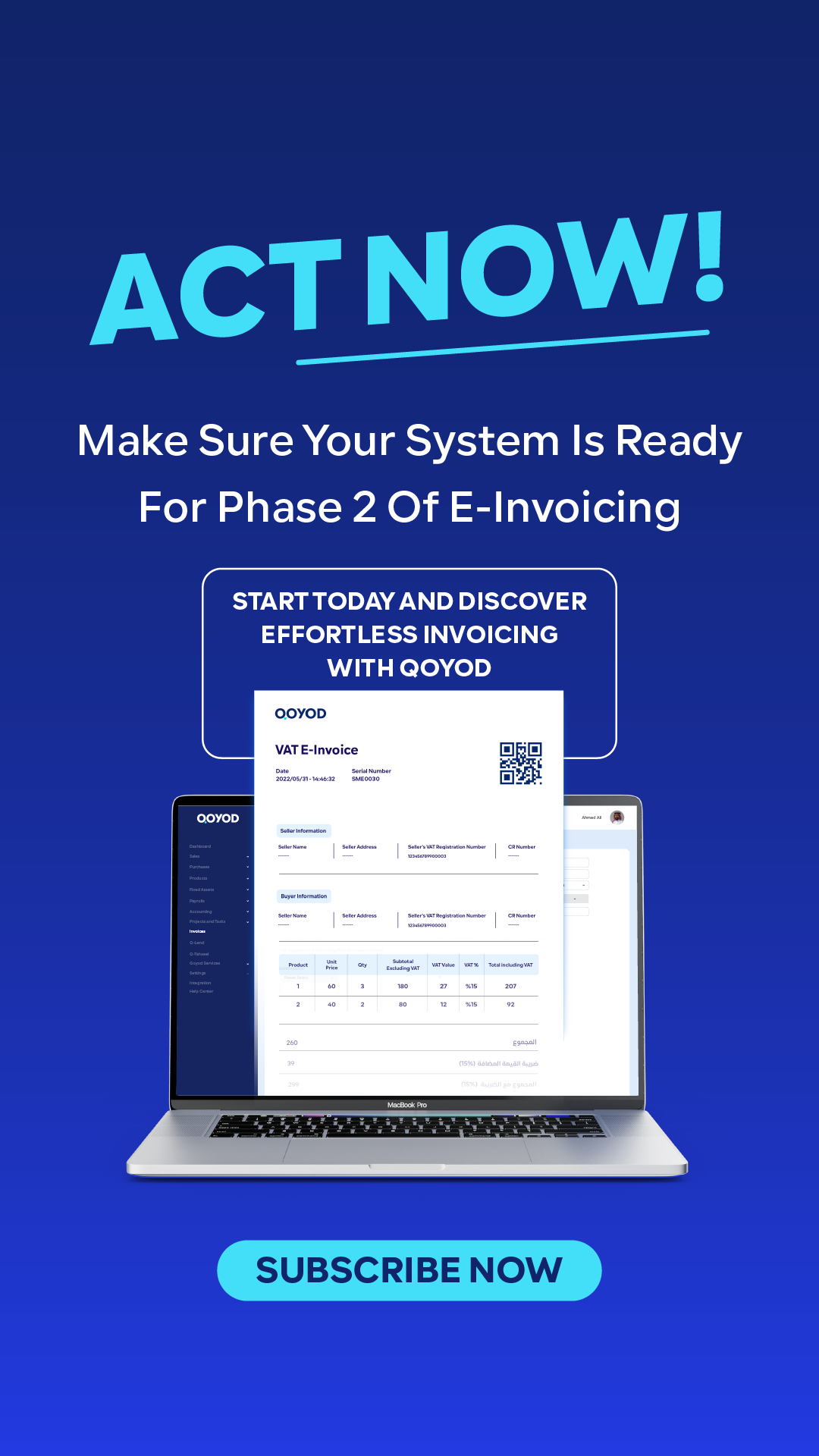
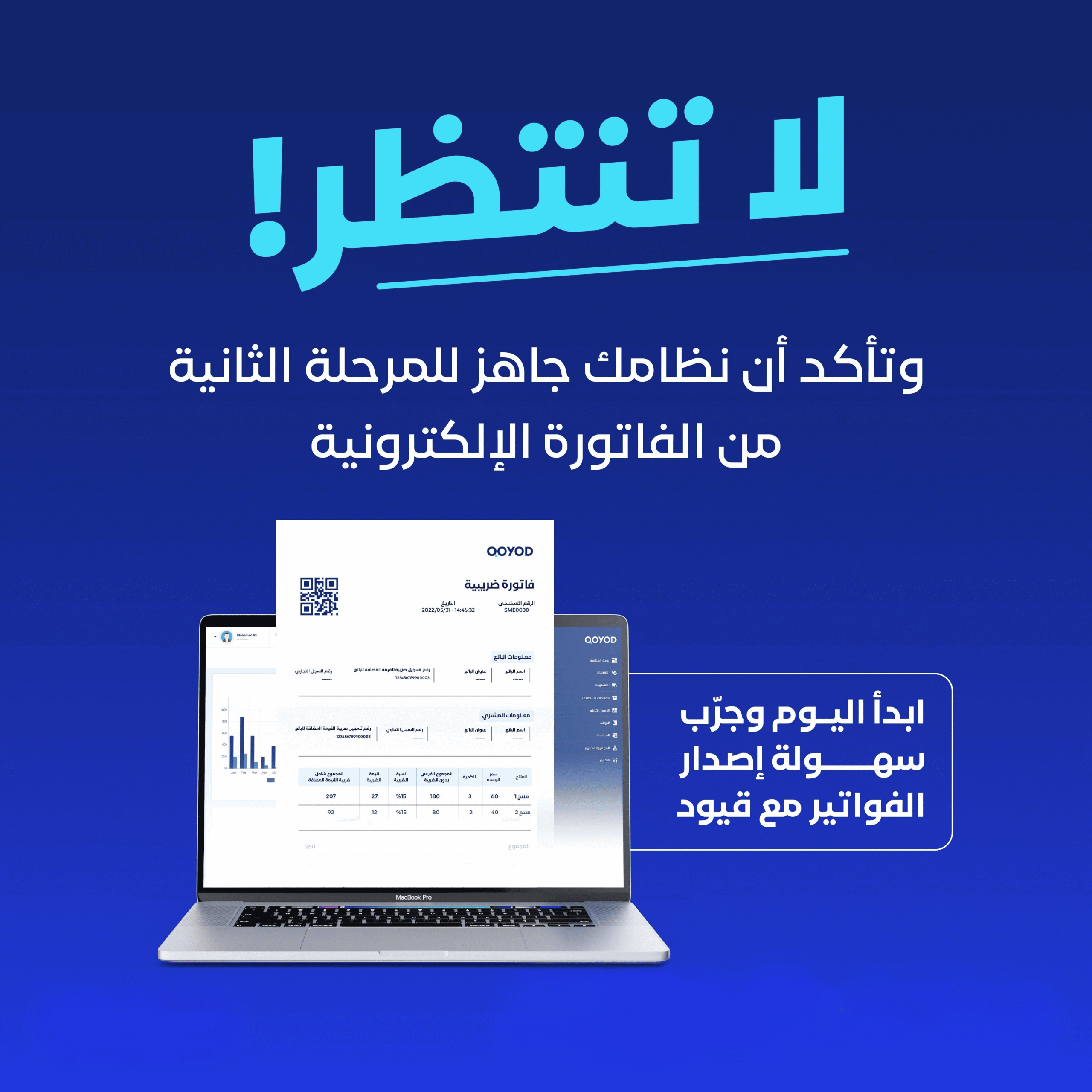
A shop owner in Amman logs into the free JoFotara portal every evening to key in the day’s invoices by hand, then opens a separate Excel file to track what customers still owe. The portal satisfies the law. It does nothing for the books. By month three, the two records have drifted apart, and reconciling them eats a full weekend.
That gap, between “compliant” and “actually running the business,” is the real question behind “best cloud accounting software for small businesses in Jordan.” Since the National (Electronic) Invoicing System, known as JoFotara, became mandatory for effectively every seller of goods and provider of services on 1 April 2025, Jordanian SMBs haven’t been short on invoicing tools. What most are still missing is a system that treats invoicing as one part of the books, not the whole job.
This guide walks through what cloud accounting software needs to do for a Jordanian business specifically, not a generic checklist copied from a US or Gulf buyer’s guide, and where a dedicated system earns its keep over the free government portal plus a spreadsheet. If you’re weighing specific vendors side by side rather than the cloud-vs-portal question itself, our overview of the best accounting software options for small businesses in Jordan lays out that comparison directly.
What “Cloud Accounting Software” Actually Means Here
Cloud accounting software is an accounting system hosted online rather than installed on one office computer. You log in from a browser or phone, your data lives on the vendor’s servers instead of a local hard drive, and updates happen automatically instead of through a yearly disc or download. For a small business owner in Jordan, the practical difference shows up in three places:
- Access. The accountant can review the books from home, the owner can check cash position from a supplier meeting, and nobody needs to be at a specific desk to issue an invoice.
- Continuity. A laptop dying or a burglary doesn’t mean losing a year of records, since nothing critical sits on only one machine.
- Compliance updates. When ISTD (the Income and Sales Tax Department) changes a requirement on the national invoicing system, a cloud vendor pushes the fix to every customer at once instead of asking each business to install a patch.
None of that is unique to Jordan. What is Jordan-specific is the second half of the phrase: “for small businesses.” A five-person trading company in Amman doesn’t need the same system as a 500-employee manufacturer, and most accounting software marketed internationally is priced and built for the second case.
Why This Decision Looks Different in Jordan Than It Did Two Years Ago
Three things changed the calculation for a Jordanian SMB owner, and none of them are hype.
1. E-invoicing stopped being optional
Under the Regulation for Organizing and Controlling Invoicing Affairs, full enforcement of Phase 2 began on 1 April 2025. Every invoice for goods or services, whether business-to-business, business-to-consumer, or business-to-government, must be issued through the national invoicing system or through software connected to it. An invoice issued outside JoFotara is not a valid tax document. The buyer loses the input deduction on general sales tax, and the seller cannot recognize the expense for income tax purposes.
The free ISTD portal satisfies this obligation. It was never designed to also be your general ledger.
2. The accountant, not the owner, usually makes the call
In the Jordanian small-business market, a bookkeeper or an external accounting office frequently chooses the software, with the owner approving the cost. That changes what “best” means. An accountant weighing options cares less about a flashy dashboard and more about whether the chart of accounts is standard, whether journal entries post correctly behind every invoice, and whether the software will still make sense to a second accountant a year from now.
3. Manual double entry is now the most expensive option
Keying an invoice into the JoFotara portal and then keying the same invoice into a spreadsheet, or into disconnected desktop software, means every number gets typed twice and every mistake has two chances to happen. As invoice volume grows past a few dozen a month, the labor cost of manual double entry usually exceeds what a subscription would have cost.
What to Actually Check Before Choosing
Strip away the marketing pages, and a genuinely useful evaluation for a Jordanian small business comes down to seven questions.
7 Questions to Ask Before Choosing Cloud Accounting Software in Jordan
Strip away the marketing pages: a genuinely useful evaluation comes down to these seven questions.
- Does it connect to JoFotara, or just print a QR code?
- Does it handle 16% GST, not 15% VAT?
- Does it run real bookkeeping behind the invoice, or just the invoice?
- Is the interface genuinely Arabic-first?
- Can your team access it from a phone?
- What happens when an invoice is rejected?
- Can someone reach support in Arabic, during Jordan’s working week?
1. Does it connect to JoFotara, or does it just print a QR code?
Some tools call themselves “e-invoicing software” while only formatting a document that still has to be keyed manually into the portal. A real integration submits the invoice as UBL 2.1 XML to ISTD’s servers, receives the invoice back with the official QR code embedded (the QR is generated by ISTD, not by the software), and only then is the transaction complete. That is real-time clearance: the invoice is validated by JoFotara before it is legally usable, not reported to the authority afterward.
2. Does it handle 16% GST, not 15% VAT?
Jordan’s consumption tax is the General Sales Tax (GST), administered by ISTD, at a standard rate of 16%, with reduced rates of 1%, 2%, 4%, 5%, and 10% on specific goods, plus a Special Sales Tax layered on top of certain items like fuel and tobacco. Software built primarily for a neighboring Gulf market and adapted for Jordan sometimes gets this wrong, hard-coding the wrong rate or the wrong tax label. A Jordanian business should confirm the tax engine actually reflects GST, not a renamed tax field carried over from somewhere else.
3. Does it run real bookkeeping behind the invoice, or just the invoice?
This is the single biggest gap between a compliance tool and accounting software. A compliant invoice is one output. Behind it, a real system should be posting a journal entry, updating accounts receivable, adjusting inventory if the item is stocked, and feeding a trial balance, without a bookkeeper re-entering anything.
4. Is the interface genuinely Arabic-first?
Most small business owners and their staff in Jordan work more comfortably in Arabic day to day. Software translated after the fact, with English financial terms left untranslated in menus and reports, creates friction that compounds every time someone opens the system.
5. Can your team access it from a phone?
A supplier calling about an overdue payment, or a sales rep who needs to check stock before confirming an order, shouldn’t require opening a laptop. Mobile access matters more for a business with 5 to 30 employees split across a shop floor and an office than it does for a company where everyone sits at a desk all day.
6. What happens when an invoice is rejected?
JoFotara rejects invoices for formatting errors, missing fields, or incorrect tax codes. A cleared, ISTD-generated invoice cannot simply be edited and resent. The correction path is a return invoice that references the original invoice’s ID and UUID, adjusting quantities only and never exceeding the original quantity. Software that hides this step, or implies a rejected invoice can be silently fixed and resubmitted, is describing a process that doesn’t match how the national system actually works.
7. Can someone reach support in Arabic, during Jordan’s working week?
Jordan’s business week runs Sunday through Thursday. A support team operating on a different country’s calendar and time zone, or only in English, adds friction exactly when a rejected invoice or a locked account needs fixing fast.
Core Features a Small Business in Jordan Actually Uses
Beyond e-invoicing, the accounting layer is where the software either earns its subscription or turns into an expensive invoice printer. The features that matter most for a small trading or retail business:
- Sales and purchase management. Issuing sales invoices, recording purchase invoices from suppliers, and tracking customer and supplier balances in one place instead of three notebooks.
- Inventory across branches. Stock levels, transfers between locations, and average cost per item, useful the moment a business operates more than one store or warehouse.
- Expense tracking. Recording day-to-day costs against the right account and cost center, not lumping everything into “miscellaneous.”
- Bank reconciliation. Matching what the bank statement shows against what the books say, catching errors before they compound.
- Reports that mean something to a lender. A trial balance, income statement, and balance sheet a bank or investor can actually read, generated on demand instead of assembled by hand at year-end.
- Fixed assets. Tracking equipment, vehicles, and fixtures with depreciation posted automatically instead of forgotten until the accountant asks about it in December.
- Multi-user roles. Letting a cashier issue invoices without being able to see payroll, and letting the external accountant log in without full access to everything.
- Bulk import from Excel. Moving existing customer lists, product catalogs, and opening balances in from spreadsheets instead of retyping years of history by hand.
A tool that only does the first item on this list, invoicing, is a compliance add-on. A tool that does all of them, with JoFotara built into the invoicing step rather than bolted on, is accounting software.
The Free Portal Isn’t the Competitor. The Spreadsheet Habit Is.
It’s worth being direct about what the free ISTD portal is for. It exists so that every business, regardless of size or budget, can meet its legal obligation to issue e-invoices, and it does that job. What it was never built to do is give an owner a real-time view of cash position, track what forty different customers owe across three payment terms, or produce a trial balance an accountant can sign off on. For a business issuing a handful of invoices a month, the portal plus a notebook is a reasonable stopgap. For a business issuing dozens a week, that same setup turns into hours of reconciliation every month, and every hour is time not spent running the business. We’ve written a longer comparison of exactly when the national invoicing portal is enough and when a business needs a full accounting system behind it.
Free JoFotara Portal vs. Full Cloud Accounting Software
| Dimension | Free ISTD Portal | Qoyod |
|---|---|---|
| Issuing invoices | Manual One invoice at a time, typed into the portal |
Integrated Issued from the same screen as the sale |
| Link to the books | None No journal entry behind the invoice |
Automatic Journal entry posts the moment the invoice clears |
| Inventory tracking | None Portal has no concept of stock |
Automatic Stock adjusts automatically on every sale |
| Financial reports | Not available No trial balance, no income statement |
Real-time Income statement and balance sheet ready instantly |
| Best fit for | Very low volume A handful of invoices a week |
Active business A growing business or a multi-client accounting office |
Common Mistakes Jordanian Small Businesses Make Choosing Software
Assuming any “JoFotara-compliant” label means the same thing. Compliance can mean a full native integration, or it can mean a plugin that still requires manual steps. Ask specifically whether invoices submit automatically and whether the ISTD QR code returns into the software, or whether someone still has to visit the portal. Our own step-by-step walkthrough of connecting an accounting system to JoFotara shows what that process should actually look like.
Ignoring the reduced GST rates. A business selling a mix of standard-rated and reduced-rate items, general merchandise alongside bakery products, for example, needs software that applies the correct rate per line item, not a single flat rate across the whole invoice.
Treating the exemption thresholds as permanent. A handful of specific licensed activities, such as small grocery shops, bakeries, and home-based work under defined revenue thresholds, are exempted from mandatory invoicing under the regulation. But the exemption depends on genuinely operating that licensed activity, and the authority can impose the obligation once there’s evidence a business has exceeded its threshold. Our full breakdown of e-invoicing requirements in Jordan covers exactly who qualifies and who doesn’t. Software chosen on the assumption “we’re exempt forever” can leave a business unprepared when that changes.
Not verifying that invoices actually clear. An invoice can look correct in the software and still be rejected by JoFotara for a formatting or field error. The only way to confirm a submitted invoice carries a valid, verifiable QR code is through the official Sanad app, ISTD’s own verification channel. We’ve covered how that verification works step by step separately.
Underestimating the migration effort. Moving years of customer records, product lists, and opening balances out of a desktop tool or a spreadsheet takes real planning. Software with a proper Excel import path, rather than “start from zero,” saves weeks of manual re-entry. The same discipline applies to tax records generally: our guide to income tax in Jordan is a useful reference for how the two tax systems, income tax and GST, interact for a small business.
How Qoyod Fits a Jordanian Small Business
Qoyod runs the accounting and the e-invoicing in the same system, built on the playbook it has run for years under a comparable e-invoicing mandate, and connected directly to JoFotara. In practice, that means:
- Invoices submit to JoFotara from inside Qoyod. Sales invoices, income invoices for businesses not yet GST-registered, and return invoices for corrections all post through the same screen where the sale is recorded, instead of a separate step in the ISTD portal.
- GST calculates automatically, at the standard 16% rate or a reduced rate, item by item, on a mixed invoice.
- The invoice becomes a journal entry, not just a PDF. Accounts receivable, revenue, and tax accounts update the moment the invoice clears, so the books and the compliance record never drift apart.
- Inventory, expenses, purchases, and fixed assets run in the same subscription. A trading business tracking stock across more than one location, or a services business tracking project costs, doesn’t need a second tool bolted onto the invoicing layer.
- The interface is Arabic and English, built for a bilingual accountant and a business owner who may prefer one language over the other for different screens.
- Mobile apps let an owner or sales rep check figures away from a desk.
- Bulk Excel import brings in existing customers, products, and opening balances rather than starting from a blank chart of accounts.
Qoyod’s JoFotara integration works the same way for a business in Amman as the equivalent integration already works for tens of thousands of businesses operating under a similar national e-invoicing mandate in the region, connected through the same Client ID and Secret Key credentials issued from the taxpayer’s own ISTD portal account, entered once into Qoyod’s settings.
From Invoice to Journal Entry: The JoFotara Flow Inside Qoyod
Run JoFotara compliance and your full books in one place
Stop keying every invoice twice. See what a connected accounting system looks like for a Jordanian small business before you commit to anything.
Frequently Asked Questions
Is JoFotara mandatory for every small business in Jordan?
Yes, in effect. Since 1 April 2025, every seller of goods and provider of services, including professionals like doctors, lawyers, and consultants, must issue invoices through the national invoicing system or software integrated with it. Businesses below specific, narrowly defined activity thresholds, certain small grocery shops, bakeries, and home-based work, can be exempt, but the exemption requires genuinely operating that licensed activity and is not automatic or permanent.
What tax rate should the software calculate?
The standard General Sales Tax rate is 16%. Reduced rates of 1%, 2%, 4%, 5%, and 10% apply to specific goods listed in the schedules, and a Special Sales Tax applies on top of GST for items like fuel, tobacco, and vehicles. Good software applies the correct rate per line item automatically rather than requiring manual selection on every invoice.
Can I just use the free JoFotara portal instead of buying software?
You can, and it satisfies the legal requirement to issue e-invoices. What it does not do is run your bookkeeping, track what customers owe, manage inventory, or generate financial statements. For a business issuing more than a handful of invoices a week, the manual re-entry this creates usually costs more in time than a subscription would.
What happens if JoFotara rejects an invoice?
A rejected invoice cannot simply be edited and resent, because a cleared invoice is treated as final by the system. The correction is a return invoice referencing the original invoice’s ID and UUID, adjusting quantities only, and never exceeding the original quantity. Good accounting software handles this as a normal workflow rather than an exception the user has to figure out manually.
How do I confirm an invoice actually cleared through the national system?
Through the Sanad app, ISTD’s own verification tool. It checks the QR code returned by JoFotara after clearance, which is the only way to confirm an invoice is legally valid. Software cannot generate this QR code itself; ISTD issues it after validating the invoice.
Does JoFotara-compliant software require a digital certificate or signature?
No. Unlike some other national e-invoicing systems in the region, Jordan’s system does not require the taxpayer to hold a digital signature or certificate. Access is through a Client ID and Secret Key generated from the taxpayer’s own portal account and entered into the accounting software.
What happens if my business doesn’t comply?
An invoice not issued through the national invoicing system is not recognized as a valid tax document, which means the buyer loses the input GST deduction and the seller cannot recognize the related expense for income tax. Fines range from JOD 200 to 500 per violation and double on repetition, alongside exclusion from government tenders.
Is cloud accounting software secure enough for financial data?
A reputable cloud accounting platform stores data under the vendor’s data security and privacy controls rather than on a single office computer that can be lost, stolen, or damaged. The relevant question to ask any vendor directly is how backups, access permissions, and data recovery work, rather than assuming any cloud label is equivalent.
Choosing With the Right Priorities
The businesses that get the most value from switching to cloud accounting software in Jordan aren’t chasing the flashiest dashboard. They’re the ones who added up how many hours a bookkeeper spends reconciling the JoFotara portal against a spreadsheet every month, and decided that time was worth more spent somewhere else. Start with the compliance question, because it’s non-negotiable, then evaluate everything else, inventory, reporting, multi-user access, against how the business actually runs day to day. The right system should make the accountant’s month-end faster and the owner’s decisions better informed, not just produce a compliant PDF.