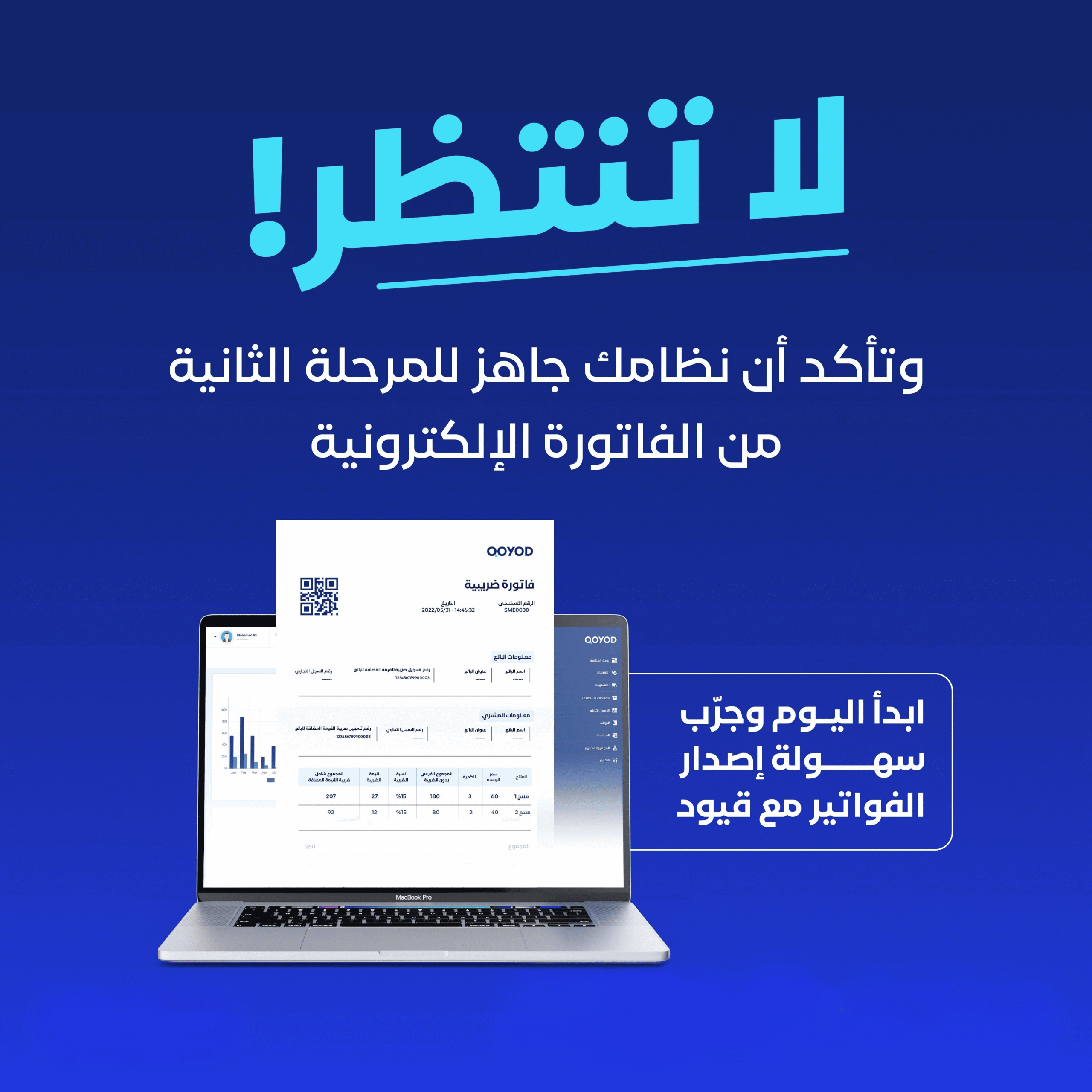
Micro, small and medium enterprises make up roughly 99% of registered businesses in Jordan, with the largest concentration in the capital governorate. The owner of a small business runs sales, operations, hiring and the books at the same time, and since 1 April 2025 every sales invoice must also be issued through the National Invoicing System (JoFotara) or through a system integrated with it. An active small business posts between 300 and 900 transactions a month across sales invoices, supplier bills, expenses and bank movements. Without one system that ties e-invoicing, general sales tax and a live cash view together, the month ends in manual reconciliations and surprises at filing time.
What makes small-business accounting in Jordan different
A small business does not need an enterprise ERP. It needs a focused accounting platform that handles the essentials well: invoicing, inventory, expenses, receivables and tax reporting, with a chart of accounts the owner can read without advanced accounting training.
The Jordanian context adds three specifics no off-the-shelf foreign system carries. First, the tax is general sales tax at a 16% standard rate, with reduced rates on specific annexed lists (1%, 2%, 4%, 5% and 10%) and special sales tax added on goods such as tobacco, fuel and cars. Second, the tax identification number is a mandatory field on the tax invoice and in every submission to the national system, and the general sales tax registration number is seven digits. Third, the market names invoices by payment method: a cash invoice is treated differently from a receivable invoice that lands in customer receivables.
There is a fourth, operational specific: many small businesses in Jordan rely on an external accounting firm for bookkeeping and return preparation. Any software that does not let that firm reach the same data under scoped permissions means a monthly export and import cycle, which is where errors leak in.
The most common accounting challenges in Jordanian small businesses
The problems recur in four shapes and share one cause: the owner is busy operating, nobody closes the books monthly, and reality surfaces at filing or at the first tax review.
1. Invoicing outside the national system. A shop still issuing invoices from a template or a paper book after April 2025. An invoice issued that way is not accepted as a tax document, so the buyer loses the right to recognise it in their books and you lose the customer before any fine arrives.
2. No cash visibility. A business holds JOD 42,000 in the bank, JOD 28,000 in receivables, and JOD 19,000 in obligations due within thirty days. Without a cashflow report the bank balance reads as available cash, so stock gets bought at an amount that strangles next month’s obligations.
3. Inventory drift. A retail shop holds 600 SKUs. Without barcode receiving and issuing, the system count drifts from the physical count by up to 8% inside a quarter: sales are lost on stockouts while capital sits in dead stock.
4. The sales tax return left to the last minute. The return is postponed to the deadline week, two full periods of invoices get reviewed in two days, and the business either overpays or files an inaccurate return that comes back months later as a claim.
What a small business in Jordan actually needs from its software
Spreadsheets were built for ad-hoc calculation, not for posting hundreds of transactions a month with tax, inventory and receivables. The free government portal solves one part of the equation, submitting the invoice, without keeping your books. The gap reads clearly line by line:
| Task | Spreadsheet or the free portal | What a small business needs |
|---|---|---|
| Invoicing | Manual template or separate entry on the portal | Invoice issued in the system and submitted to JoFotara in one step |
| Sales tax | Manual, one rate for everything | Per-item rate covering reduced rates and special sales tax |
| Inventory | A sheet updated late | Barcode receiving and issuing with reorder alerts |
| Receivables | Tracked from memory | Ageing report with overdue alerts |
| Cash position | Bank balance only | Cash, receivables and payables on one screen |
| Accounting firm | Files sent monthly | Direct access to the same data under scoped permissions |
The four categories of accounting software for small businesses in Jordan
The market is crowded, and comparing brand names alone does not produce a decision. What helps is understanding the four categories every available solution falls into: each has a different pricing logic, a different level of fit with the Jordanian tax system, and a different ceiling for growth. Once you know your category, the shortlist drops from dozens of options to three or four.
Qoyod is a working example of the fourth category: integrated with the National Invoicing System (JoFotara), computing general sales tax per item, with a chart of accounts, cost centres, bank reconciliation, multi-branch management, user permissions and Jordanian dinar invoicing. More than 25,000 businesses in Saudi Arabia run on it under a comparable e-invoicing mandate, which is operating experience with tax enforcement rather than a local presence in Jordan. On the other side of the ledger: Qoyod is not an ERP, it does not cover bills of materials or multi-stage production planning, and Jordanian payroll obligations are not yet localized in it. If that is your core need, your category is a different one.
How to identify your category in five minutes
Five questions whose answers place you in a category without a long search:
JoFotara and sales tax for small businesses
The National Invoicing System (JoFotara) is run by the Income and Sales Tax Department in cooperation with the Ministry of Digital Economy and Entrepreneurship. It has been mandatory since 1 April 2025 for invoices on sales of goods and services, with enforcement tightening gradually. The scope is broader than businesses registered for general sales tax: it covers every seller of goods and provider of services, including professionals, and a business not registered for sales tax issues an income invoice with no tax. Full detail: e-invoicing requirements in Jordan.
A small business needs four invoice types: income invoice, general sales tax invoice, special tax invoice, and a credit note for returns. Each has a cash and a receivable variant. The rule that catches small businesses out most often: an invoice cannot be edited after issuance, and corrections are made through a return invoice on quantities only, never exceeding the original quantity. The QR code is issued by the department and comes back with approval to be printed on the invoice, where the buyer verifies it through the Sanad app.
Exemptions deserve reading before you assume you have one. The instructions exempt nine specifically named licensed activities under JOD 75,000 in annual sales, licensed trades under JOD 30,000, and bread-only bakeries under JOD 150,000. The exemption depends on actually carrying out the activity, not on holding the licence, and it is not permanent: the obligation may be imposed once there is evidence the threshold was exceeded. Lawyers have their own rule, where a receipt voucher stands in for the invoice up to JOD 50,000 of collected revenue, and an invoice is required within 45 days of crossing it. Check the text in force with the department before relying on any figure. Income tax is a separate obligation with its own brackets and deadlines: income tax in Jordan.
How to evaluate software for JoFotara compliance
- A real, direct integration with the National Invoicing System, not a file export uploaded by hand on the portal.
- Support for all four invoice types, each in its cash and receivable variant.
- Per-item tax covering reduced rates and special sales tax, not one rate for the whole invoice.
- Credit notes linked to the original invoice with a free-text reason, on quantities only.
- The tax identification number and the mandatory Jordanian invoice fields in the template, with dinar invoicing to three decimals.
- Tax reports that turn return preparation into a review rather than a rebuild.
How to organize a small business’s books step by step
Six steps, each building on the one before it:
Where Qoyod fits in for small businesses in Jordan
Qoyod brings together, inside one account: cloud accounting with a chart of accounts sized for a small business, invoicing integrated with the National Invoicing System, sales tax computed per item with reports that make return preparation straightforward, barcode inventory, receivables with ageing and alerts, bank reconciliation, and balance sheet and cashflow reports. Every sale, supplier bill and bank movement lands an automatic journal entry in the same ledger.
The platform handles single-branch and multi-branch businesses under one account, with shared master data, per-branch permissions, and consolidated or separate reports. It runs entirely in the cloud, so the owner and the accounting firm read the same numbers from any device. Online stores can connect through Zapier or the API: store, then Zapier or the API, then Qoyod, then the National Invoicing System.
Frequently asked questions
Is Qoyod the right size for a small business in Jordan?+
Is Qoyod integrated with the National Invoicing System (JoFotara)?+
What is the difference between an income invoice and a general sales tax invoice?+
Does Qoyod handle the different general sales tax rates?+
Can I connect my online store to Qoyod?+
Is technical support available 24/7?+
Running a small business in Jordan does not call for a heavyweight system. It calls for one system that holds JoFotara-compliant invoicing, sales tax, inventory, receivables and cash in the same place. For what Qoyod offers in the Jordanian market: Qoyod Jordan.