




A labour market at its lowest unemployment ever
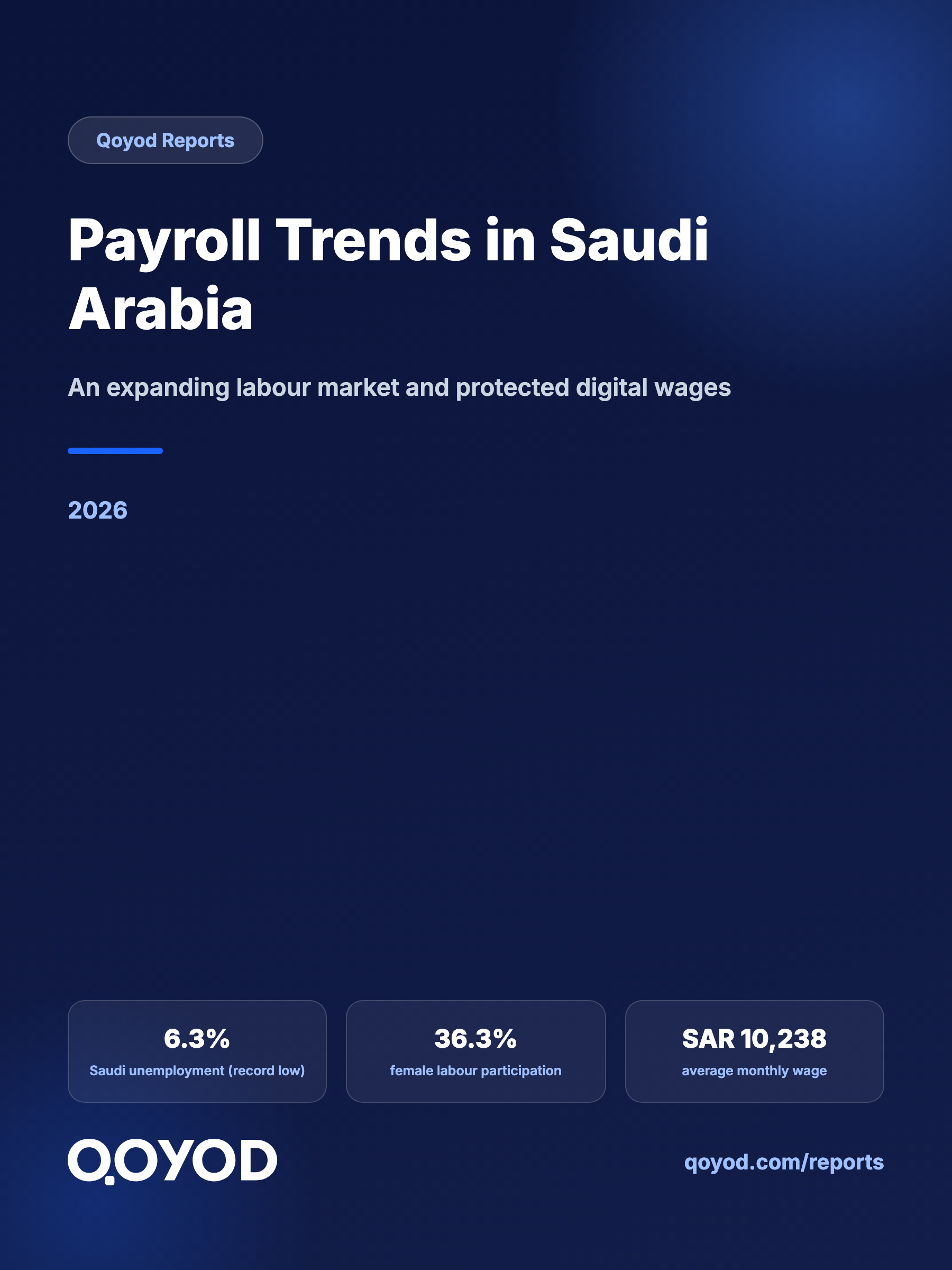
The Kingdom achieved one of Vision 2030’s most notable labour-market milestones: Saudi unemployment fell to 6.3% in Q1 2025, the lowest level recorded, while overall unemployment (including non-Saudis) dropped to 2.8% in Q1 and 3.2% in Q2. Most importantly, Vision 2030’s goal of cutting Saudi unemployment to 7% was reached roughly six years early, so the Kingdom raised its ambition to 5% by 2030.
% by 2030
% (record low)
Source: GASTAT + Ministry of Human Resources, via Arab News and Saudi Gazette, 2025.
Female participation: a leap beyond the target
One of the strongest drivers of this shift is the accelerating entry of Saudi women into the labour market. Their participation rose from 17% in 2017 to 36.3% in Q1 2025, more than doubling and beating Vision 2030’s 30% target. Meanwhile, female unemployment fell from 31.7% in 2018 to 10.5% in 2025, and women’s private-sector jobs passed one million for the first time.
%
%
Source: GASTAT + Ministry of Human Resources, via Arab News, 2025.
Wages: competitive and well-structured
According to the General Authority for Statistics, the average monthly wage of workers across four sectors was about SAR 10,238, including basic pay, allowances, bonuses, overtime and other entitlements. The average wage for Saudi nationals was about SAR 10,016. These levels, alongside Saudization policies, have made private-sector work an increasingly competitive option.
Source: General Authority for Statistics (GASTAT). Saudi nationals’ average wage was about SAR 10,016 (2023).
Saudization: the biggest hiring driver
Since 2020, more than 2.48 million Saudi men and women have joined the private sector, driven by Saudization (“Nitaqat”) programs that tie the Saudization ratio to clear incentives and requirements. One of the program’s tools is a SAR 4,000 monthly wage floor at which a Saudi employee counts toward the Saudization ratio. With the launch of the “Enhanced Nitaqat” phase (2026 to 2028), the Kingdom aims to localize more than 340,000 additional private-sector jobs.
Source: Ministry of Human Resources and Social Development / SPA, 2025 to 2026.
Payroll is digital and protected
Paying a salary is no longer a private matter between business and employee; it is a monitored digital system. The Wage Protection System (WPS / “Mudad”), overseen by the Ministry of Human Resources in cooperation with the Saudi Central Bank, ensures private-sector salaries are paid on time and in full, electronically. The General Organization for Social Insurance (GOSI) covers about 12.9 million contributors, with the new Social Insurance Law taking effect on 3 July 2025.
Source: GOSI + Ministry of Human Resources + Saudi Central Bank. The new Social Insurance Law took effect on 3 July 2025.
What does this mean for employers?
Payroll is usually the largest expense line in a business, and at the same time the most compliance-bound: wage protection, social insurance, Saudization and the wage floor. Managing this line accurately is no longer optional. What an employer needs most:
| Requirement | Why it matters |
|---|---|
| Pay via the Wage Protection System (Mudad) | Mandatory for the private sector, and documents salaries paid on time |
| Accurate social-insurance (GOSI) contributions | Calculated on basic + housing within a set ceiling; errors are costly |
| Meet the Saudization wage floor (SAR 4,000) | Determines whether a Saudi employee counts toward the Nitaqat ratio |
| An accurate accounting record of payroll | Payroll is the biggest expense; tracking it precisely protects liquidity and decisions |
This is where the accounting system comes in: Qoyod, an Arabic cloud accounting system, records payroll expenses accurately within your books and links them to your financial reports, and integrates with specialized HR and payroll systems (such as Jisr) to complete the payroll cycle from calculation to the accounting entry.
Outlook to 2030 and recommendations
Indicators point to continued hiring growth and expanding female participation, alongside deeper payroll digitization and Saudization. Practical recommendations for businesses:
- Pay salaries via “Mudad” and review social-insurance contributions monthly to avoid violations.
- Link the payroll line to your accounting system so its impact on expenses and liquidity is immediate.
- Plan Saudization early in line with the “Enhanced Nitaqat” phase and the wage floor.
- Invest in the skills of Saudi women, as the market is expanding and the talent pool is widening.
The Saudi labour market today is broader and better organized than ever. A business that manages its payroll accurately and compliantly does not just avoid violations, it builds an enterprise ready to grow in a fast-changing economy.
Sources
- General Authority for Statistics (GASTAT) — average monthly wage of workers.
- GASTAT + Ministry of Human Resources, via Arab News — record unemployment and female participation (2025).
- Ministry of Human Resources and Social Development — Nitaqat, the wage floor and Enhanced Nitaqat.
- General Organization for Social Insurance (GOSI) — contributors and the Wage Protection System (Mudad).