




A lateness warning letter is a formal tool organizations use to notify an employee of a violation of workplace policies, whether related to tardiness, performance, or general compliance with internal rules. The warning is issued as a corrective action aimed at addressing undisciplined behavior, and forms part of the administrative system that strengthens clear communication between management and employees. An administrative warning can be verbal or written, depending on the type of violation and the organization’s policy.
Workplace discipline is a key factor in achieving organizational goals. Administrative warnings help maintain discipline by:
Demonstrating seriousness: A warning reflects the organization’s commitment to its rules and regulations.
Clarifying consequences: It shows the employee that undisciplined behavior has tangible consequences, encouraging them to correct their actions.
Ensuring fairness: It guarantees that all employees are treated according to unified standards, creating a workplace built on fairness and equity.
Building a culture of commitment: It pushes employees to respect time and take their work seriously, boosting productivity and efficiency across the organization.
Why Lateness Must Be Taken Seriously for Operational Efficiency
Tardiness is one of the behaviors most likely to harm organizational efficiency. Taking lateness seriously reflects the importance of adhering to set working hours and ensures:
Maximum productivity: Repeated lateness disrupts workflow and delays the achievement of objectives.
Stronger teamwork: Punctuality encourages collaboration, since employees rely on each other to complete tasks.
A professional environment: Treating lateness seriously fosters an organized workplace that respects time and commitment.
Lower operating costs: Repeated tardiness can increase operating costs by disrupting project schedules and workflow.
An administrative warning, therefore, is not just a way to alert an employee. It is an organizational tool designed to reinforce discipline and ensure the company meets its goals efficiently.
The Importance of a Lateness Warning Template in the Workplace
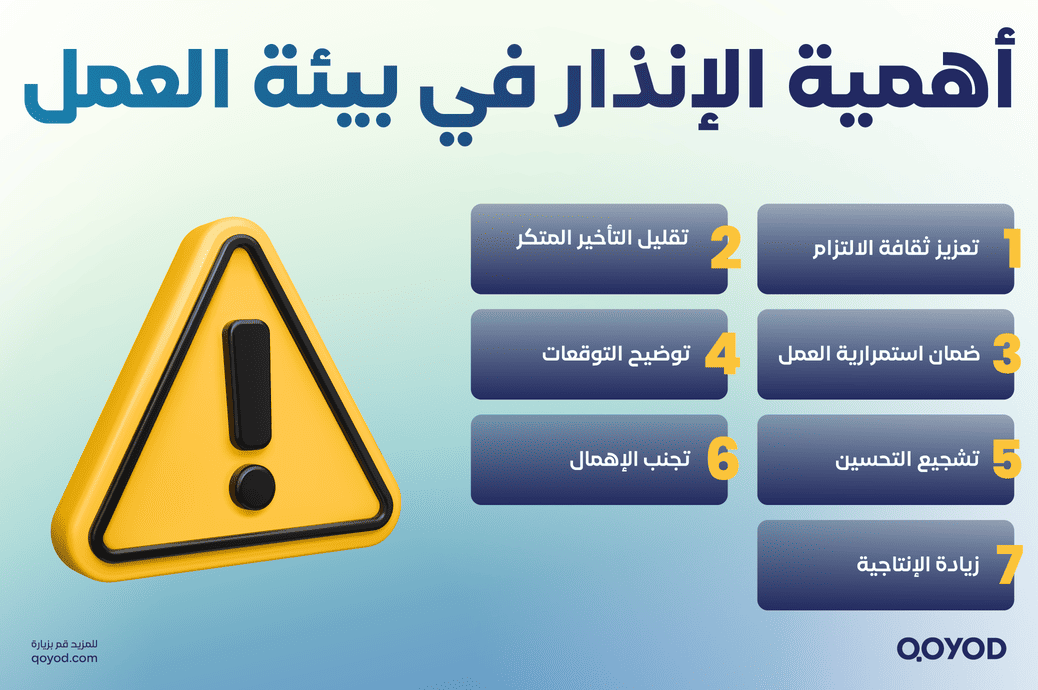
Workplace warnings are not merely an administrative tool for flagging violations. They are an essential element for ensuring discipline, improving performance, and achieving fairness across the organization. Below is a detailed look at the role warnings play in the workplace:
Its Role in Enforcing Punctuality
Employee punctuality is the foundation of any organization’s success. When lateness is addressed seriously and warnings are issued when needed, the following benefits follow:
Building a culture of commitment: A warning sends a clear message that the organization values time and considers punctuality an integral part of its success.
Reducing repeated lateness: Warnings act as a deterrent for employees who are frequently late, pushing them to improve their behavior and avoid consequences.
Ensuring business continuity: Punctuality keeps work flowing without interruption, helping the organization meet its goals on schedule.
Its Effect on Improving Employee Performance
An administrative warning can be a positive turning point in employee performance when used correctly:
Clarifying expectations: When an employee receives a warning, they also receive clear guidance on what is expected of them.
Encouraging improvement: Warnings often prompt employees to review their behavior and work on improving their performance.
Preventing negligence: A clear warning system makes employees more diligent in carrying out their tasks and avoiding any shortcomings.
Increasing productivity: When issues are addressed firmly, employees become more focused and disciplined, leading to better overall performance.
Its Role in Improving the Workplace and Ensuring Fairness Among Employees
Administrative warnings contribute significantly to creating a workplace built on fairness and professionalism:
Achieving fairness: When an organization applies a unified warning system to all employees without exception, it strengthens the sense of fairness among the team.
Building trust in management: Employees trust management that enforces its policies fairly, which boosts morale.
Maintaining an organized workplace: A warning system that manages undisciplined behavior helps preserve order at work.
Reducing friction: Handling violations quickly and transparently lowers tension between employees and management, creating a more positive workplace.
The result
The Right Steps to Issue a Lateness Warning
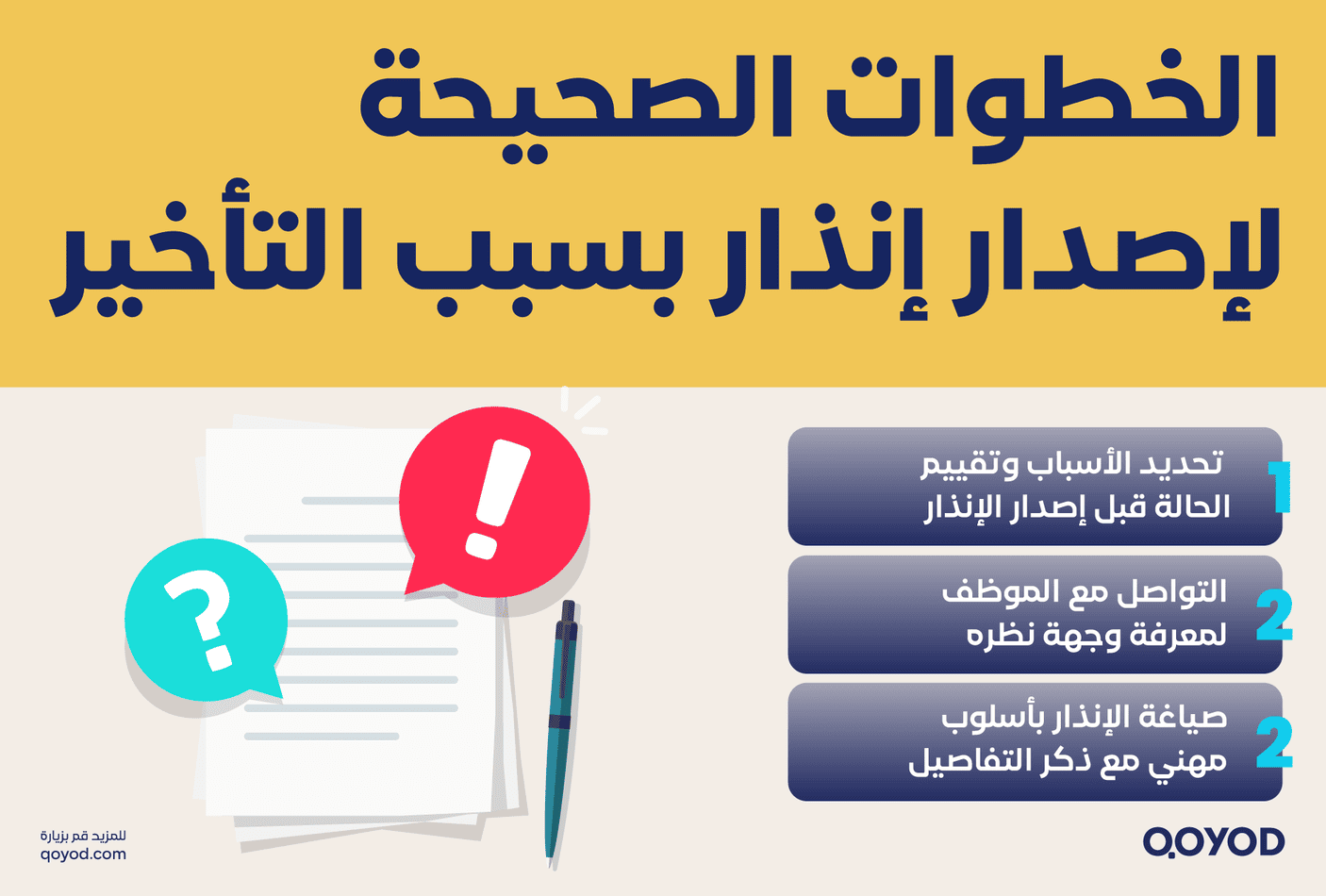
Issuing a lateness warning must be done in a professional, structured way to achieve the core goal of improving performance and commitment, without damaging the employee’s relationship with the organization. Here is a detailed look at the right steps for issuing this type of warning:
1. Identify Causes and Assess the Situation Before Issuing the Warning
- Review the time log: Before issuing the warning, review the employee’s attendance records to determine how often the lateness has occurred.
- Verify the circumstances: Sometimes the employee may face circumstances beyond their control (such as health issues or emergencies). It is important to gather information about the case.
- Assess the impact: Evaluate how much the lateness affects workflow and team performance to gauge the seriousness of the issue.
- Check the policies: Confirm that the lateness contradicts the policies and rules the employee previously agreed to in the employee handbook.
2. Speak with the Employee to Hear Their Perspective
- Hold a one-on-one meeting: Have a direct conversation with the employee to understand the reasons behind the lateness.
- Show empathy: The conversation should be objective and respectful, giving the employee the chance to explain their situation.
- Review possible solutions: If special circumstances caused the lateness, discuss options such as adjusting working hours or offering temporary flexibility.
- Clarify the consequences: Make clear to the employee that continued lateness may lead to stricter administrative action.
3. Draft the Lateness Warning Professionally with Full Details
- Include clear and accurate information:
- Employee details: Name, position, and department.
- Warning date: Record the date clearly so it aligns with the administrative log.
- Violation details: List the number of lateness incidents with their dates and how they affected workflow.
- Professional and precise language:
- The warning should be free of emotional or accusatory phrases.
- The wording must be formal and clear to prevent any misinterpretation.
- Reference the relevant policies: Point to the internal regulation clauses or rules that were violated by the lateness.
- State the required actions:
- Call on the employee to commit to the designated working hours.
- Outline the performance improvement steps needed to avoid future warnings.
- Closing and invitation to follow up:
- Indicate the channels through which the employee can reach out if they have additional questions.
- Emphasize that the goal is to improve commitment, not to punish.
Why These Steps Matter
Following these steps strengthens the integrity of the administrative action, protects the organization from potential disputes, and confirms its commitment to fairness and professionalism. It also helps guide employees toward greater commitment and boosts productivity in the workplace.
Handling the Employee After a Lateness Warning
Issuing the warning is not the end of the road. It is the start of a process aimed at improving the employee’s performance and strengthening their commitment. Handling the employee well after the warning helps build a positive professional relationship and increases productivity. Below is a breakdown of how to manage the situation after the warning is issued:
1. How to Reinforce Support for Better Performance
- One-on-one meetings:
After issuing the warning, hold a personal meeting with the employee to discuss the causes of the lateness and how to improve performance. Make sure the discussion is positive, so the employee feels supported rather than blamed. - Active listening:
Listen to the employee about the challenges they face, whether personal or work-related. Sometimes there are issues outside the employee’s control that can be addressed easily. - Encouragement and motivation:
Show appreciation for the employee’s past efforts and encourage them to achieve more. Positive statements like “we believe in your ability to improve” can make a real difference. - Personal development plans:
Offer a specific performance improvement plan with measurable goals and practical steps to help the employee commit to working hours.
2. Offering Solutions to Reduce Lateness
Sometimes, improving employee performance requires adjusting the environment or conditions around them. Among the most effective solutions:
- Flexible working hours:
If the employee faces transportation challenges or personal circumstances, consider offering flexible hours, such as allowing a slightly later start with compensation at the end of the day. - Job transfer:
If the employee struggles to commit due to long distance or current site conditions, they can be moved to a closer location or a more suitable environment. - Personal support:
Some lateness may stem from personal issues such as stress or lack of focus. Providing psychological or managerial counseling can help the employee overcome these challenges.
3. Monitoring Commitment After the Warning
- Performance follow-up:
Review the employee’s performance periodically after the warning. This can be weekly or monthly, depending on the need. The goal is to confirm improved commitment and reinforce positive behavior. - Continuous documentation:
Keep a clear record of the employee’s progress after the warning. This record can serve as a reference for future decisions about performance improvement or strengthening the professional relationship. - Transparent evaluation:
Provide ongoing feedback to the employee about their performance, whether positive or requiring improvement. This ensures continued progress and prevents regression. - Praise when there is improvement:
When the employee shows improvement in commitment, offer recognition, either publicly or privately. This builds their confidence and motivates them to keep improving.
Frequently Asked Questions
Is an administrative warning a punishment or a corrective action?
The main purpose of a warning is correction, not punishment. It is a formal way to alert the employee to a lapse in commitment and give them the chance to adjust their behavior before moving to stricter disciplinary action.
When does minor lateness become a violation that requires a written warning?
When lateness becomes a recurring behavior that affects the team’s operational efficiency, and after verbal alerts have been exhausted. At that point the violation should be documented in writing to maintain seriousness and protect the organization’s legal rights.
What are the essential elements that must appear in a warning template?
The warning should include: employee details, the exact date of the violation, a reference to the internal regulation clause that was breached, and a clear statement of the consequences if performance does not improve or the violation is repeated.
How does an administrative warning protect workplace fairness?
By applying unified standards to all employees, it prevents any sense of bias, strengthens a culture of respect for time, and ensures that a committed employee is not treated the same as an undisciplined one.
Closing Thoughts
Handling the employee after a warning in a positive way reinforces a culture of transparency and fairness in the workplace. Instead of feeling punished, the employee feels supported and motivated to improve their performance. By offering practical solutions and tracking commitment, a warning experience can be turned into an opportunity to strengthen the relationship between the organization and the employee and drive more productivity and commitment.