




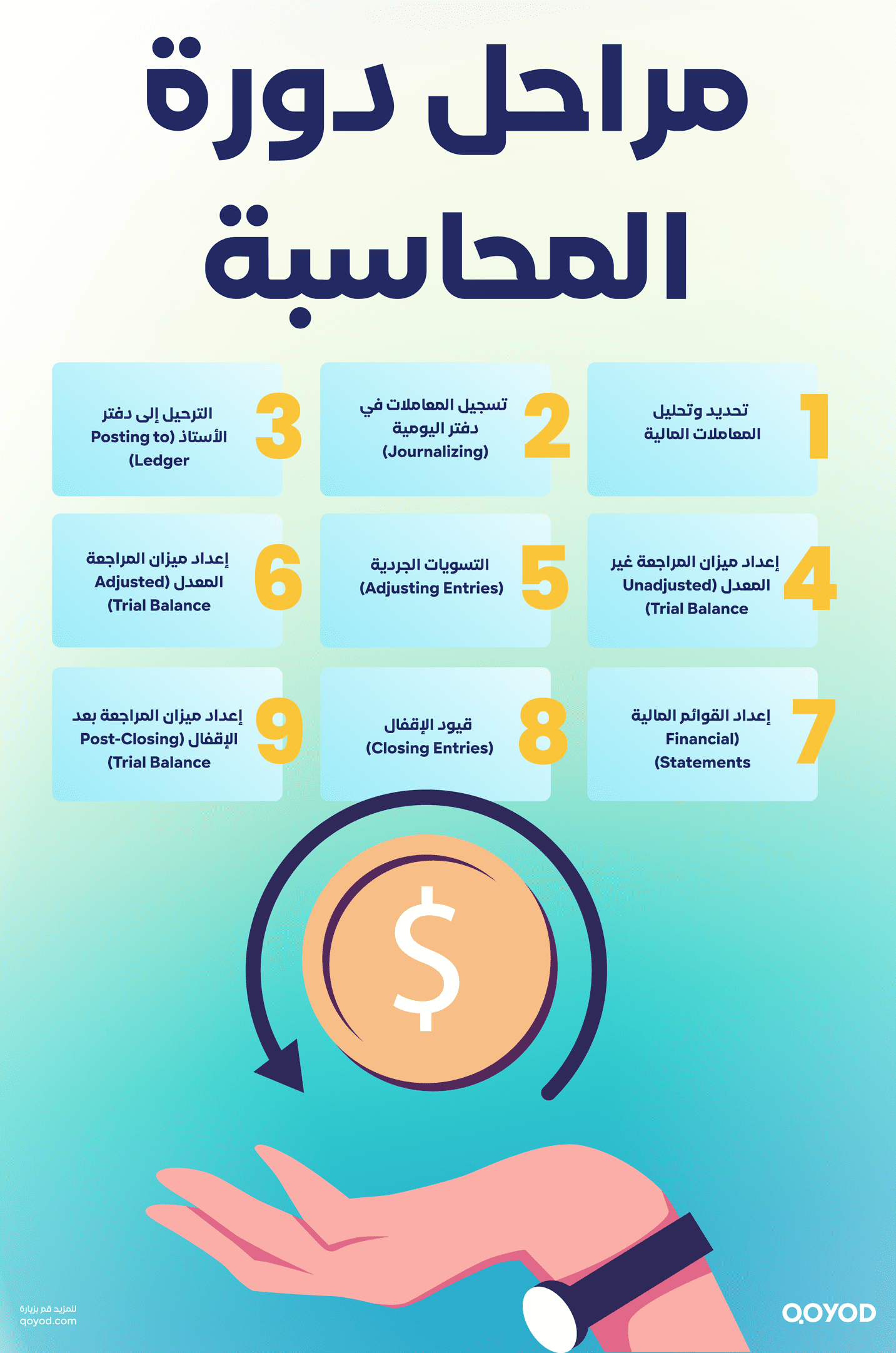
The accounting cycle template serves as the roadmap and navigation guide that ensures you reach your destination safely and accurately. It is a series of interconnected, logical steps used to record, classify, summarize, and present financial information for any organization, from the moment a financial transaction occurs through to the preparation of final reports presented to management and stakeholders.
Why is the accounting cycle template important?
Simply put, without a complete and properly executed accounting cycle template, companies would be in financial chaos. They would not be able to know their true sales volume, their actual profits, or even what they own and owe. The accounting cycle is what ensures accuracy, transparency, and reliability in financial data, enabling managers to make informed decisions, giving investors confidence in company performance, and supporting compliance with legal requirements. It is a recurring process that repeats every accounting period (monthly, quarterly, or annually) to provide a continuously updated financial picture.
Stage one: identifying and analyzing financial transactions
The accounting cycle journey begins with the foundational step: identifying and analyzing financial transactions. What is a financial transaction? It is any economic event that affects the financial position of the company. These transactions can be as simple as buying a pen, or as complex as signing a loan contract worth millions of SAR. What matters is that they have a measurable financial impact. Common examples include: selling goods or services to a customer, purchasing raw materials or fixed assets (such as machinery and equipment), paying employee salaries, settling an electricity bill, or collecting an amount due from a customer.
The critical step here is analyzing these transactions. This means understanding how each transaction affects the basic accounting equation: Assets = Liabilities + Equity. For each transaction, you must determine which accounts (assets, liabilities, equity, revenues, or expenses) increased or decreased, and therefore whether it should be recorded as a debit or a credit. For example, when purchasing a new machine, the “Machinery” account (asset) increases and the “Cash” account (asset) decreases, or the “Accounts Payable” account (liability) increases if the purchase is on credit. This precise analysis is the foundation for applying the double-entry principle, which keeps the records in balance.
Stage two: recording transactions in the journal (Journalizing)
After analyzing a transaction, we move to recording it. This is done in the General Journal, the company’s primary record. Think of the journal as a logbook where all of the company’s financial events are recorded in chronological order. Each transaction is recorded as a “journal entry” consisting of: the date the transaction occurred, the names of the accounts affected (with the debit and credit specified for each, along with the corresponding amounts), and a brief, clear description of the transaction.
Adhering to the double-entry principle here means that the total debits must always equal the total credits in every entry. This keeps the record balanced from the start. For example, if a company sells a product for 5,000 SAR cash, the journal entry would be: “Cash account (Debit 5,000) to Sales Revenue account (Credit 5,000),” with the description “cash sale of products.” This stage provides a detailed historical record of all financial activities.
Stage three: posting to the ledger (Posting to Ledger)
After entries are recorded in the journal, they are posted to the General Ledger. The ledger is essentially a collection of “individual accounts” for every financial element in the company. Each account (such as the cash account, the machinery account, the salaries account, the capital account) has its own page in the ledger, where all transactions affecting that account are gathered. Posting means transferring the debit and credit amounts from journal entries to the appropriate sides (debit or credit) of the relevant accounts in the ledger.
The purpose of this stage is to consolidate all transactions related to a specific account in one place, allowing us to know the current balance of each account at any time. For example, the cash account in the ledger will show all amounts that flowed in and out of cash, giving you the available cash balance in the company. This stage is essential for preparing subsequent financial reports.
Stage four: preparing the unadjusted trial balance (Unadjusted Trial Balance)
At the end of the accounting period, after all journal entries have been posted to the ledger, the unadjusted trial balance is prepared. This list is simply a statement of all account balances (debits and credits) extracted from the ledger. The main purpose of the trial balance is to verify that the balances are in equilibrium: the total debit balances must equal the total credit balances.
This balance is an initial indicator that the recording and posting process has been done correctly and that the double-entry principle has been applied. If the trial balance does not balance, this indicates an accounting error (such as a posting or addition error) that must be found and corrected before moving on to the next stages. Despite its importance, the unadjusted trial balance does not guarantee that the records are completely free of errors, but it is a necessary step for initial verification.
Stage five: adjusting entries (Adjusting Entries)
After the unadjusted trial balance comes a critical stage known as adjusting entries. Why do we need them? Because some financial transactions have effects that span multiple accounting periods, or may not involve an immediate cash flow that requires daily recording. Adjusting entries ensure the application of the accrual basis of accounting, which requires recording revenues and expenses in the period to which they actually belong, regardless of when cash was received or paid.
These adjustments are prepared at the end of the accounting period to correct or modify certain accounts. Common types include: accrued expenses (such as salaries that are due but not yet paid), accrued revenues (such as services rendered but not yet collected), prepaid expenses (such as rent paid several months in advance), unearned revenues (such as amounts collected for a service to be provided in the future), and finally depreciation (the allocation of the cost of fixed assets over their useful life). These adjustments ensure that the financial statements reflect the true position of the company.
Stage six: preparing the adjusted trial balance (Adjusted Trial Balance)
After completing the adjusting entries and posting them to the ledger, a new version of the trial balance is prepared, called the adjusted trial balance. This trial balance reflects the final balances of all accounts after taking the impact of the adjusting entries into account.
The importance of the adjusted trial balance lies in being the reliable foundation for preparing the main financial statements. All the figures it contains have been adjusted to reflect the true picture of revenues, expenses, assets, liabilities, and equity at the end of the accounting period, ensuring that the financial statements will be accurate and meaningful.
Stage seven: preparing the financial statements (Financial Statements)
This stage is the ultimate goal of the accounting cycle. After gathering and processing all the data, it is summarized in the financial statements, the reports that provide important information to various parties. The main financial statements are:
- Income Statement: shows the company’s financial performance over a specific period (such as a quarter or year) by comparing revenues to expenses to arrive at net profit or loss.
- Balance Sheet: provides a snapshot of the company’s financial position at a specific point in time (at the end of the period), presenting assets, liabilities, and equity.
- Cash Flow Statement: explains the sources of cash the company obtained and how it used them during the period, divided into operating, investing, and financing activities.
- Statement of Changes in Equity: details the changes that occurred in owners’ equity during the period (such as owner investments, net profit, and dividend distributions).
These statements are vital for decision-making by management, investors, creditors, and government bodies.
Stage eight: closing entries (Closing Entries)
After preparing the financial statements comes the closing entries stage. These entries are prepared at the end of the accounting period to “zero out” certain account balances and prepare them for the next period. The accounts that are closed are known as temporary accounts, and they include revenues, expenses, and the owner’s personal drawings. The balances of these accounts are transferred to a permanent account called “Income Summary” and then to the capital account or retained earnings.
The main objective is to ensure that temporary accounts start the new accounting period with a zero balance, so that the performance of that period can be measured independently. Permanent accounts (assets, liabilities, equity) are not closed; their opening balances are carried forward to the next period.
Stage nine: preparing the post-closing trial balance (Post-Closing Trial Balance)
The final step in the accounting cycle is preparing the post-closing trial balance. This list shows the balances of all permanent accounts only (assets, liabilities, equity) after the temporary accounts have been closed.
The purpose of this trial balance is to perform a final check that all temporary accounts have been closed correctly, and that the balances of the permanent accounts are in equilibrium, so the accounting system is ready to begin a new accounting cycle with confidence and accuracy. It represents the starting point for the next period.
Frequently asked questions
What is the accounting cycle and why is it like a “roadmap”?
It is a series of 9 sequential steps that begin with the occurrence of a financial transaction and end with issuing reports. It is like a roadmap because it ensures every halala is recorded accurately and prevents financial chaos, giving management and investors a clear, reliable view of the company’s position.
What is the difference between the journal and the ledger?
The journal: the primary record where transactions are entered chronologically as soon as they occur.
The ledger: the record that classifies transactions into separate accounts (such as the cash account alone, and the salaries account alone) to show the balance of each item at any moment.
Why are “adjusting entries” the most important step for accuracy?
Because they apply the accrual principle. They ensure that expenses and revenues are recorded in the period to which they actually belong, even if the cash has not yet been paid or received (such as this month’s salaries that will be paid next month), which prevents profits from being artificially inflated or understated.
What are “closing entries” and why do we zero out some accounts?
They are entries made at the end of the year to zero out the temporary accounts (revenues and expenses) and transfer net profit to equity. The goal is for the new year to start with a “zero” balance for these accounts so the new year’s performance can be measured independently and accurately.
Conclusion: the ongoing importance of the accounting cycle in financial management
The accounting cycle is not just a set of routine steps; it is an integrated, interconnected system that ensures financial information flows in an organized and reliable manner. Each stage complements the next and serves as the foundation for the stage that follows, culminating in the production of accurate financial statements that reflect the true picture of a company’s performance and financial position.
Understanding and mastering this cycle is essential not only for accountants, but for anyone dealing with the financial side of business, whether a manager, an investor, or an entrepreneur. It contributes directly to effective financial control, sound strategic planning, and informed decision-making that drive the growth and prosperity of any organization. Can you now see how this cycle is truly an indispensable roadmap in the business journey?