




A financial clearance form is a critical legal tool used to settle rights and obligations between two parties in a contractual relationship, particularly in cases where disputes or claims may arise after the relationship ends.
The importance of a clearance lies in documenting that the second party has received all financial entitlements in full and final form, protecting both sides from any future legal claims. It is often used to settle financial dues related to salaries, allowances, compensation, or any other rights that may arise during the contract period.
Conditions for a Valid Financial Clearance Form Under Saudi Law
A financial clearance form is one of the key legal instruments for settling rights and obligations between parties. Three main conditions must be observed to guarantee its validity and legal standing under Saudi regulations, so it serves its intended purpose in full. Below is a breakdown of these conditions:
-
The contractual relationship between the parties has ended
One of the foremost conditions for a valid clearance is that it must be drafted after the relationship between the parties has fully and finally ended. If the clearance is signed while the contract or employment period is still active, it is considered void and has no legal weight. The clearance must be the final step between the parties, with no subsequent actions or procedures indicating that the contractual relationship continues after signing.
-
Issued through a clear written document
The financial clearance must be issued via a written document containing clear, understandable wording that precisely outlines the rights of the second party and the amounts due. The document should include every detail related to rights, financial dues, and any deductions or settlements made between the parties. It is best practice to include a statement from the recipient (the second party) such as: “I, [name of the second party], acknowledge receipt of all my entitled rights, including: …” to ensure clarity around the rights and the scope of the clearance.
-
Signature of the second party on the clearance
Simply writing the rights and dues into the clearance is not enough, even if handwritten by the second party. The second party must formally sign the clearance to confirm receipt of all rights and entitlements. The signature serves as legal proof and stands as evidence that they received the rights set out in the clearance, granting it the required legal standing.
These conditions ensure the financial clearance complies with the legal requirements in Saudi Arabia, protecting both parties’ rights and shielding them from any future legal disputes.
Importance of a Financial Clearance Form
A financial clearance plays a central role in safeguarding the rights of contracting parties. It is a trusted legal instrument for documenting the settlement of financial dues, helping to prevent potential future disputes. It provides formal evidence that the second party has received all entitled rights, reinforcing transparency and trust between the parties.
For companies and employers, the financial clearance supports financial compliance and more accurate cash flow control. It also helps reduce legal risk tied to unjustified financial claims. Beyond that, the clearance acts as a documented record that can be referenced when needed, providing legal protection for both sides should any future dispute arise.
When is a financial clearance void?
A financial clearance form is considered invalid or void under Saudi law if it fails to meet any of its core conditions, most importantly the requirement that it be drafted after the contractual relationship has ended. If the clearance is signed while the contract is still active, it carries no legal weight, because not all financial dues may have been accurately calculated, such as the end-of-service award (EOSB), which only becomes due once the relationship has formally ended.
Likewise, the absence of a formal signature from the second party, or failure to clearly outline the rights and dues, can invalidate the clearance, making it unreliable in court should any financial dispute arise between the parties.
Signing the clearance before receiving the rights
The second party’s signature on the financial clearance counts as a formal acknowledgement that they have received all their dues in full. If the clearance meets all legal conditions, the second party has no right to claim any additional dues after signing. However, there are exceptional cases where the second party can object and claim their rights, if they did not actually receive them, or if the clearance contains errors or accounting flaws.
The following are the most common situations that may trigger a dispute over a financial clearance after signing:
-
Dues not delivered after signing
-
-
- If the second party signs the clearance but the first party (the employer or paying entity) withholds the agreed dues, the clearance remains formally valid but loses its practical effect. In this case, the second party can turn to the courts or engage a lawyer to prove they did not actually receive their rights, giving them the right to pursue them legally.
-
-
Missing rights or overlooked dues
-
-
- If, after signing, the second party discovers that the clearance does not cover all their financial dues, they have the right to claim a correction. They can refer to the competent judicial bodies to request a recalculation and prove that amounts have not been paid in line with the contract or applicable regulations.
-
-
Accounting flaws in the clearance
-
- A financial clearance may contain accounting errors that affect the accuracy of the dues paid. In this case, these errors are treated as defects of consent, since the clearance was not based on correct information, so the first party cannot rely on it to extinguish the second party’s right. Once these errors are proven, the clearance can be adjusted and the calculations corrected to ensure the second party receives their full dues.
Types of Financial Clearances
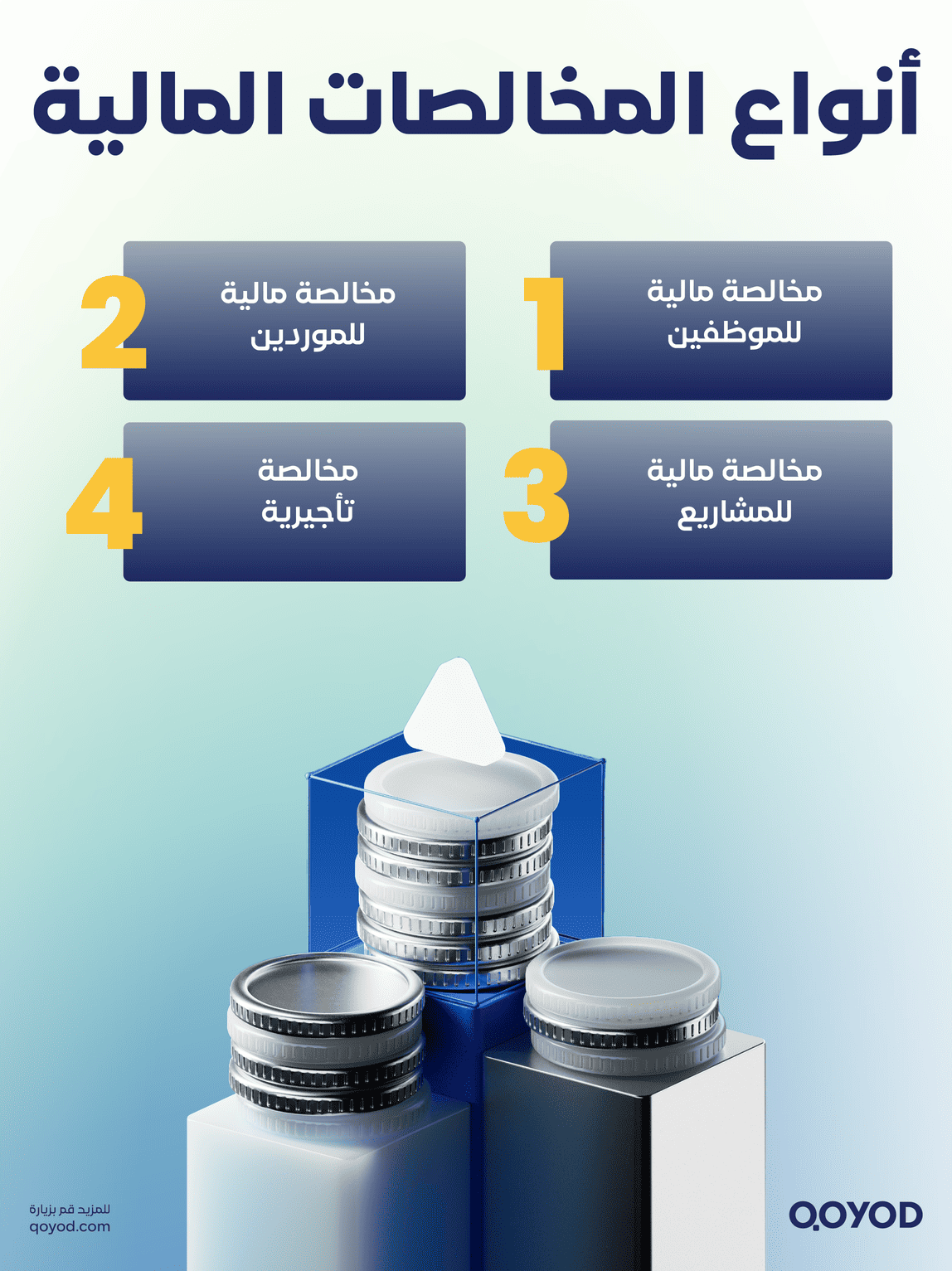
Financial clearances vary depending on the nature of the financial relationship between the parties. The type of clearance is determined by the dues being settled. Below are the most common types of financial clearances:
-
Employee financial clearance
Used when an employee’s service ends, whether by resignation or contract termination, to confirm they have received all financial dues such as salaries, allowances, end-of-service award (EOSB), and compensation for unused leave.
-
Supplier financial clearance
Issued between companies and suppliers when settling invoices and financial dues related to the supply of goods or delivery of services, confirming that no unpaid financial obligations remain.
-
Project financial clearance
Used at the completion of projects to ensure all financial dues between the contracting parties (such as contractors or service providers) have been paid, and to confirm that no outstanding financial obligations remain.
-
Rental clearance
Issued in the real estate or equipment leasing sector to confirm settlement of all dues related to a lease, whether for residential or commercial property or equipment, and to prove there are no unpaid financial obligations at the end of the contract.
Uses of the Financial Clearance Across Different Contracts
Financial clearances are not limited to employment contracts between companies and employees. They extend to many other contractual relationships and are drafted to document the settlement of rights between the parties. The wording of the clearance varies based on the nature of the financial relationship. Below are some cases that call for a financial clearance, with a brief example for each:
1. Financial clearance between landlord and tenant
Used to document the landlord’s receipt of all financial dues related to the lease, and to confirm that no other financial obligations remain between the parties.
2. Financial clearance for debt settlement between creditor and debtor
Used to document the full settlement of a debt between the parties. The creditor acknowledges receipt of the entire amount due from the debtor, extinguishing any future claims related to that debt.
Important notes:
- It is preferable to document the clearance through a formal letter or a legal authority to guarantee its validity.
- The debt amount must be clearly stated, along with any interest or additional fees that have been settled.
- Signing before witnesses strengthens the legal weight of the clearance should any future dispute arise.
3. Financial clearance between two companies
This clearance settles all financial obligations between two companies and closes any existing contracts or financial claims between them.
When Should You Use a Financial Clearance Form?
A financial clearance is an important step to ensure that all financial rights between the parties are settled. It is recommended in the following situations:
-
When the employment relationship ends
To settle all dues between the company and the employee, including salaries, allowances, and end-of-service award (EOSB).
-
When a project is completed
To confirm all financial dues between the contractor or supplier and the project owner have been paid before closing any obligations.
-
When ending a lease contract
To ensure the leased property or equipment is free of any remaining financial obligations and to confirm settlement of all dues between landlord and tenant.
-
When liquidating a company
To document all financial dues, whether outstanding debts or payments owed, when the company’s activity is permanently wound down.
Common Mistakes When Preparing a Financial Clearance Form
Some recurring mistakes should be avoided when preparing a financial clearance, including:
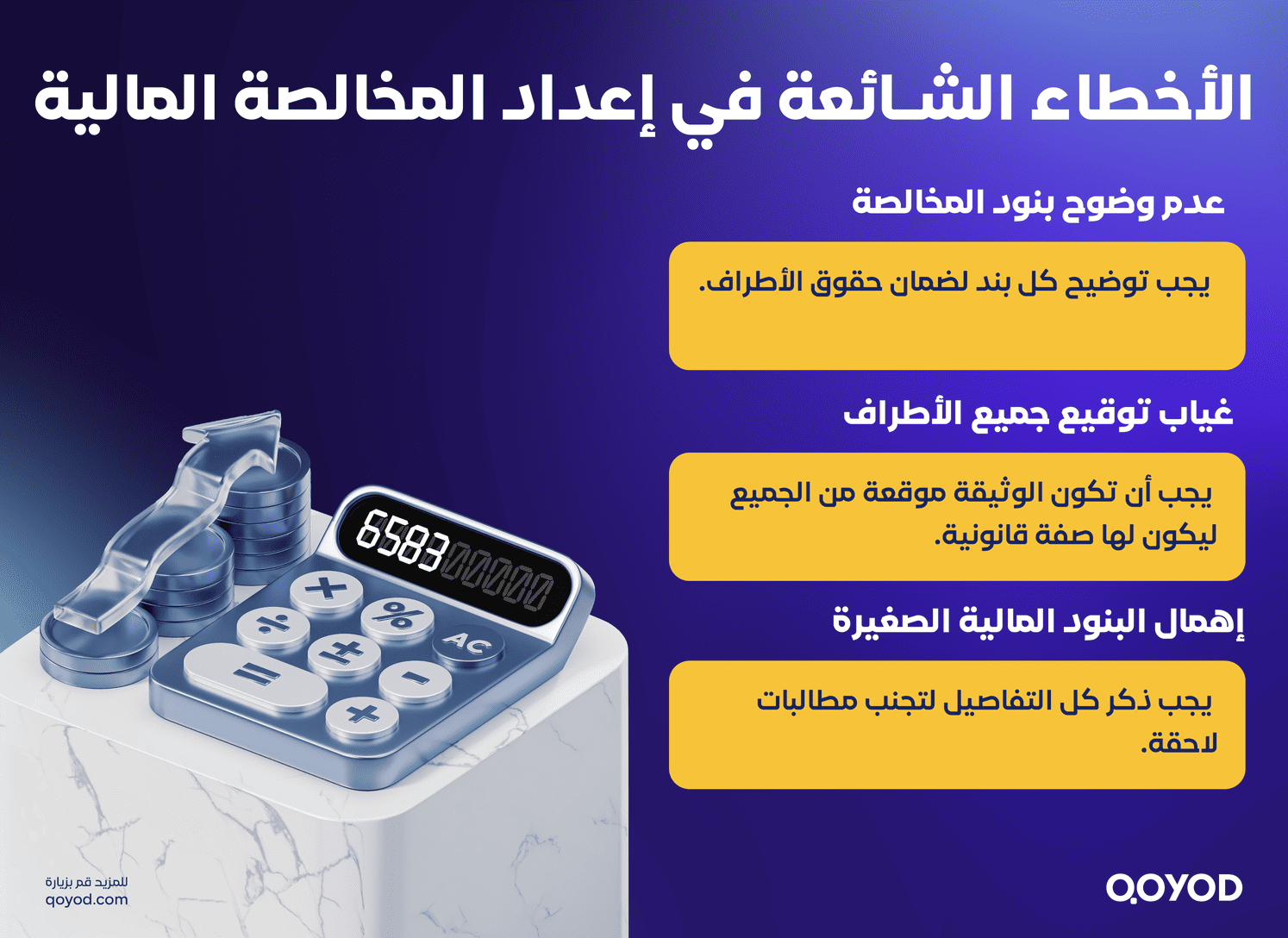
1. Unclear clearance terms
All financial items and rights must be specified precisely to avoid ambiguity or future disputes.
2. Missing signatures from all parties
Every involved party, including witnesses where necessary, must sign so the clearance gains full legal standing.
3. Neglecting small financial details
Some dues may appear minor but can trigger later claims, so every financial detail must be captured.
Legal Requirements for a Financial Clearance
1. Signatures of all parties
To make the clearance binding, it must carry the signatures of both parties and any witnesses present.
2. Formal documentation of the document
Some authorities require formal notarization of the clearance to give it legal effect, especially for large contracts or dealings with government bodies.
3. Confirming all financial obligations are closed
Review every due to confirm no amounts remain unpaid and no financial obligations remain open.
Role of the Financial Clearance Form in Managing Company Cash Flow
1. Precise settlement of dues
It improves financial planning and gives a clear picture of real financial obligations.
2. Closing receivables and payables (AR and AP)
It helps the company assess its actual financial position and make sound liquidity decisions.
3. Tighter expense control
It helps avoid sudden obligations and supports better financial stability.
Frequently Asked Questions (FAQ)
Can a financial clearance be signed while the employment contract is still active?
No. A clearance signed while the contract is still active is legally void under Saudi law, because certain rights (such as the end-of-service award) only become due once the contractual relationship ends. Signing in advance is treated as an unlawful waiver of rights that have not yet vested, and that precision is what protects employees from losing entitlements under pressure.
What happens if the second party signs the clearance but never actually receives their dues?
The signature is an acknowledgement of receipt, but it does not block a judicial claim if non-payment can be proven. In this case, the second party can go to court to show that the clearance was “on paper only” or that the amounts were never actually transferred (via bank statements), which prevents the loss of rights and provides legal protection for the affected party.
Why is writing amounts in words and itemizing the clearance considered essential to its validity?
Writing amounts in words prevents tampering or accounting mistakes. A vague clearance that does not separate salaries, allowances, and end-of-service award remains open to challenge. Clarity in the clearance terms is the core that ensures financial periods are closed with confidence and prevents future surprise claims.
What is the advantage of managing financial clearances through Qoyod?
Full automation and high accuracy. Instead of manual calculations prone to error, Qoyod automatically computes all employee dues (back salaries, leave compensation, and end-of-service award) based on the recorded contract end date. With one click, this data is turned into a precise financial report that supports full regulatory compliance and makes it easy to link the figures, in real time, to the company’s cash flow.
Conclusion
After walking through the concept of the financial clearance form in detail, explaining its conditions for validity and how to draft it with all required items, we can say that financial clearances are among the most important legal documents, especially for business and company owners. They need them to prove that they have delivered all rights to their employees when an employment contract ends for any reason. The matter does not stop at the financial clearance alone. There are many other administrative and accounting documents and processes that business owners, regardless of company size, should understand and apply when needed, to maintain ongoing legal compliance.
That is why Qoyod works to lighten much of the load on its users, business owners and companies, by offering professional services that handle a large part of their administrative and accounting work, including payroll services for employees, automatically prepared professional financial reports, and many other accounting services. You can benefit from all of this by subscribing to the Qoyod accounting system from any internet-connected device, with no downloads required. Sign up and enjoy a full 14-day free trial.
Join our community. Follow our page on LinkedIn and Twitter to be the first to see the latest articles and updates. It is an opportunity to learn and grow in the world of accounting and finance. Do not miss it, join today.