















In the Saudi market, Strategic Planning is a necessity for every establishment keeping pace with the economic transformations of Vision 2030. These practices ensure objectives are met efficiently in a competitive environment with rapid regulatory changes, helping local companies in Riyadh, Jeddah, and Dammam to control time, resources, and continuous development.
This article explores the concept of Strategic Planning, why it’s crucial, especially for small and medium-sized businesses (SMEs), and its fundamental goal. We’ll also provide a detailed breakdown of the various stages involved, from assessing the current situation to strategic plan development, evaluation, and necessary adjustments. Follow along to master the framework that positions your business for success.
Understanding the Concept of Strategic Planning
Saudi Strategic Planning focuses on supporting the national vision, building clear and comprehensive policies from accounting to marketing and human resources, with continuous monitoring and development to ensure regulatory compliance, profitability, and sustainability.
Strategic Planning is the backbone of any successful company or establishment. It represents the roadmap guiding the company to success. It requires significant thought and planning by responsible departments, as it’s not enough to merely arrive at a seemingly successful strategy. The plan must be executable at a reasonable, budget-aligned cost, allowing the company to avoid any unnecessary financial risks.
Strategic Planning vs. Tactical Planning
To clarify the concept further, we must differentiate it from tactical planning. They differ in the timeframe of their defined objectives. Planning for Saudi companies distinguishes between the corporate level, operational units, and functional performance, ensuring each department’s strategy serves the overall vision and reflects positively on local market performance. Thus, tactical planning can be considered a part of the broader Strategic Planning framework.
Types of Strategic Planning
Strategic Planning methods vary based on their scope, objectives, and implementation details within the company. The types of Strategic Planning include three main levels:
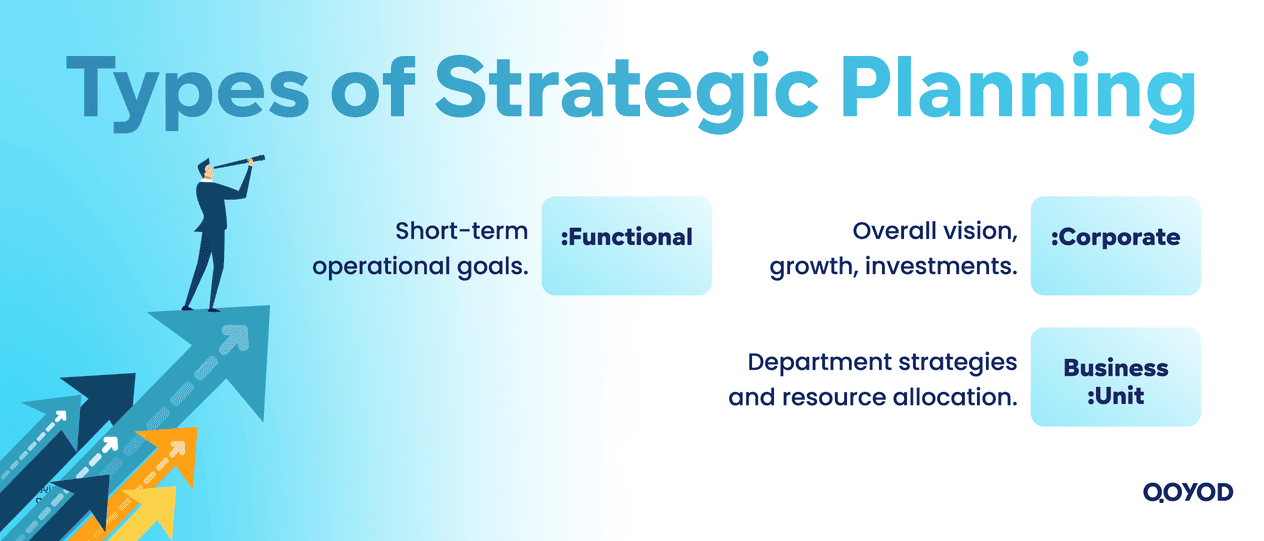
- Corporate-Level Strategic Planning: Focuses on defining the overall vision and major objectives the entire company seeks to achieve. It covers all company activities, aiming to enhance its market position and ensure long-term sustainability. Decisions regarding investment, market expansion (e.g., into Khobar or Madinah), entering new sectors, and brand development are key topics at this level.
- Business Unit-Level Planning: Deals with strategies for different units or departments. It aims to allocate resources and achieve excellence within these units, aligned with the overall corporate strategy. This includes specialized departments like sales, marketing, product development, accounting, and human resource management.
- Functional Planning: Relates to short and medium-term functional objectives specific to roles like marketing, production, or finance. It focuses on improving internal operations and increasing efficiency in daily performance.
Each of these types can work effectively when applied comprehensively within a company. Successful Strategic Planning requires synergy between these levels to maximize the company’s resources and investments and achieve its long-term goals.
The Importance of Strategic Planning for Saudi SMEs
The importance of Strategic Planning in Saudi Arabia includes aligning the vision, unifying work teams, enhancing national performance, and achieving quick responsiveness to governmental and economic changes.
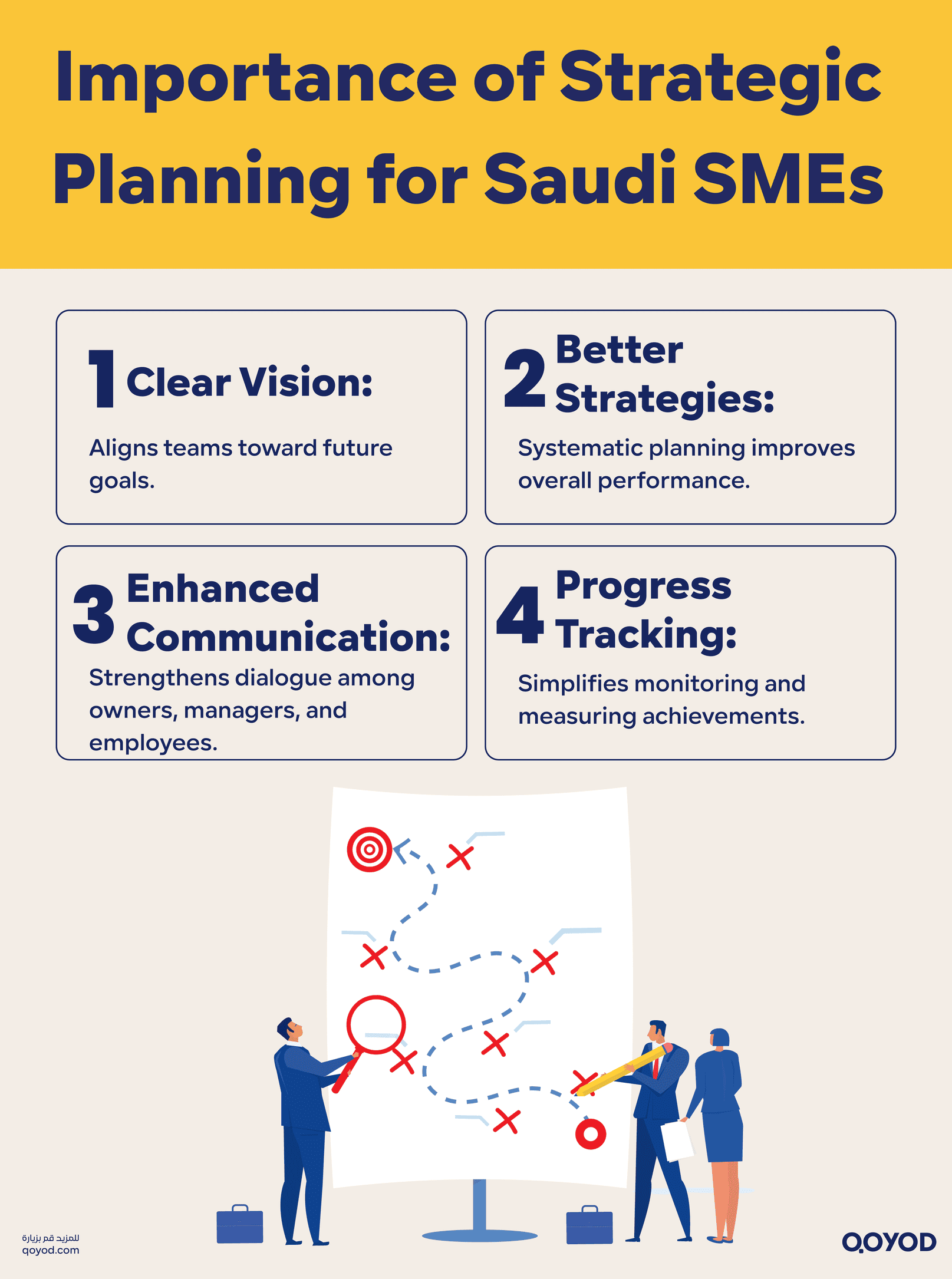
- Defining a Clear Vision: Planning helps define a clear, future-focused vision, ensuring everyone in the company works harmoniously toward the defined objectives.
- Formulating Better Strategies: Planning relies on a logical and systematic approach, which assists in formulating better strategies and plans. Studies suggest that the planning process itself significantly improves overall company performance, regardless of the strategy’s ultimate success.
- Enhancing Communication: The planning process involves participation from owners, managers, and employees in dialogue, analysis, and planning, which strengthens communication among them and boosts employees’ sense of effectiveness and importance to the company’s success.
- Tracking Progress: Having a Strategic Plan translated into operational plans with clear steps simplifies the process of tracking and measuring progress toward set goals. This aids in performance evaluation and identifying what needs to be adjusted and improved.
Analyzing the Internal and External Environment
To ensure the effectiveness of the Strategic Plan, it’s essential to consider factors affecting the company internally and externally. Analyzing the internal and external environment aims to understand the elements influencing the company and its policies. Tools for this analysis include:
| Tool | Focus | Key Components |
| SWOT Analysis | Internal & External Factors | Strengths (Internal advantages), Weaknesses (Internal deficiencies), Opportunities (External positives, e.g., new e-invoicing system in Saudi Arabia adoption), Threats (External negatives, e.g., competition). |
| PESTEL Analysis | External Macro-Factors | Political, Economic, Social, Technological, Environmental, and Legal factors (e.g., ZATCA regulations). |
Comprehensive analysis helps companies pinpoint areas of strength and weakness, opportunities, and threats, enabling smart strategic decisions that ensure their continuity and superiority.
Financial Planning in Strategy
Financial Planning is an integral part of Strategic Planning, aiming to allocate financial resources and determine how to utilize them to achieve the desired objectives. It involves setting a detailed budget that covers the expenses required to execute the activities outlined in the Strategic Plan.
- In Saudi businesses, Financial Planning adheres to Zakat, Tax, and Customs Authority (ZATCA) regulations and relies on resource distribution that enhances the institution’s sustainability in the local market.
- Budget Alignment: The budget defines cost estimates for each department or business unit and considers resource allocation based on priorities.
- Cost and Revenue Analysis: Helps determine profitability and the distribution of expenses and revenues, contributing to improved resource allocation.
- Financial Control: Requires regular monitoring of company expenditures to ensure objectives are met without exceeding the budget.
LEARN How to prepare an estimated budget with practical examples?
Financial Planning is a crucial element that guarantees efficient spending and sufficient resources for the company to achieve its strategic objectives, reinforcing its financial stability and sustainability.
The Goals of a Strategic Plan
The primary goal of Strategic Planning is to define long-term objectives, determine the best accounting software in Saudi Arabia to support them, and establish the plans to achieve them. It involves assessing current performance and asking, “Where am I going, and how can I reach my desired goals?” Planning also aims to connect three core areas:
- Mission: Defining your business’s purpose.
- Vision: Describing what you aim to achieve.
- Plan: Specifying how you will achieve your long-term objectives.
Stages for Developing an Effective Strategic Plan
After understanding the concept, importance, and goals of Strategic Planning, you may wonder how to set a strategic plan for your company to define clear objectives and guide your team toward success. Here are the stages for developing an effective Strategic Plan:
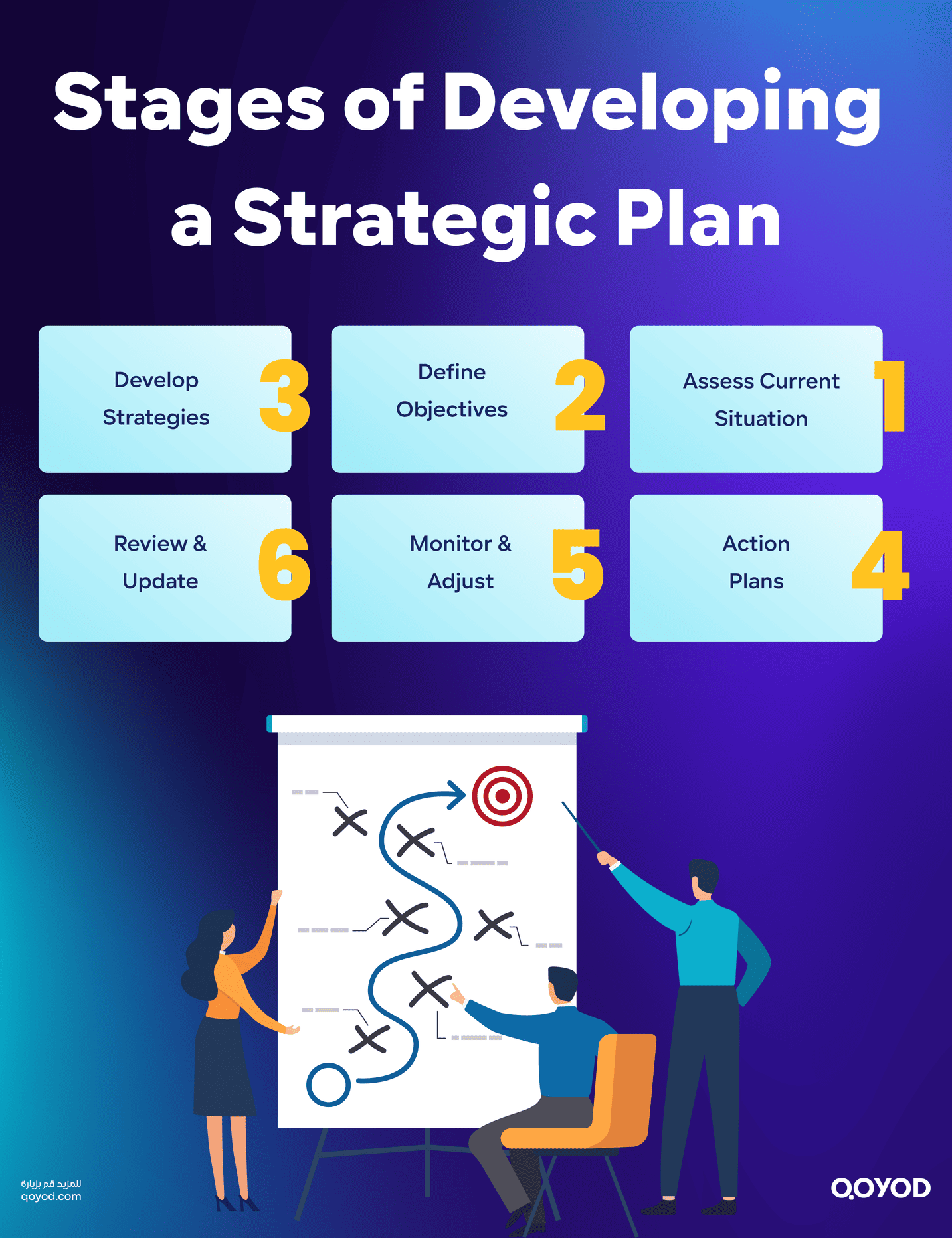
1. Assessing the Current Situation
This stage forms the foundation of the Strategic Plan. Before creating a good one, you need to thoroughly assess and understand the company’s current status. You can do this using the SWOT Analysis (Strengths, Weaknesses, Opportunities, and Threats), helping you identify areas of excellence and those needing improvement. This stage also includes assessing the company’s capabilities to factor them into goal setting and planning.
2. Defining Objectives
After assessing the company’s situation, you can define the goals you wish to achieve through your Strategic Plan. The previous analysis helps significantly. For instance, knowing weaknesses allows you to set goals to improve those aspects, and knowing available opportunities allows you to set goals to seize and benefit from them. The defined goals must align with the company’s vision and be measurable to help you evaluate the plan’s success later.
3. Developing Strategies and Action Plans
You can start developing strategies once your objectives are set. You must formulate these strategies to align with your goals and ensure their achievement. This stage involves defining the key initiatives and projects that will lead your company toward success.
4. Translating Strategies into Action Plans
The fourth stage is breaking down each strategy into clear action plans, each containing clear, executable steps. This also includes assigning and distributing responsibilities and setting timelines and deadlines for the plans.
5. Monitoring Progress and Making Adjustments
After distributing tasks and setting the schedule, you must regularly monitor the progress of your Strategic Plan to ensure you are heading in the right direction. Track the performance of the implemented plans. If monitoring reveals that some strategies are not achieving the desired results, adjust them as needed.
6. Reviewing and Updating the Plan
Strategic Planning is a continuous process. Circumstances can change, or new opportunities or threats may emerge. Therefore, you must constantly review and update your plan when necessary. Continuous feedback and periodic evaluations help review the plan’s effectiveness and make any necessary adjustments.
How Qoyod Helps You in Developing a Strategic Plan?
In Saudi Arabia, accounting software like Qoyod provides integrated solutions that link financial management with operations, ensure compliance with regulations (E-invoicing system in Saudi Arabia), and support business leaders in planning, especially in SMEs.
Qoyod Accounting Software offers many administrative services your company needs, such as managing purchases, sales, and inventory, in addition to accounting services like electronic invoicing and easy/manual entries. Qoyod ensures accuracy and efficiency in all these tasks and more. Therefore, you can be consistently confident that your reports are accurate and sound, which you can rely on to develop an effective Strategic Plan that guides your company to success.
Frequently Asked Questions about Strategic Planning
What is Strategic Planning?
A systematic process for defining long-term objectives and allocating resources for the best company outcomes in a competitive and changing environment.
Strategic vs. Tactical Planning?
Strategic focuses on long-term vision, while tactical handles short-term tasks and plans to achieve strategic goals.
Benefits for Saudi Companies?
Helps companies unify vision, improve decision-making, and enhance performance and compliance with Vision 2030 requirements.
What are the stages?
Assess the situation, define goals, develop strategies, implement/monitor performance, and continuously adjust.
Why is internal/external analysis crucial?
To reveal strengths/weaknesses, exploit opportunities, and avoid threats, increasing the effectiveness of strategic decisions.
How does Financial Planning contribute?
Ensures proper resource allocation, sound management of costs/investments, supports financial sustainability, and achieves goals.
In Conclusion
You should now have a clear understanding of the concept and importance of Strategic Planning and why many companies use it to formulate their strategies and action plans. While planning may require significant time, effort, and cost, a well-thought-out Strategic Plan fosters company growth, goal achievement, and employee satisfaction. Moreover, it saves considerable time that could be wasted working without a clear plan and well-studied objectives.
Qoyod Accounting Software helps you manage your administrative and accounting tasks with high efficiency and ease. It’s designed to be user-friendly for all clients. It provides security and safety for your data and transactions, ensuring accuracy in their retention. Through the professional reports it provides, Qoyod empowers you to develop an effective Strategic Plan for your company. Do not hesitate to subscribe to the Qoyod accounting system; you can benefit from all its features completely free for 14 days. Try Qoyod Accounting Software now to make your business operations easier and more accurate with solutions designed for Saudi companies.
Join our inspiring community! Subscribe to our LinkedIn and X (Twitter) pages to be the first to see the latest articles and updates. A chance to learn and develop in the world of accounting and finance. Don’t miss the opportunity, join today!