

















| Excerpt
Have you considered achieving sustainable income that matches the global digital growth? In the fast-paced digital age, owning a successful digital product is key to financial independence. This is not just about selling a file, but building real value. This comprehensive guide details how to build a successful digital product, from idea filtering to launch and profit. Read on to discover the steps to creating a profitable digital product and how to overcome legal and marketing challenges in any market. |
The global digital economy is undergoing a massive transformation, creating an unprecedented environment for launching and scaling digital products, from SaaS solutions to online courses and e-books.
However, success requires more than just a great idea; it demands deep compliance with international regulations and a keen understanding of the target market’s consumer behavior. This comprehensive guide provides a practical, step-by-step roadmap to build and launch your digital product successfully in any growing market.
The Concept of Digital Products Explained
Digital products are characterized by the fact that they do not require physical storage or complex shipping operations. They can be sold and distributed widely with just an internet connection, providing great flexibility for both the seller and the buyer. For example, you can purchase an e-book from any store and download it directly to your personal device. This makes them easily accessible, cost-effective, and time-efficient.
Digital products are a core element of the modern digital economy and are used across wide areas: education, entertainment, and creativity. Individuals and businesses can now easily create and sell digital products through specialized platforms.
Learn how to create an online store: A comprehensive guide to the best platforms and steps for success.
Digital vs. Physical Products
| Aspect | Digital Products | Physical Products |
| Physical Presence | Intangible, exists only in electronic form. | Tangible, has a physical presence and can be touched. |
| Distribution | Distributed and instantly downloadable online after purchase. | Requires storage and shipping, adding costs and time. |
| Cost | Low production costs after initial design (no raw materials). | Requires raw resources, manufacturing, packaging, and shipping. |
| Return on Investment (ROI) | Offers sustainable returns with the ability to sell repeatedly at no additional cost per unit. | Requires continuous production with every sale. |
| Geographic Reach | Can be sold and distributed globally without geographical barriers. | Depends on shipping logistics and may face distribution restrictions. |
Key Types of Digital Products
Digital Products: The Gateway to Modern Creativity and Innovation
Digital products have become an essential component of our daily lives. They offer innovative solutions that meet diverse user needs, ranging from education and entertainment to business management. These products significantly contribute to enhancing both personal and professional experiences.
Below is a detailed review of the most prominent types of digital products and their impact:
1. E-books and Online Courses (Educational Content)
E-books:
- They represent one of the most prominent and common forms of digital products.
- They allow users to access knowledge easily and at any time via their smart devices.
- They vary between novels, educational books, and career guidance books, making them an ideal choice for students and professionals alike.
Online Training Courses:
- They have become an essential educational tool in a rapidly changing world.
- These courses offer great flexibility to learners by providing access to their content anytime and anywhere.
- They are a profitable option for creators who share their expertise in fields such as programming, design, or self-development.
2. Software and Technical Applications (Global Context)
Software and Applications (Apps):
They serve multiple purposes, from improving productivity to offering entertainment. Task management applications and design software help professionals perform their work efficiently. Video games enrich our lives with unique entertainment experiences and represent a massive global market.
Technical Software for Business Management:
These are specialized software tools that help companies organize and manage various aspects of their daily operations. They aim to improve performance, facilitate decision-making, and reduce operational costs. These programs cover a wide range of functions, such as accounting and financial management.
Prominent Example: Cloud-based accounting software is widely used to manage financial operations, issue invoices, and ensure tax compliance. Solutions like Xero, QuickBooks, or Qoyod offer integrated systems designed to meet the needs of Small and Medium Enterprises (SMEs) worldwide.
3. Templates and Ready-Made Resources
Ready-Made Templates:
- They are among the most important resources for creators and professionals, as they provide quick and professional solutions.
- Design and presentation templates allow users to focus on content instead of designing structures from scratch.
- They are an essential option for accelerating the daily operations of startups and businesses in the region.
Digital Photos and Graphics:
- They are an integral part of the digital marketing and media world.
- They meet multiple needs, whether used in advertisements, website design, or creating visually appealing content.
Music and Audio Recordings:
- They add a creative flair to media and marketing.
- Whether it involves film soundtracks or audio recordings for books, they contribute to enhancing the audience experience and strengthening their connection to the content.
Digital Product Opportunities and Global Market Insights
The global digital economy is undergoing an unprecedented transformation, driven by worldwide efforts to diversify economies and increase reliance on the knowledge economy. This fertile environment makes the market a prime destination for entrepreneurs looking to launch and scale digital products.
Growth Opportunities and Challenges in the Global Market
The size of the e-commerce market worldwide is estimated to be in the trillions, with significant growth in spending on digital content and cloud services. The target audience generally focuses on products that offer practical and fast solutions, such as:
- Targeted Training Courses: Especially in high-demand global fields like Artificial Intelligence, Cybersecurity, and Digital Marketing that support emerging businesses globally.
- Custom Templates and Tools: Such as standard tax compliance templates or business organization files that comply with regional regulations.
- Applications Supporting Small and Medium-sized Businesses (SMEs): Such as cloud accounting software (e.g.Qoyod) that meets the requirements for electronic invoicing and integration with tax authorities.
Global Insight: Forecasts indicate the continued annual growth of the e-commerce market worldwide, confirming that investing in digital products now is a safe future investment.
Key Selling Platforms
To ensure the success of your digital product, you must choose selling platforms that facilitate global payment and transfer processes and enjoy the trust of consumers in your target market. Among the most important types of these platforms are:
E-commerce and Course Platforms:
- Global Platforms (e.g., Shopify, WooCommerce, Etsy): These provide integrated solutions for setting up online stores that support multiple languages and international payment methods (e.g., Stripe, PayPal).
- Regional E-commerce Leaders (e.g., Salla and Zid): These are crucial options for entrepreneurs specifically targeting the Middle East and North Africa (MENA) region, as they offer specialized support for the Arabic language and local payment gateways.
- Learning Management Systems (LMS) (e.g., Teachable, Thinkific): Specialized platforms that allow entrepreneurs to easily host, market, and sell online courses.
Accounting and Financial Management:
- Cloud Accounting Software (e.g. Qoyod): Using reliable cloud accounting software is essential for the success of your digital sales. It helps you manage the revenue and expenses of your digital products, issue invoices, and comply with relevant international tax and compliance requirements, ensuring the accuracy of your financial records.
Use Qoyod to generate and send invoices.
How to Create Digital Products
The process of creating a successful digital product requires a carefully planned strategy and clear execution phases, as these stages must aim to deliver genuine added value to the target audience. Here is a detailed explanation of the key steps that will help you create your digital product:
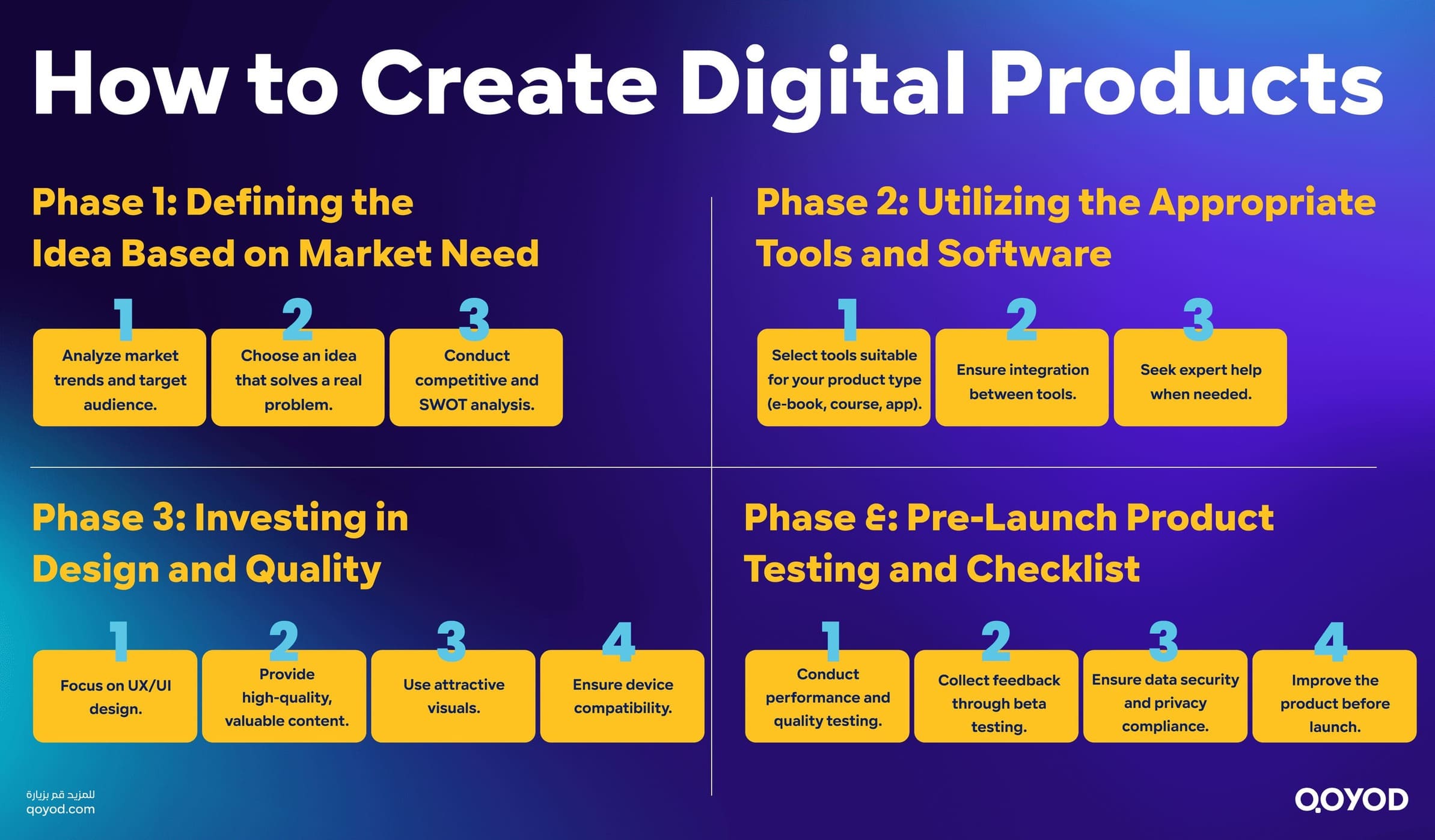
Phase 1: Defining the Idea Based on Market Need
Your success begins with a deep understanding of the target audience and their needs.
Market and Target Audience Analysis:
- Start by precisely identifying your target audience and understanding their needs through intensive research.
- Use tools like surveys or study current market trends in your target region.
- Example: If you target entrepreneurs globally, your product might be an e-book on effective digital marketing strategies on the X platform (formerly Twitter) or LinkedIn.
Choosing an Idea that Meets Needs:
- Based on the analysis results, choose a unique idea that offers a solution to an existing problem or improves the user experience.
- Ensure the idea aligns with your interests and skills to guarantee the highest quality delivery.
Competitive Analysis:
- Review competing digital products in the target market to determine their strengths and weaknesses.
- This analysis helps you introduce a distinct product that stands out in the crowded digital market.
SWOT Analysis: What it is and how it can be applied
Phase 2: Utilizing the Appropriate Tools and Software
Choosing the right tools is a critical step to ensure the efficiency of the production process.
Selecting the Right Tools:
- Determine the tools you need to create your digital product based on its type:
- For E-books: Use tools like Microsoft Word or Canva for book design and formatting.
- For Training Courses: Rely on hosting platforms like Teachable or Udemy to deliver and organize your content.
- For Applications and Software: Use appropriate programming languages (like Python or JavaScript) and interface design software (like Adobe XD).
Integration Between Tools:
- Ensure the tools you use support integration with each other.
- This integration is essential to speed up the creation and development processes, such as linking design tools with programming software.
Seeking Experts When Necessary:
- If you lack sufficient expertise in a specific area (such as design or programming), consult specialized designers or developers.
- This ensures the professional quality of the final product.
Phase 3: Investing in Design and Quality
Product quality is the foundation of successful marketing in the digital world.
Designing an Attractive User Interface (UX/UI):
- If your product is an application or a website, focus on the User Experience (UX).
- Design a simple and easy-to-use interface to reduce the bounce rate.
Content Quality:
- Ensure that the content provided in your digital product is high-quality and relevant to your audience.
- Example: If you offer a training course, use practical examples and rich resources to enhance the value provided.
Selecting Visual Elements:
- Invest in attractive product design by using high-quality images and graphics.
- Tools like Canva or Adobe Photoshop can help you enhance visual elements.
Compatibility with Different Devices:
- Ensure your digital product works smoothly and seamlessly on various devices: smartphones, tablets, and desktop computers.
Phase 4: Pre-Launch Product Testing and Checklist
The testing phase is the final check to ensure the launch of an error-free product.
Comprehensive Performance and Quality Testing:
- Thoroughly examine the digital product to ensure it is free of any errors or defects.
- If you are developing an application, test all features to ensure they work efficiently and smoothly.
Gathering Feedback from the Target Audience:
- Launch a beta version to a limited number of customers or friends to receive their valuable feedback.
- This helps you identify areas that need improvement before the general launch.
Ensuring Security and Privacy:
- If your product requires collecting user data, ensure compliance with security and data protection standard.
Product Improvement Based on Testing:
- Modify the digital product based on feedback and tests to ensure the delivery of a complete product that meets expectations.
Tips for Success in Selling Digital Products
With the expansion of the digital products market and increased competition, success requires precise strategies and innovative practices. The goal is not just to sell the product, but to build a long-term relationship with customers that ensures their loyalty and enhances your market position. Here are the most important tips for achieving success:
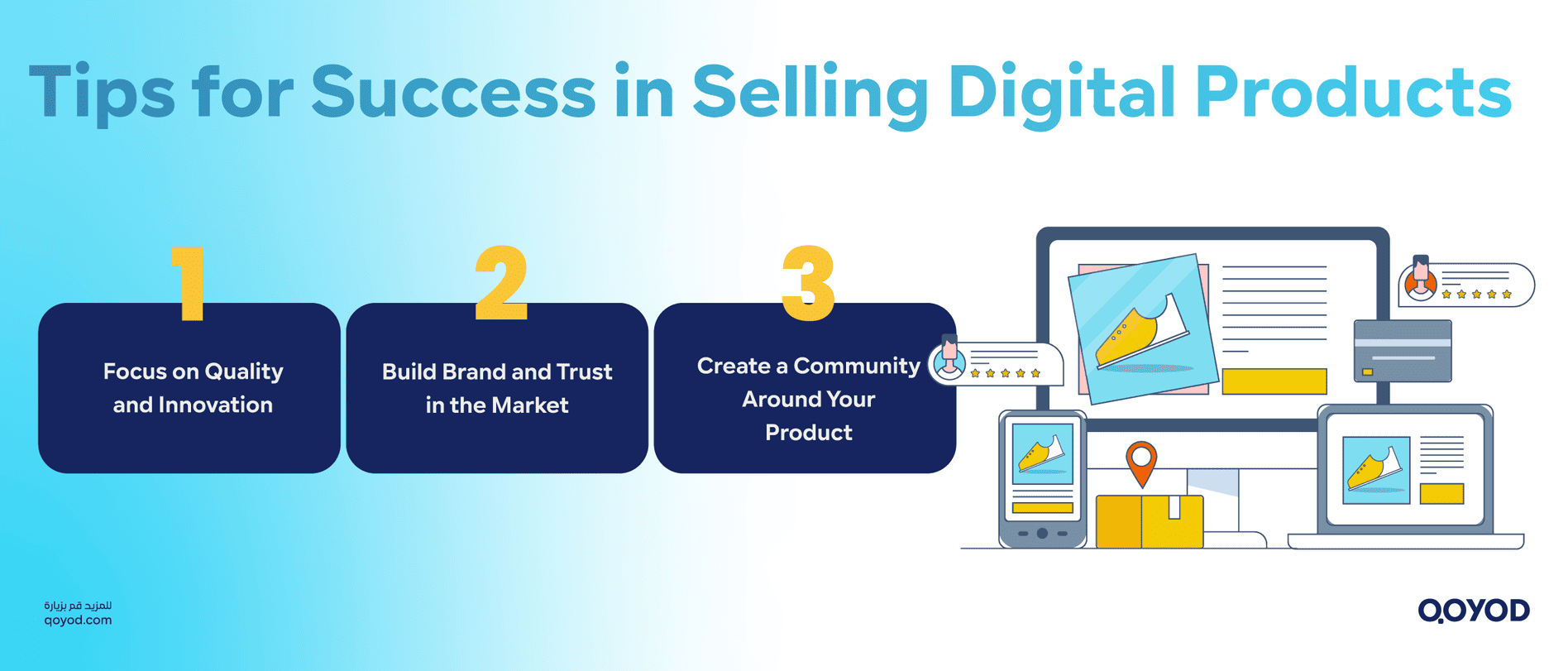
Focusing on Quality and Continuous Innovation
Success in selling digital products begins with offering a distinct product that meets customer needs.
- Quality is Essential: Your product must provide real value that makes the customer feel their investment was worthwhile.
Example: If you are selling a training course, focus on providing up-to-date, information-rich content built on practical foundations.
- Innovation is the Competitive Advantage: Look for ways to offer new solutions or innovative improvements that address needs not yet covered in the market.
Instead of copying existing ideas, offer features that make the user’s life easier, such as ease of use or an attractive interface design.
Building Brand and Trust in the Local Market
Trust is the most important currency in digital commerce, and it is built through continuous interaction.
Listening to Customer Feedback and Developing the Product:
- Provide open communication channels to receive customer opinions, whether via email or social media.
- Listen carefully to common patterns in complaints or requests and work to improve that feature in the next update.
- Inform customers that you are listening to their feedback and working on improvements, which strengthens their trust and loyalty to your products.
Creating a Community or Network Around the Product to Foster Loyalty:
- Building a community around your product is one of the most powerful tools for fostering loyalty and increasing sales.
- This community can be created through social media for direct interaction and providing valuable content.
- Example: Creating a Facebook group for customers to share their designs and exchange ideas, which creates a sense of belonging and increases engagement.
- You can organize events or online seminars that gather customers around your product to share their experiences.
How to Start a Digital Product Selling Business?
Starting a digital product selling business is an exciting step that requires careful planning and clear strategies. Whether your products are e-books, training courses, or ready-made templates, follow this step-by-step guide to ensure success and distinction in the growing digital market.
Steps to Start: From Idea Definition to Launch
We provide you with a practical guide to successfully launching your digital product:
Idea Definition:
- The first step is to determine the type of digital product you want to sell.
- Ask yourself: What skills or knowledge do I possess? And what problems can I solve for a specific audience?
- Example: If you are a professional designer, you can create ready-made design templates; and if you have expertise in accounting, a program like Qoyod might be the ideal tool for you to manage your business.
Market and Target Audience Analysis:
- Conduct thorough research on the market and local competitors.
- Accurately determine: Who is the target audience? What are their needs and preferences?
- Competitive analysis helps you identify gaps that your product can fill with added value.
Learn More:Definition of the sales process
Product Design:
- After defining the idea and understanding the market, start designing the product using tools and software appropriate to its nature.
- Tool Examples: Microsoft Word/Adobe InDesign for books, Teachable/Thinkific for courses, Flutter/React Native for applications.
- Focus on delivering a high-quality and user-friendly product.
Creating Preliminary Marketing Content:
- Before launch, prepare marketing content that attracts customers, including:
- A Landing Page containing product details and benefits.
- Short explanatory videos.
- Social media posts to enhance awareness.
Choosing the Selling Platform:
- Determine the platform you will sell through, prioritizing local options that support Saudi payment methods.
- Options: Your own e-commerce store (Shopify/WordPress), or local e-commerce platforms like Salla and Zid.
Pricing:
- Set the price based on the product’s quality and its value to the market, not just its cost.
- Analyze competitor prices and establish a pricing strategy that suits your target audience.
Product Launch:
- The launch is the crucial stage. Organize a strong marketing campaign that includes:
- Announcing the launch on all platforms.
- Offering limited-time discounts or promotions to attract initial customers.
- Contacting influencers or bloggers to increase product visibility in the region.
Strategies for Building a Digital Brand
A strong brand identity is the foundation for sustainability and growth in the digital products market.
Developing Brand Identity:
- Brand identity includes the name, logo, and design colors, and it must reflect your product’s values.
- Example: Choose a name that reflects creativity and professionalism and use modern colors that express the product’s concept.
Establishing a Strong Digital Presence:
- A digital presence is essential. Create a website that showcases your products and establish accounts on social media (Twitter, Instagram, LinkedIn).
- Focus on continuously delivering valuable content that attracts your audience, such as tips, articles, and educational videos.
Building Trust with Customers:
- Trust is the key to success. To enhance it:
- Offer a clear and flexible refund policy.
- Clearly state product details, features, and usage instructions.
- Use customer testimonials and positive reviews as proof of your product’s quality.
Interacting with the Audience and Continuous Development:
- Use social media to communicate directly with customers and quickly answer their inquiries.
- Share success stories of customers who have used your products to encourage others.
- Do not stop at the first product: Expand your offerings and develop advanced levels based on customer feedback and market changes.
Conclusion: Start Your Digital Journey
In conclusion, this comprehensive guide clarifies that the digital products sector represents a massive and sustainable investment opportunity for individuals and businesses. Capitalizing on the ongoing digital transformations is the key to achieving continuous profit and growth.
Key Takeaways for Success:
- Target Focus: You must accurately understand the needs of your target market and provide solutions that align with their culture and prevailing trends.
- Quality and Compliance: Good planning, investing in product quality, and adhering to relevant legal and tax requirements (such as VAT) are the basis for sustainability.
- Building Loyalty: Remember that building a strong brand and interacting with customers across key digital platforms is what fosters loyalty and increases long-term success opportunities.
Digital products are not just a field of work, but a means to spread knowledge, creativity, and solve problems with flexibility and effectiveness. Now, it is time to turn your idea into a tangible reality and utilize the unlimited potential the digital world offers.
Join Our Inspiring Community! Subscribe to our page on LinkedIn and Twitter to be the first to know about the latest articles and updates. An opportunity for learning and development in the world of accounting and finance. Don’t miss out join today!
Frequently Asked Questions (FAQ)
What are Digital Products and how do they differ from Traditional Products?
Digital products are intangible goods and services (such as courses, templates, and software) distributed and consumed electronically. They differ from traditional (physical) products as they do not require shipping or physical storage costs, and they feature a low cost for repetitive production.
How much does it cost to create a Digital Product from scratch?
The cost varies significantly; it can be zero if you use your skills and free tools (like Canva or Google Docs for an e-book), or it can reach thousands of Saudi Riyals if you hire professional developers or designers to create a complex application or technical software.
What are the best Digital Products for Beginners?
The best are those that require a one-time effort and offer lasting value, such as: short e-books, ready-made templates (for social media designs or resumes), or specialized checklists in your area of expertise.
How do I choose a profitable Digital Product idea?
Choose an idea that solves a specific problem for a defined audience in the Saudi market. Look for market gaps (what do people need but cannot find?). The idea should also align with your passion and skills to ensure quality and sustainability.
What are the free tools for creating Digital Products?
You can rely on: Canva (for designs, templates, and e-books), Google Docs/Slides (for content creation), Loom or OBS Studio (for simple course recording), and platforms like Qoyod for free initial account organization.
How do I market my Digital Product in the Saudi market?
Focus on marketing through Saudi influencers specializing in your product's field, heavily utilize platforms like Twitter (X) and Snapchat, and use paid ads specifically targeting the "Kingdom of Saudi Arabia" location for precise reach to the local audience.
What are the best platforms for selling Digital Products in the Arab region?
For effective reach to the local audience, it is recommended to use e-commerce platforms that support local payment gateways and the Arabic language, such as Zid and Salla, in addition to using Qoyod to manage accounting and financial inventory operations related to your digital sales.
How do I protect my Digital Product from Piracy?
Use content protection mechanisms such as unremovable watermarks on courses and videos, encrypt files with strong passwords, strictly enforce terms of use, and register Intellectual Property rights with relevant Saudi authorities when necessary.
What are the Legal Challenges of selling Digital Products in Saudi Arabia?
The main challenges are tax compliance (registering the establishment for VAT for some products), ensuring consumer protection under Ministry of Commerce regulations, and adhering to privacy and security policies when handling customer data in the Kingdom.
How do I measure the success of my Digital Product?
Success is not limited to sales volume. Measure it based on: the Product Page Conversion Rate, the Refund Rate (which should be low), and positive customer reviews that enhance trust and loyalty in the local market.
Official Sources and References
- ZATCA E-Invoicing Page (VAT and E-Invoicing Compliance)
- CST Market Report News (ICT Market Size and Growth)
- CST Internet Report (Digital Penetration and User Behavior)
- Market Data Reports (E-commerce Market Statistics – Mordor Intelligence / ECDB)