| Expert Summary :In the competitive business world, success is driven by a clear vision, inspiring leadership, digital innovation, and accurate data, while failure is threatened by poor planning and resistance to change. Learn the secrets to building a powerful business empire. |
In the highly competitive business world, success is defined by a clear vision, inspiring leadership, digital innovation, and accurate data. Conversely, failure is often threatened by poor planning and a resistance to crucial change. Understanding these dynamics is the first step toward achieving sustainable expansion. For small and medium-sized businesses (SMBs), leveraging the right tools, such as Qoyod Accounting Software, is paramount to managing the complexity of growth and avoiding common pitfalls.
Steps and Real-World Examples of Business Success
Successful companies are commercial or organizational entities that sustainably achieve their defined objectives, whether financial, social, or environmental. They possess the vital ability to adapt to intense challenges and competition. These organizations are distinguished by a clear vision, effective leadership, continuous innovation, and an organizational culture that actively supports growth. This confluence of factors leads to strong financial performance, high customer satisfaction, and an increased market share.
Business success is not solely about profits; it crucially includes achieving long-term sustainability and positive impact, as seen in global models like Apple, which successfully blend profitability with innovation.
Non-Profit Impact: The Success of Government Entities
Governmental or semi-governmental entities differ from the traditional commercial model because their core objective is often not pure material profit but achieving broad social or economic impact. Their success is typically measured by non-material factors such as the number of jobs created, environmental sustainability, or contribution to national development. This makes them a non-profit model of success, where the surplus returns to the state or society instead of private shareholders.
Private Companies: Success Linked to Material Profit
Successful private companies, like Amazon or other global telecom providers, primarily focus their success on sustainable profitability and increasing shareholder value, while achieving revenue growth and operational efficiency. Their key metrics include high net profit, market share expansion, and a strong Return on Investment (ROI), all underpinned by strategies such as product innovation and geographic expansion. These companies strategically transform profit into a competitive advantage by reinvesting in technology and human resources, ensuring their continuity in highly competitive markets.
Why Do Some Companies Succeed While Others Fail?
Some companies thrive thanks to well-planned internal and external factors, while others fail due to neglecting these foundational elements, often resulting in financial losses or complete closure. Success is not by chance; it is the result of a clear vision, effective leadership, and continuous adaptation to the market. Conversely, failure often stems from poor management or a lack of innovation.
Key Success Factors
Thriving businesses integrate a mix of studied strategic elements, ensuring all operational parts work in harmony.
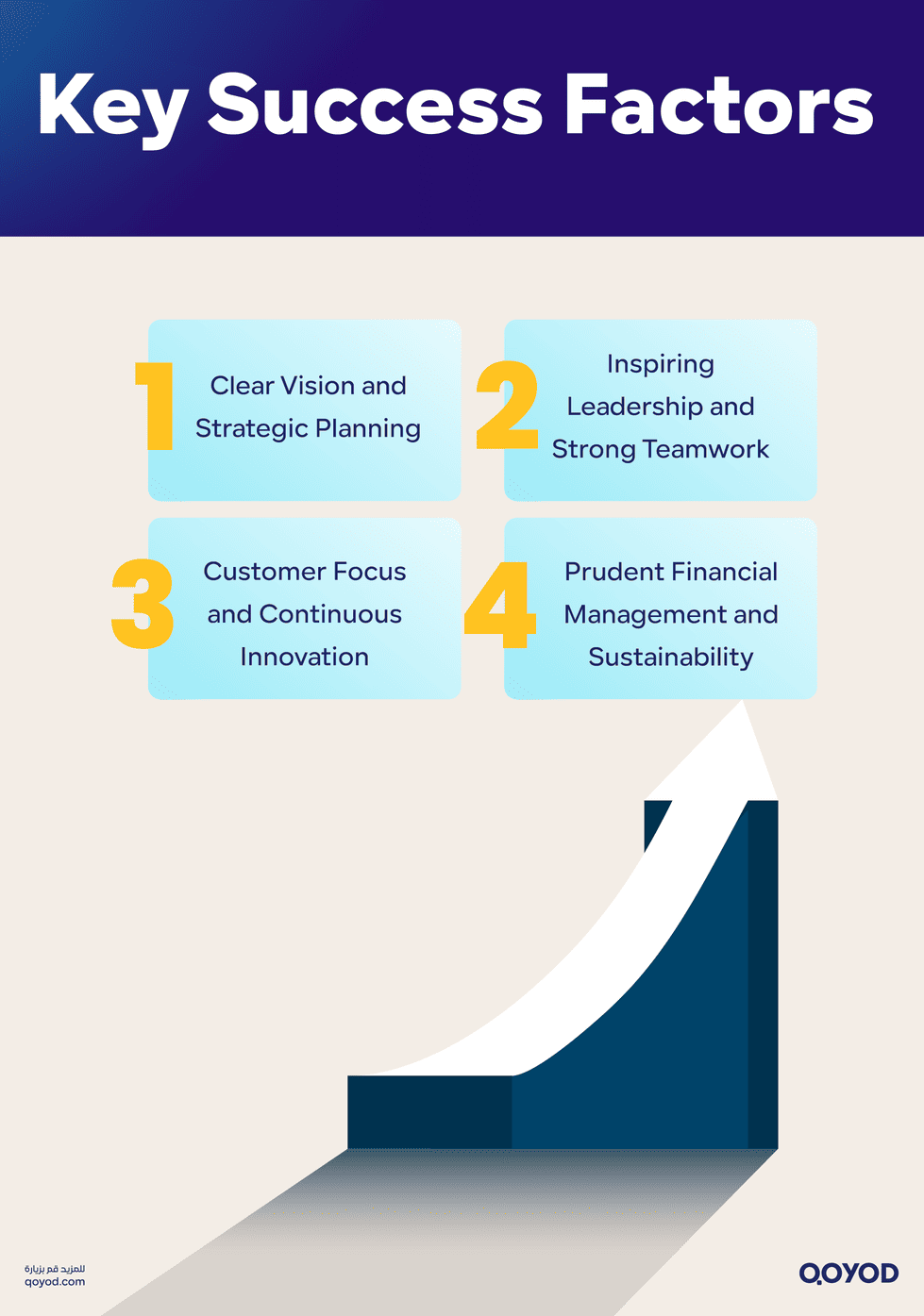
- Thought-out Vision and Strategy: Successful companies start with a clear vision that defines long-term objectives. This is supported by strategic plans that include market and competitor analysis, directing efforts towards sustainable growth.
- Inspiring Leadership and Cohesive Team: Effective leaders motivate employees, build a positive culture, and develop competencies. The team is considered the backbone of high productivity and innovation.
- Customer Focus and Innovation: Customer satisfaction results from delivering superior value at a lower cost, coupled with continuous innovation to meet changing needs through new technologies and products.
- Prudent Financial Management and Sustainability: Controlling costs, managing liquidity, and committing to environmental and social sustainability ensures survival in competitive markets. Leveraging technology, particularly a robust cloud accounting system, optimizes operations.
Successful Company Factors
| Key Factor | Brief Description |
| Vision & Strategy | Clear long-term vision supported by plans that include market and competitor analysis for sustained growth. |
| Leadership & Team | Leaders who motivate employees, build a positive culture, and develop competencies for high productivity and innovation. |
| Customer Focus & Innovation | Delivering superior value at a lower cost, with continuous innovation through new technologies and products for customer satisfaction. |
| Financial Management & Sustainability | Prudent cost control, liquidity management, and commitment to sustainability, utilizing technology for operational improvement (e.g., Qoyod Accounting Software features). |
Common Causes of Failure
Understanding and mitigating risks is key to survival. Most business failures can be traced back to fundamental errors in strategy and execution.
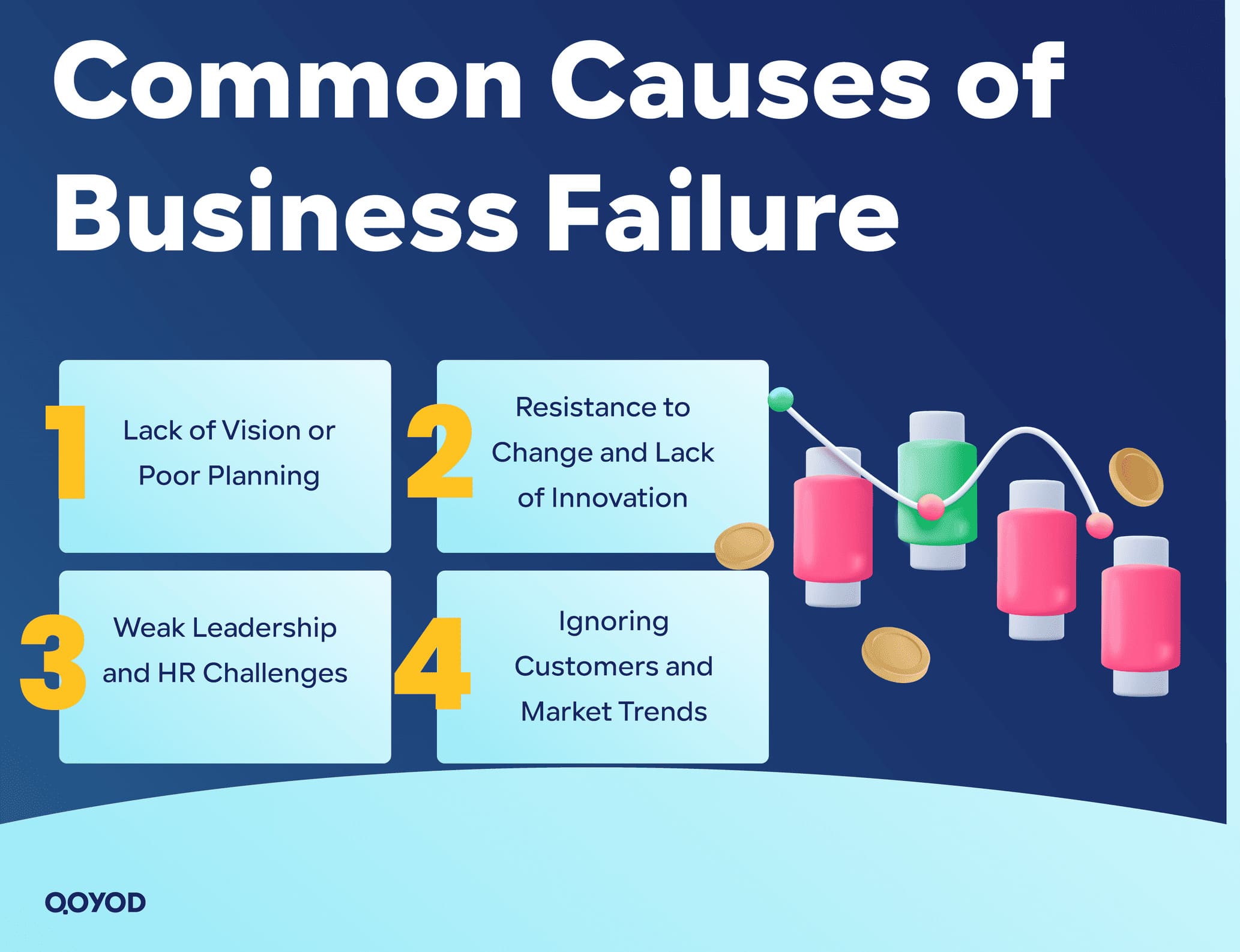
- Absence of Vision or Poor Planning: Without a clear, actionable plan, efforts become fragmented, and the company fails to withstand economic or competitive challenges.
- Resistance to Change and Lack of Innovation: Companies that rigidly adhere to traditional methods inevitably fail against digitally agile competitors, similar to the fate of some conventional retailers when faced with digital giants like Amazon.
- Leadership and Human Resources Issues: Weak leadership or a demotivated team leads directly to low productivity and high turnover rates. This is often compounded by poor financial management and oversight, which causes debilitating debt.
- Neglecting Customers and the Market: Failure to understand evolving customer needs or ignoring significant market shifts leads to a rapid loss of market share.
Ultimately, success depends on balancing the success factors mentioned previously. Failure is largely preventable through continuous learning from mistakes and persistent adaptation.
Common Business Failure Factors
| Main Cause | Brief Description |
| Absence of Vision / Poor Planning | Lack of a clear plan leads to fragmented efforts and inability to cope with economic or competitive challenges. |
| Resistance to Change & Innovation | Sticking to traditional methods fails against digital competitors and hinders operational improvements. |
| Leadership & HR Issues | Weak leadership or an unmotivated team causes low productivity, high resignations, and debt due to bad financial management. |
| Neglecting Customers & Market | Failure to understand customer needs or ignoring market changes results in rapid loss of market share. |
The Role of Digital Transformation and Technology in Business Success
Digital Transformation (DX) is a strategic process for integrating digital technology across all business facets, effectively shifting traditional operations into efficient digital models. It encompasses technologies such as Artificial Intelligence (AI), Cloud Computing, Big Data Analytics, and Automation. DX significantly boosts productivity, minimizes errors, and enhances the customer experience, thereby strengthening competitive capabilities and unlocking new revenue streams in rapidly changing markets.
Key Benefits of Digital Transformation
- Improved Operational Efficiency: Digital Transformation automates manual processes, such as using robotics in production lines. This can reduce time and costs by 30-50%, while enhancing productivity through streamlined procedures and instantaneous data sharing. For SMBs, adopting an accounting automation system like Qoyod Accounting Software falls directly under this benefit.
- Enhanced Customer Experience: Data analysis allows for service personalization, similar to product recommendations on global platforms like Amazon. This increases customer satisfaction and loyalty, leading to a potential boost in sales by 20% or more.
- Driving Innovation and Growth: DX facilitates the development of new products and market expansion, exemplified by companies like Uber, which revolutionized the transportation industry with its application. This opens new revenue opportunities and achieves higher returns on investment.
- Risk Management and Sustainability: AI provides precise demand forecasts and helps reduce environmental costs by optimizing energy consumption. This critical capability ensures business continuity in unstable or uncertain operating conditions.
Successful Examples Globally and How to Overcome Challenges
Globally, Amazon successfully built a cloud system that manages millions of transactions daily, achieving enormous annual growth.
Challenges and How to Overcome Them
Challenges include resistance to change, a lack of digital skills, and initial implementation costs. These hurdles can be overcome by:
- Training employees and developing digital literacy.
- Adopting a gradual digital strategy.
- Forming partnerships with cloud solution providers (e.g., Oracle or Amazon Web Services).
This approach ensures that transformation is a profitable long-term investment.
Conclusion on Digital Transformation: Digital transformation has become a necessity for survival. It converts businesses into flexible entities capable of innovation and sustainable growth in the age of Artificial Intelligence (AI).
The Importance of Data in Strategic Decision-Making
Data provides a scientific foundation for making strategic decisions instead of relying solely on intuition or personal experience. It converts massive amounts of information into actionable insights through advanced analytics like AI and Machine Learning. Data-Driven Decision-Making (DDDM) is the process of collecting, cleaning, and analyzing data from various sources (customer behavior, market trends, financial performance). This approach reduces risk and increases accuracy by up to 5-6 times compared to traditional decisions.
The Importance of Using Data for Your Business Success
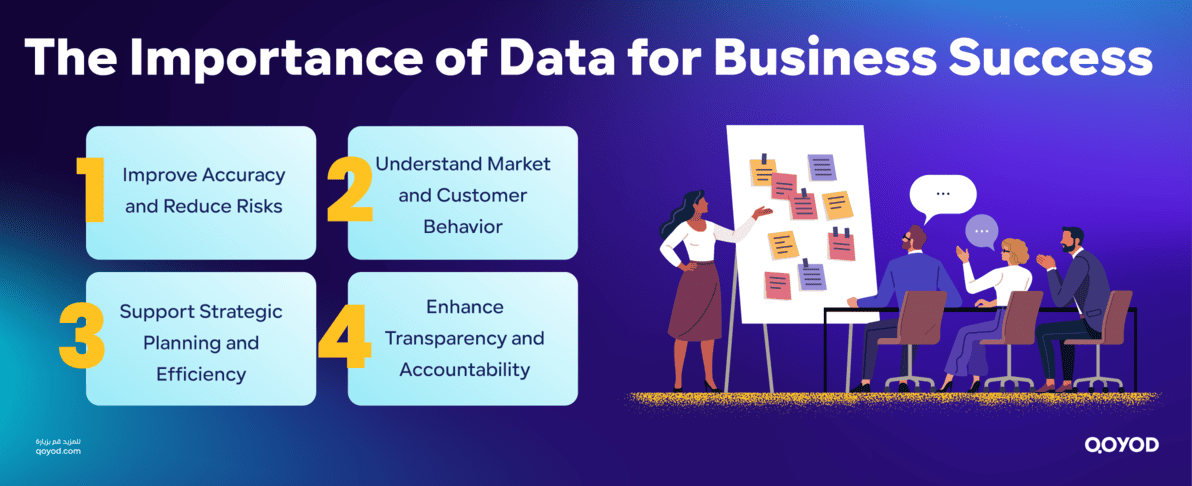
- Accuracy and Risk Reduction: Data analysis aids in predicting future trends and identifying early risks, such as detecting a demand drop before it occurs, which saves costs and improves ROI.
- Understanding the Market and Customers: Data enables a deep understanding of customer behavior, like personalized offerings on Netflix based on viewing data, which increases customer retention by 20-30% and boosts revenues.
- Strategic Planning and Efficiency: Predictive analytics support long-term planning, such as using GIS for site selection based on demographic analysis, which improves performance and accelerates response to changes.
- Enhanced Transparency and Accountability: Data makes decisions measurable and trackable, building a transparent organizational culture and improving stakeholder satisfaction. For SMBs, utilizing Qoyod Accounting Software centralizes financial data, making it transparent and auditable.
Practical Examples from Successful Companies
Amazon used data analytics for personalized product recommendations, generating 35% of its sales from this feature.
Challenges and How to Overcome Them
Challenges include poor data quality, skill shortages, and over-reliance on historical data. These are resolved by:
- Improving data quality through governance tools.
- Training teams.
- Integrating real-time and predictive analytics.
- Adopting a data culture within the organization.
Conclusion: Data has become the “new oil” of the economy. Successful companies transform challenges into opportunities through data-backed decisions, ensuring sustainable growth in a competitive environment.
Marketing and Building a Strong Brand
Marketing is a core pillar of business success. It connects the product and the customer through studied strategies encompassing promotion, distribution, pricing, and communication, potentially increasing sales by 23% and boosting brand awareness. Building a strong brand relies on creating a distinctive identity that reflects company values, which builds long-term trust and reduces customer sensitivity to price changes.
The Importance of Marketing in Business Success
- Increased Awareness and Sales: Marketing creatively introduces products to the audience, stimulating purchases and attracting new customers. Studies show marketing expenditure yields direct positive returns.
- Market and Customer Understanding: It allows for the analysis of customer needs and market changes, helping to develop demand-aligned products and build strong relationships through continuous interaction.
- Competitive Advantage and Growth: Innovative campaigns differentiate the company from competitors, supporting expansion into new markets, achieving sustainable growth, and increasing market share.
Steps to Build a Strong Brand
- Define Identity and Values: Start by outlining the brand’s persona (logo, colors, message) that conveys distinction, such as Apple’s “Think Different,” linking it to innovation.
- Integrated Marketing Strategies: Use multiple channels (social media, digital ads, content marketing, SEO) to enhance presence, focusing on customer experience to boost loyalty.
- Performance Measurement and Adjustment: Monitor key indicators like conversion and satisfaction rates via tools (e.g., Google Analytics), then refine campaigns based on data to ensure continuity.
For practical tips on digital marketing and SMB growth, visit the Qoyod blog.
Successful Examples
Coca-Cola successfully built a global brand through emotional campaigns linking the product to happiness, achieving massive annual sales.
Challenges and How to Overcome Them
Challenges include fierce competition and digital changes. These are addressed by embracing digital marketing (SEO, social media), investing in creativity, and maintaining transparency to build lasting trust.
Strategic Partnerships and Networking: A Growth Engine for SMBs
Strategic partnerships are defined as long-term relationships between two or more non-competing organizations, aiming to create mutual value through the exchange of resources, expertise, and risks while maintaining the independence of each party. Expanding your network involves building strong ties with customers, suppliers, and government entities, enhancing access to markets and opportunities. Both are crucial tools for growth in a competitive business environment.
The Importance of Strategic Partnerships
- Market Expansion and Reach: They allow entry into new markets through partner networks, increasing market share without massive capital costs.
- Knowledge Exchange and Innovation: They facilitate the sharing of technical and operational expertise, enhancing innovation and improving productivity.
- Risk and Cost Reduction: Financial and operational risks are distributed among parties, while shared resources can reduce costs by 20-30% in major projects.
- Enhanced Efficiency and Sustainability: Operations improve through resource integration, supporting long-term, difficult-to-achieve individual goals.
The Role of Expanding Network
- Building Trust and Opportunities: A wider network opens doors to new partnerships and contracts, building a strong reputation and attracting investors.
- Supporting Growth and Marketing: It helps access new customers and reliable suppliers, while enhancing the brand through recommendations and collaborations.
Successful Examples
Globally, Apple’s collaboration with Foxconn for production enhanced its global efficiency and scale.
Challenges and How to Overcome Them
Challenges include differing objectives, lack of trust, or legal issues. These are resolved through clear agreements, choosing compatible partners, and joint management focused on communication and periodic performance measurement.
Conclusion: Strategic partnerships and network expansion are engines for sustainable growth, transforming companies into robust entities capable of facing global challenges.
Frequently Asked Questions (FAQ)
What are the key reasons for business success?
Clear vision, effective leadership, innovation, customer focus, and prudent financial management form the basis of success, supported by digital transformation.
How does leadership contribute to business success?
Inspiring leaders build a positive culture, motivate teams, and develop competencies, which can raise productivity and innovation by up to 20-30%.
What is the role of digital transformation in success?
It improves efficiency, enhances customer experience, and reduces costs through AI and cloud accounting, as seen in the success of Amazon.
Why do some companies fail despite strong resources?
Lack of vision, resistance to change, weak leadership, and neglecting customers lead to fragmented efforts and loss of market share.
What are the most common causes of failure?
Poor planning, insufficient funding, and a lack of market understanding are the most common causes, as shown in CB Insights studies.
How do companies avoid innovation failure?
By analyzing predictive data and adopting technology, which prevents adherence to traditional methods against digital competitors.
Conclusion: The Path to Sustainable Business Success
In the accelerating business world, company success is manifested in the balance between strategic vision, inspiring leadership, digital innovation, and accurate data, with a focus on customers, strong marketing, and strategic partnerships. Failure is prevented by avoiding poor planning and resistance to change.
Start applying these strategies today: Define your vision, embrace data, and build strong networks to convert your challenges into opportunities. Success is not random; it is the result of informed decisions and continuous adaptation. With ethical commitment and sustainability, your company will secure a long-term leading position in a competitive global market.
Actionable Next Step
Try Qoyod Accounting Software now to make your business operations easier and more accurate with solutions designed for modern businesses, ensuring you have the financial clarity to drive your success strategies.