www.qoyod.com

Tamara is now in Qoyod :tada: Subscribe to annual plans and pay in four installments.

    • Qoyod Accounting
      • Qoyod Accounting

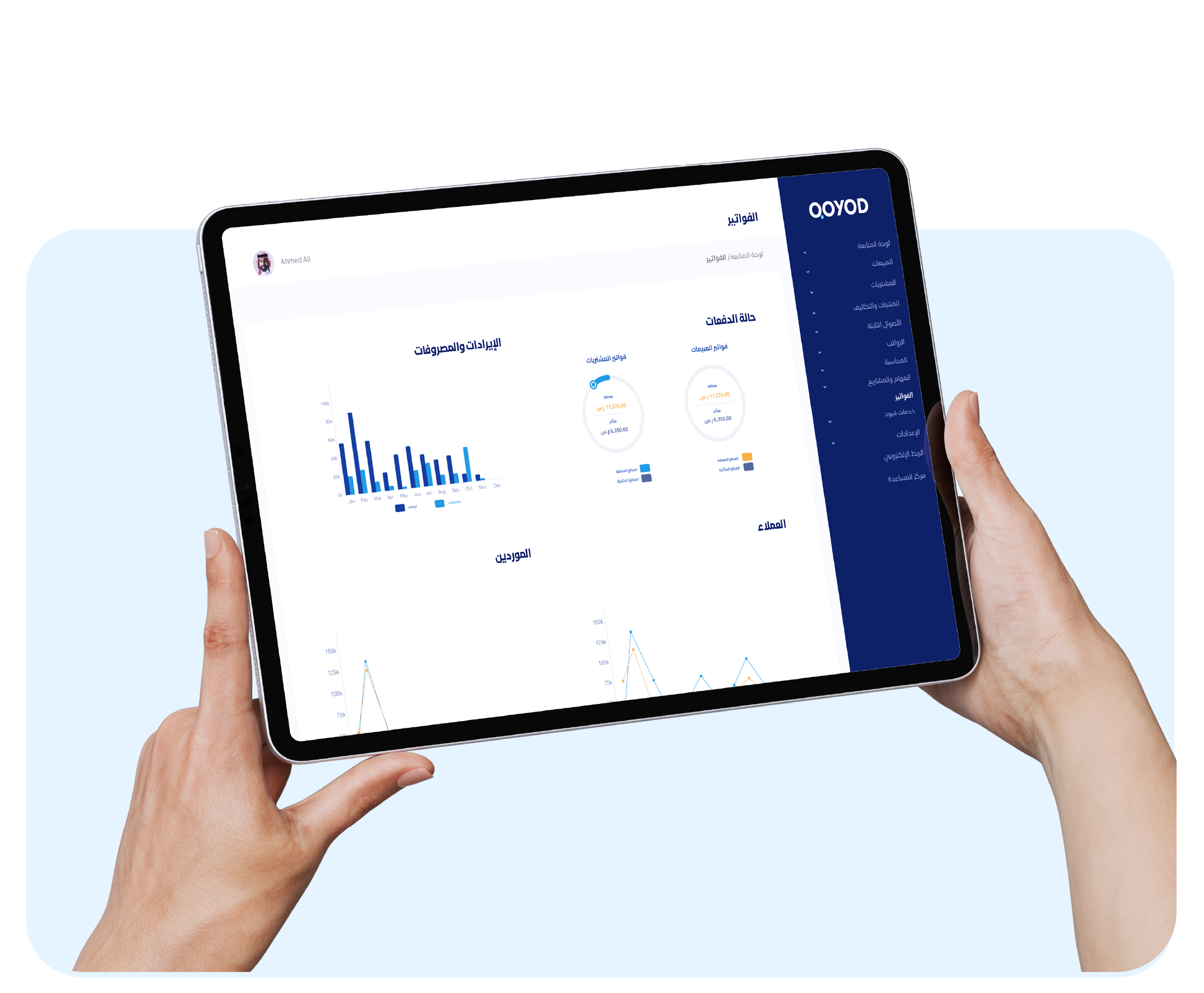
        A cloud-based accounting software that helps business owners streamline all accounting processes for companies, by managing sales, inventory, and issuing financial reports

        Know More

    • Pro services
      • Pro services

        A service designed to help business owners fulfill their financial and accounting requirements, such as bookkeeping, tax filing, and more.

        Know More

    • E-Invoice
      • E-Invoice

        Simplify your financial transactions with Geidea integration, allowing seamless payment processing and cash flow management.

        Know More

    • Integrations
      • Integrations

        Expand your Qoyod capabilities with integrations to your favorite tools for more efficiency.

        Know More

    • Blog
      • Qoyod Blog

        Explore rich articles and topics on accounting and business management to enhance your skills and stay up-to-date with industry trends.

        Know More

    • Help Center
      • Help Center

        If you have any inquiries or questions about Qoyod solutions and services, our help center has a variety of educational articles and videos to help and guide you.

        Know More

    • Newsletter
      • Monthly Newsletter

        Subscribe to our monthly newsletter for the latest news, updates, and valuable tips delivered straight to your inbox.

        Know More

    • Partnership
      • Partnership

        Discover the types of partnerships offered by Qoyod

        Know More

    • Vat Calculator
      • TAX Calculator

        Accurately and effortlessly calculate your tax with Qoyod’s advanced TAX Calculator, helping you stay compliant with the Saudi ZATCA requirements.

        Know More

Tamara is now in Qoyod :tada: Subscribe to annual plans and pay in four installments.

Marketing Strategy vs. Marketing Plan: A Global Business Guide

Marketing Strategy vs. Marketing Plan A Global Business Guide

Sign up for "Qoyod" and experience the difference yourself


Expert:

This article clarifies the crucial distinction between a Marketing Strategy and a Marketing Plan, guiding small and medium-sized businesses globally on how to build both effectively for sustained growth. By understanding this difference, entrepreneurs and marketing managers can ensure their efforts are focused, data-driven, and aligned with overall business objectives.

In the modern business landscape, the terms Marketing Strategy and Marketing Plan are often used interchangeably, yet they represent two distinct, fundamental components critical to a project’s success. In an age of digital transformation and intense global competition, it’s essential for every enterprise, startup or established, to adopt a structured approach to marketing.

Random promotional campaigns are no longer sufficient. Businesses need a long-term Marketing Strategy that defines the vision and goals, followed by an operational Marketing Plan that details the day-to-day actions and practices. This article, presented by Qoyod Accounting Software, aims to illuminate this distinction, helping SMBs understand their core elements and how to build them intelligently for sustainable growth and market expansion. This comprehensive guide will help business owners and managers direct their marketing efforts with intelligence and efficiency.

The Difference Between Marketing Strategy vs. Marketing Plan and Why the Confusion Exists

In the contemporary business environment, the marketing function is increasingly vital for achieving market differentiation, attracting, and retaining customers. Consequently, many professionals in the field conflate “Marketing Strategy” and “Marketing Plan,” which can lead to ineffective execution or duplicated efforts without tangible results. Understanding the difference between the Marketing Strategy and the Marketing Plan is a prerequisite for any marketing director or business owner seeking to achieve genuine, measurable outcomes.

Marketing Strategy (The “Why”)

The Marketing Strategy is the overarching “why” behind your marketing efforts. It establishes the general vision and the roadmap detailing how and why you aim to reach your target market.

A sound Marketing Strategy includes:

  • Defining the project’s market objectives, such as increasing market share, enhancing brand equity, or entering new markets.
  • Identifying the Target Audience (Buyer Persona), understanding their needs and purchasing behavior, and performing competitor analysis.
  • Formulating the Unique Value Proposition (UVP) that makes customers prefer your product or service over others.
  • Establishing a long-term timeframe (typically 3–5 years or more) and gathering the resources that will enable the company to achieve its goals.

In essence, the Marketing Strategy answers the big questions: Why do we excel? Why this market? And How will we stand out?

Marketing Plan (The “How” and “What”)

Once the strategy is set, the Marketing Plan steps in to execute it practically. The plan is the “how,” “when,” and “what” we will do to realize that vision.

The plan includes:

  • Defining the specific marketing campaigns and initiatives, the channels to be used, and the allocated budget for each.
  • Preparing timelines with clear start and end dates, execution phases, and team responsibilities.
  • Setting Key Performance Indicators (KPIs) to measure success, such as the number of new customers, conversion rate, and Customer Acquisition Cost (CAC).
  • Allocating the resources and tactics (digital marketing tools, content, advertisements, events) that support the plan.

Therefore, the Marketing Plan outlines the detailed course for implementing what the strategy determined, answering: What will we do? When? Who? And With what budget?

The Confusion in Concepts

The confusion persists because many SMBs prioritize launching immediate campaigns quickly, keeping them solely within the frame of a “Marketing Plan” without a clear strategic vision. Conversely, some formulate a strategy without converting it into an actionable implementation plan. Experts note that “The Strategy is what you should do,” while “The Plan is how you will do it.” Without clarity on the difference, companies may execute random or disconnected marketing activities, reducing the effectiveness of their marketing investment.

 Example to Clarify the Difference:

Imagine a company launching a new product targeting young professionals.

  • Strategy Phase: The company determines its goal is to become “The preferred brand for young professionals seeking easy digital financial tools” within two years. It targets an age group of 25–35 globally, distinguishing itself with fast customer service and seamless digital integration.
  • Plan Phase: The company sets a schedule for social media campaigns every two weeks, allocates a budget of $\$50,000$ in the first three months, hires influencers, launches an introductory video, measures the view rate and engagement monthly, and analyzes results.

Here, the difference between the Marketing Strategy (the destination and goal) and the Marketing Plan (the execution path and detailed actions) is clear.

Learn More: What is strategic planning, its relevance, aims, and stages?

Building a Marketing Strategy and Marketing Plan Step-by-Step

After clarifying the difference between the Marketing Strategy and the Marketing Plan, the crucial question remains: How can any company, whether new or established build an effective strategy and a successful execution plan that translates goals into tangible results? Understanding the difference is not enough; practical application is necessary.

Here, we detail the essential steps for building a strong Marketing Strategy, followed by the mechanism for designing a rigorous Marketing Plan that ensures the achievement of business objectives.

Steps to Build a Robust Marketing Strategy

Steps to Build a Robust Marketing Strategy

1. Analyze the Market and Competition

The first step in any successful strategy is understanding the market environment. No project can set its goals without knowing its surrounding reality. This analysis involves knowing current market trends, customer needs, and the position of competitors. This stage helps identify available opportunities and potential threats. For instance, a company in the FinTech sector must understand the demand for cloud accounting systems, consumer behavior towards e-invoicing, and the leading brands in this global space.

2. Define the Target Audience

A common mistake is assuming a product is “suitable for everyone.” Successful marketing relies on focus, not random dissemination. Therefore, you must define the ideal customer:

  • What is their demographic profile?
  • What is their income level?
  • What are their interests, daily concerns, and problems that the product aims to solve?
    The clearer the picture, the more precise the strategy and the stronger the results

Read Also : Building a Successful Digital Product: The A-to-Z Guide for Entrepreneurs

3. Formulate the Unique Value Proposition (UVP)

This is where the company answers the core question: “Why should the customer buy from me and not from a competitor?” The UVP is the promise the brand makes to its customers, making it both distinct and appealing. For example, your company’s advantage might be “Speed in Service,” “Accuracy in Quality,” or “Easy Digital Experience” like the one offered by Qoyod Accounting Software. This value must be genuine, measurable, and consistent with customer needs.

4. Set Measurable Marketing Objectives

As we’ve seen, objectives guide all efforts. It’s not enough to say, “We want to increase sales.” Objectives must be SMART: Specific, Measurable, Achievable, Relevant, and Time-bound.

  • Example:Increase sales by 20% within six months” or “Increase website traffic to 100,000 monthly visits.”

5. Select Appropriate Marketing Channels

Channels vary based on goals, vision, and the target audience. If a company targets a younger demographic, digital platforms like Instagram and TikTok might be best. If the company offers services to other businesses (B2B), LinkedIn and professional email marketing become more effective. Channel selection is part of the Strategy as it determines where resources will be directed later in the implementation plan.

6. Outline the Marketing Identity

The marketing identity is how the company speaks to its audience. It includes key messages, tone of voice, and visual elements (colors, logos, images). These features must be consistent across all platforms to build trust and a cohesive brand image.

Steps to Prepare the Marketing Plan

Steps to Prepare the Marketing Plan

After setting the Marketing Strategy, the phase of practical conversion of ideas into tangible activities begins. This is the role of the Marketing Plan, the document that translates the vision into an actionable and measurable timeline.

1. Define Activities and Campaigns

The company lists all campaigns and initiatives to be launched during a specific period (e.g., a full year). These activities may include:

  • Launching a digital campaign to increase brand awareness.
  • Organizing a field event to attract new customers.
  • Improving website visibility in search results (SEO).
  • Setting up paid advertising campaigns on Google and social media platforms.

2. Prepare the Timeline

Execution requires precise time management. The year must be divided into specific phases, with each campaign executed at the optimal time.

  • Example: Q1: Focus on product awareness. Q2: Focus on promotional offers. Q3: Build relationships with existing customers. Q4: Evaluate results and launch new features.

3. Allocate Budget and Resources

One of the most crucial components of the plan is clear budget allocation. It’s best to distribute the budget among different marketing channels based on their priority and expected Return on Investment (ROI). Team roles must also be defined: Who will supervise content? Who handles ads? Who monitors analysis and performance measurement?

4. Define Key Performance Indicators (KPIs)

A clear measurement indicator must be set for every goal in the plan. If the goal is to increase the number of customers, the KPI is the number of new subscriptions or sales. If the goal is to improve interaction on social media, the KPI is the engagement rate and share count. Continuous measurement helps adjust the course in a timely manner and achieve the best results.

5. Continuous Review and Improvement

The Marketing Plan is not a static document; it’s a dynamic tool that must be reviewed regularly. Since market conditions or customer behavior can naturally change, it’s wise to review performance quarterly or monthly and update activities accordingly.

Understanding the difference between the Marketing Strategy and the Marketing Plan is what sets the general direction and lays the intellectual foundation for the vision, while the Marketing Plan transforms that vision into tangible actions. Success depends on the balance between them: Without a strategy, plans become random and scattered. Without a plan, the strategy remains ink on paper. The intelligent blending of strategic thinking and practical execution is what makes the difference between a company striving for growth and one that actually achieves it.

 (FAQ) about Marketing Strategy vs. Marketing Plan

What is the fundamental difference between a Marketing Strategy and a Marketing Plan?

The Marketing Strategy defines the long-term vision and major objectives (e.g., increasing market share). The Marketing Plan is the practical, short-term method for achieving those goals through specific, timed, and budgeted activities. Strategy is the Direction; Plan is the Route.

Can a marketing plan succeed without a clear strategy?

Temporary campaigns might be executed without a strategy, but they are short-term attempts without vision. In the long run, the company will lose its ability to differentiate and sustain success. The strategy ensures every plan serves a larger, integrated objective.

Who typically develops the Strategy and the Plan within a company?

The Marketing Strategy is usually developed at the senior management or marketing director level, as it relates to the company's overall direction. The operational marketing teams or executive departments prepare the Marketing Plan, as it involves day-to-day work details and operational activities.

How often should the Marketing Strategy be updated?

The Strategy is typically reviewed every one to two years, depending on changes in the market, competition, and technological advancements. The Marketing Plan is updated quarterly or monthly because it deals with changing details and short-term campaigns.

Can the Plan change without changing the Strategy?

Yes, this is normal. A company might find a specific marketing channel isn't delivering the desired results, so the tactic is changed without affecting the overall goal. However, if the market shifts dramatically, the company may need to adjust its Strategy entirely.

Conclusion: Balancing Strategy and Execution for Sustainable Growth

In a world where marketing tools are changing at a breathtaking speed, understanding the difference between the Marketing Strategy and the Marketing Plan remains the constant foundation for any sustained marketing success. The Strategy provides the company with the compass, and the Plan provides the concrete steps to walk toward the goal.

Companies that grasp this balance build strong brands, achieve real growth, and keep pace with digital transformation confidently. Because Qoyod Accounting Software closely tracks this transformation, we understand that marketing is no longer just promotion but an integrated system based on data, analysis, and precise accounting.

Qoyod strives to help business owners manage their financial and marketing resources intelligently through its e-invoicing software and smart Point-of-Sale (POS) systems that complete the digital transformation journey for SMBs.

If you seek to develop your business and build a well-thought-out marketing plan based on accurate financial data, Qoyod offers you the tools and expertise to start with confidence and continue successfully.

Try Qoyod Accounting Software now to make your business operations easier and more accurate with solutions designed for modern businesses.

Written by

Tags

Share this article on

Register in Newsletter !

SIMILAR POSTS

More From Qoyod Blog